Category: Tax Planning for Corporate Owner Managers

  • 🚀 Introduction to Compensation Strategies & How to Study This Module

    When working with corporate owner-managers, tax planning rarely involves just one rule or one calculation. Instead, it involves combining multiple tax concepts into practical strategies that help clients manage taxes over the short term and long term.

    This module focuses on compensation strategies — how business owners can take money out of their corporations in ways that are tax-efficient, financially sustainable, and aligned with their personal goals.

    However, it’s important to understand something critical before diving into these strategies:

    📌 There is rarely only one “correct” tax strategy.

    Different accountants may design completely different compensation plans for the same client, and all of them could be technically valid depending on assumptions, priorities, and long-term goals.

    This section will help you understand how to think like a tax planner, not just memorize rules.


    🧠 What This Module Is Really About

    This unit is not simply about learning a list of tax tricks or formulas. Instead, it focuses on developing a strategic mindset when advising corporate clients.

    In previous modules, you learned technical building blocks such as:

    • Salary vs. dividend decisions
    • CPP contribution planning
    • Shareholder loans and benefits
    • Corporate deductions and reimbursements
    • Owner-manager compensation structures

    Now the goal is to combine those concepts into practical real-world planning strategies.

    💡 Think of previous modules as tools.
    This module shows you how to use those tools together.


    📊 Why Compensation Planning Is So Important

    For many owner-managers, their corporation represents their primary source of income and wealth. How they withdraw money from the company affects:

    AreaWhy It Matters
    💰 Personal taxesSalary vs dividend decisions affect tax rates
    🧾 Corporate taxesDeductions and retained earnings planning
    🏦 Retirement planningCPP contributions, RRSP room, savings
    📉 Long-term tax efficiencyFuture tax planning vs immediate tax savings
    👨‍👩‍👧 Family financesIncome splitting and family planning

    Because of these factors, compensation planning often involves balancing several competing objectives rather than simply minimizing taxes today.


    🔍 The “Big Picture” Approach to Tax Planning

    One of the most important lessons in compensation planning is this:

    ⚠️ Saving the most tax this year is not always the best strategy.

    Many new tax preparers focus heavily on minimizing taxes immediately. While this can sometimes be helpful, experienced tax professionals often take a long-term planning perspective.

    For example, some situations may require:

    StrategyReason
    Paying slightly more tax todayTo reduce taxes later
    Increasing salaryTo build CPP or RRSP benefits
    Leaving money in the corporationTo defer personal taxes
    Paying dividends instead of salaryTo simplify payroll obligations

    These decisions depend on the client’s life stage, financial situation, and future plans.


    👤 Every Client Situation Is Different

    A critical concept in tax planning is that no two clients are exactly alike.

    Two businesses may have identical profits, yet require completely different compensation strategies.

    For example:

    Client SituationPossible Planning Approach
    Young entrepreneur building wealthRetain earnings inside corporation
    Business owner approaching retirementFocus on retirement income planning
    Owner with minimal retirement savingsEncourage CPP participation
    Owner planning to sell the businessConsider capital gains strategies

    Because of this, tax planning is often customized to each client’s circumstances.


    💡 Thinking Like a Tax Advisor

    As you study compensation strategies, the goal is not to copy a single approach. Instead, you should focus on developing a structured way of thinking about tax planning.

    A good tax advisor typically asks questions such as:

    • What are the client’s short-term income needs?
    • What are their long-term financial goals?
    • Are they saving enough for retirement?
    • Do they need stable personal income?
    • Should we defer personal taxes or pay some tax now?

    By analyzing these factors, the advisor can design a strategy that fits the client’s broader financial situation.


    ⚖️ Why Different Accountants May Give Different Advice

    One fascinating aspect of tax planning is that different professionals may recommend different strategies for the same client.

    For example:

    🧾 Ask five accountants about a compensation strategy and you might receive six different answers.

    This happens because tax planning involves judgment, assumptions, and priorities.

    Two accountants might disagree because they:

    • prioritize tax minimization vs retirement planning
    • value cash flow stability vs tax deferral
    • prefer simple structures vs complex strategies

    This diversity of approaches is completely normal within professional tax practice.


    📦 Your Role as a Tax Professional

    One of the most important professional principles is that the final decision always belongs to the client.

    Your responsibility as a tax preparer or advisor is to:

    ✔ Explain the available options
    ✔ Outline the tax implications
    ✔ Provide professional recommendations
    ✔ Help the client understand risks and benefits

    But ultimately:

    ⚖️ Clients make the final decision about their financial strategy.

    Your role is to guide and inform, not dictate the outcome.


    📚 How You Should Study This Module

    To get the most value from this section, approach it with the right mindset.

    Instead of trying to memorize each strategy, focus on:

    Study ApproachPurpose
    Understand the reasoningWhy the strategy works
    Analyze the client situationWhen it applies
    Compare alternativesWhat other options exist
    Think criticallyCould you design a better plan?

    You may encounter examples where you disagree with the strategy presented, and that is perfectly acceptable.

    In fact, questioning strategies is a valuable skill because it helps develop professional judgment.


    🧩 Building Your Own Planning Toolbox

    As you progress through this module, you will begin building your own tax planning toolbox.

    This toolbox will include:

    • Salary vs dividend strategies
    • Benefit and reimbursement structures
    • Retirement planning considerations
    • Long-term tax minimization techniques
    • Practical client advisory approaches

    Over time, your experience will help you refine these strategies and develop your own planning style.


    🎯 Key Takeaway for New Tax Preparers

    💡 Tax planning is not about memorizing rules — it’s about understanding people, financial goals, and long-term outcomes.

    The strategies in this module will demonstrate how experienced professionals think about owner-manager compensation planning.

    Use these examples as guidelines and inspiration, but remember that the best tax strategies are always tailored to each client’s unique situation.

    🏢 Protecting the Corporation & Using a Holdco for Retained Earnings

    One of the most powerful planning strategies for corporate owner-managers is the use of a holding company (Holdco) to protect business assets and accumulated profits. This structure is commonly used in Canadian tax planning to protect retained earnings from business risks and create additional flexibility in compensation and tax planning.

    For professionals such as consultants, engineers, architects, and other service providers, the risk of lawsuits, creditor claims, or business liabilities can be significant. Without proper structuring, all accumulated profits inside the operating company could potentially be exposed to these risks.

    A Holdco structure helps separate the operating business risks from the wealth accumulated by the business.


    📌 Basic Corporate Structure Without a Holdco

    Many businesses start with a simple structure where the owner directly owns the operating company.

    Typical Basic Structure

    OwnershipStructure
    IndividualRandy
    Business entityOperating Company (Opco)
    Shareholder relationshipRandy owns 100% of Opco

    In this structure:

    • Randy earns income through Opco
    • Profits accumulate as retained earnings inside Opco
    • All business assets and retained earnings are exposed to business risks

    ⚠️ The Risk of Leaving Retained Earnings in the Operating Company

    If a business becomes successful, the operating company may accumulate significant retained earnings.

    Example:

    ItemAmount
    Annual profit$100,000
    Retained earnings after several years$500,000

    This retained earnings balance represents valuable accumulated wealth, but if it remains inside the operating company, it may be exposed to:

    • Lawsuits
    • Professional liability claims
    • Business creditors
    • Contract disputes

    If a legal claim occurs, creditors may attempt to access assets held by the operating company.


    🏗️ Introducing the Holding Company Structure

    A common solution is to introduce a holding company (Holdco) into the corporate structure.

    Holdco Structure

    Ownership LevelEntity
    Individual shareholderRandy
    Parent companyHoldco
    Operating companyOpco

    Structure flow:

    Randy

    Holding Company (Holdco)

    Operating Company (Opco)

    In this arrangement:

    • Randy owns 100% of Holdco
    • Holdco owns 100% of Opco

    This structure allows profits to be moved from the operating company to the holding company, where they are better protected.


    💰 Moving Retained Earnings to the Holdco

    The key planning technique involves transferring retained earnings from Opco to Holdco using intercorporate dividends.

    When properly structured, Canadian tax rules allow tax-free dividends between connected corporations.

    For this to apply:

    • Holdco must own more than 10% of Opco shares
    • Corporations must be connected corporations

    In most Holdco structures, Holdco owns 100% of Opco, so this condition is easily satisfied.


    📊 Example: Moving $500,000 to the Holdco

    Assume Opco has accumulated:

    ItemAmount
    Retained earnings$500,000

    Opco can declare a dividend to Holdco.

    Step 1 – Dividend from Opco to Holdco

    TransactionAmount
    Dividend declared$500,000
    Tax payable$0 (intercorporate dividend)

    After the dividend:

    CompanyRetained Earnings
    Opco$0
    Holdco$500,000

    The funds have now been moved to Holdco, where they are generally protected from Opco’s creditors.


    🛡️ Why This Protects the Business

    The key concept behind this strategy is asset separation.

    CompanyRole
    OpcoConducts business operations
    HoldcoHolds accumulated profits and investments

    If a creditor sues Opco:

    • They can only access assets inside Opco
    • Funds already transferred to Holdco are generally outside the creditor’s reach

    As a result, the operating company effectively becomes a low-asset risk entity, while the wealth remains protected in Holdco.


    📈 Ongoing Profit Protection Strategy

    This structure is most effective when used consistently every year.

    Example annual strategy:

    YearOpco Profit After TaxDividend to Holdco
    Year 1$100,000$100,000
    Year 2$100,000$100,000
    Year 3$100,000$100,000

    After several years:

    Location of fundsAmount
    Opco retained earningsMinimal
    Holdco retained earningsGrowing

    This keeps the operating company lean and less exposed to risk.


    💵 Paying the Owner: Salary vs Dividends

    The presence of a Holdco does not change the fundamental compensation strategies available to the owner.

    The owner can still receive compensation through:

    MethodSource
    SalaryFrom Opco
    DividendsFrom Holdco

    The key difference is that dividends must flow through Holdco first.

    Example dividend flow:

    Opco → Holdco → Randy

    Instead of:

    Opco → Randy

    As long as Holdco has sufficient retained earnings, dividends can be distributed normally.


    🔄 What If Opco Needs Cash Again?

    Sometimes the operating company needs additional cash for:

    • payroll
    • research and development
    • project expenses
    • delayed client payments

    In these situations, Holdco can lend money back to Opco.


    📊 Example Loan Back to Opco

    TransactionAmount
    Holdco lends money to Opco$500,000

    In Opco’s balance sheet:

    ItemAmount
    Liability to Holdco$500,000

    This loan creates a creditor relationship.


    🔐 Using a General Security Agreement (GSA)

    To protect the loan, lawyers typically draft a General Security Agreement (GSA).

    This agreement gives Holdco priority over other creditors.

    If Opco faces financial trouble:

    Payment PriorityCreditor
    FirstHoldco loan
    SecondOther creditors

    This further protects the assets that were originally moved into Holdco.


    ⚠️ Importance of Setting Up the Structure Early

    Creating a Holdco structure after a business becomes successful can be more complicated and expensive.

    Reorganizing later often requires:

    • Section 85 rollovers
    • Share exchanges
    • Legal restructuring
    • Additional accounting work

    These reorganizations can involve significant legal and accounting fees.

    📌 Best Practice:
    If a client is expected to build substantial retained earnings, it is often better to establish the Holdco structure at the time of incorporation.


    📋 Key Advantages of the Holdco Structure

    BenefitExplanation
    🛡️ Asset protectionRetained earnings moved out of Opco
    💰 Tax-efficient dividendsIntercorporate dividends often tax-free
    📈 Investment flexibilityHoldco can invest accumulated profits
    🔄 Cash flow flexibilityHoldco can lend money back to Opco
    🧾 Compensation planningAllows flexible salary/dividend strategies

    💡 Practical Insight for Tax Preparers

    For many professional corporations and consulting businesses, the Holdco–Opco structure is one of the most common asset protection strategies used in Canada.

    While implementing these structures requires careful planning and legal documentation, understanding the core concept of separating operating risk from accumulated wealth is an essential skill for anyone advising corporate owner-managers.

    When structured properly, a Holdco can become a powerful long-term planning tool for asset protection, tax efficiency, and wealth accumulation.

    💰 Maximizing the Corporation as a Long-Term Savings Vehicle

    One of the most powerful but often overlooked uses of a corporation is as a long-term savings vehicle. Instead of simply withdrawing profits every year through salary or dividends, a corporation can be structured in a way that forces disciplined saving, creates tax flexibility, and builds retirement wealth over time.

    For many business owners, especially couples with strong household income, this strategy can help address a common problem: inconsistent or insufficient savings habits.

    This section explores a practical strategy that demonstrates how corporations can be used to build retirement savings while also improving long-term tax efficiency.


    🧠 The Real Problem: High Income but Poor Savings Discipline

    Many successful professionals earn substantial income but still struggle with saving consistently.

    Consider a common situation:

    PersonOccupationIncome
    RaymondIT Consultant (corporation owner)$100,000 corporate profit (after tax)
    NancySales Executive$200,000 – $250,000 salary

    Despite their strong income, Raymond and Nancy face a typical challenge:

    💡 If money sits in their personal bank accounts, they tend to spend it.

    Examples of spending triggers include:

    • vacations
    • new cars
    • lifestyle upgrades
    • discretionary purchases

    As a result, savings become sporadic rather than structured.


    📌 Turning the Corporation Into a Forced Savings Plan

    One powerful solution is to use the corporation itself as the savings account.

    Instead of withdrawing corporate profits each year, the strategy involves:

    1️⃣ Leaving profits inside the corporation
    2️⃣ Preventing easy access to those funds
    3️⃣ Allowing corporate retained earnings to grow over time

    This structure essentially creates a forced savings mechanism.


    📊 Basic Scenario Setup

    Assume Raymond’s corporation generates the following each year:

    ItemAmount
    Corporate profit before tax~$118,000
    Corporate tax (approx. 15%)~$18,000
    Profit after tax$100,000

    This means the corporation can retain $100,000 annually.

    If Raymond withdraws nothing personally, then after 20 years:

    YearsAnnual SavingsTotal
    20 years$100,000$2,000,000

    This assumes no investment growth for simplicity.


    📌 Strategy Option 1: Leave All Profits in the Corporation

    The simplest strategy is to leave all corporate profits inside the company.

    Tax Result During Working Years

    PersonIncomeTax Impact
    Raymond$0 personal incomeNo personal tax
    Nancy$250,000 salaryClaims spousal credit

    Because Raymond has no personal income, Nancy can claim the spousal amount tax credit.

    This slightly reduces their household tax burden.


    📊 Tax Example

    ScenarioCombined Taxes
    Raymond has no income~$95,000 tax

    This option maximizes short-term tax savings.

    However, it has one major drawback.


    ⚠️ The Long-Term Problem

    If Raymond withdraws all funds later as dividends, every dollar will be taxable.

    After 20 years:

    ItemAmount
    Corporate retained earnings$2,000,000
    Taxable when withdrawnYes

    All withdrawals would come from taxable dividends.

    This limits future tax flexibility.


    💡 Strategy Option 2: Use the “Dividend + Shareholder Loan” Strategy

    A more sophisticated approach involves declaring a dividend each year but lending the money back to the corporation.

    This allows the owner to use the personal tax-free dividend zone annually, rather than losing it.


    📊 Example Annual Strategy

    Each year:

    TransactionAmount
    Dividend paid to Raymond$40,000
    Raymond lends money back to corporation$40,000

    The corporation still retains funds, but the tax structure changes.


    📊 Tax Impact on Raymond

    Because of the dividend tax credit and personal exemption, the tax cost is extremely low.

    ItemAmount
    Dividend received$40,000
    Personal tax~$850

    So Raymond pays less than $1,000 tax each year on the dividend.


    ⚠️ Household Tax Comparison

    ScenarioCombined Tax
    No dividend strategy~$95,000
    Dividend + loan strategy~$98,000

    This means the couple pays about $3,000 more tax annually.

    At first glance, this appears worse.

    However, the long-term benefit is significant.


    📈 What Happens After 20 Years?

    Using the dividend strategy:

    ItemAmount
    Annual dividend$40,000
    Years20
    Shareholder loan created$800,000

    Corporate retained earnings will be:

    ComponentAmount
    Retained earnings$1,200,000
    Shareholder loan$800,000

    Total corporate wealth remains:

    | Total corporate funds | $2,000,000 |

    But now the structure is far more flexible.


    💡 Why the Shareholder Loan Is Powerful

    A shareholder loan can be repaid tax-free.

    That means Raymond can withdraw this portion without paying additional tax.

    Withdrawal TypeTax Treatment
    Shareholder loan repaymentTax-free
    Dividend withdrawalTaxable

    📊 Retirement Withdrawal Example

    Suppose Raymond needs $60,000 per year in retirement.

    Without the strategy:

    WithdrawalAmountTax
    Dividend$60,000Fully taxable

    With the strategy:

    SourceAmountTax
    Dividend$40,000Small tax
    Loan repayment$20,000Tax-free

    This dramatically reduces future taxes.


    📌 Example Tax Outcome

    Using the dividend strategy:

    IncomeTax
    $40,000 dividend~$850
    $20,000 loan repayment$0

    Total retirement income: $60,000

    Total tax: very minimal


    🎯 Key Advantage: Long-Term Tax Flexibility

    This strategy creates flexibility that would not exist otherwise.

    FeatureBenefit
    Shareholder loanTax-free withdrawals
    Retained earningsControlled dividend payments
    Flexible income planningAdjust withdrawals annually
    Reduced retirement taxesMore efficient cash flow

    It essentially converts part of the retirement income into tax-free withdrawals.


    📌 Important Administrative Steps

    To implement this strategy properly, several formal steps must occur:

    StepRequirement
    Declare dividendCorporate resolution required
    Issue T5 slipDividend must be reported
    Pay personal taxOwner pays dividend tax
    Record shareholder loanCorporate books must reflect loan

    Often this can be done through paper entries and proper minute book documentation.


    ⚠️ Important Planning Insight

    This example highlights a critical tax planning principle:

    💡 Sometimes paying slightly more tax today creates much larger tax savings in the future.

    Many inexperienced planners focus only on minimizing current-year taxes.

    Experienced tax advisors consider:

    • retirement income planning
    • long-term tax flexibility
    • client behavior and spending habits

    🧠 A Holistic Planning Approach

    For Raymond and Nancy, the strategy works because it addresses two separate goals:

    GoalSolution
    Difficulty savingCorporate savings vehicle
    Future retirement taxesShareholder loan strategy

    The corporation becomes both:

    • a forced savings account
    • a tax planning tool

    📦 Key Takeaways for Tax Preparers

    📌 Corporate retained earnings can function as a long-term savings vehicle
    📌 Using the dividend tax-free zone each year can improve tax efficiency
    📌 Shareholder loans create future tax-free withdrawal opportunities
    📌 Paying slightly more tax today may reduce taxes significantly in retirement


    🎯 Final Insight

    A corporation is not just a business structure — it can also be a powerful financial planning tool.

    When used strategically, retained earnings, dividends, and shareholder loans can help business owners build disciplined savings habits while creating significant long-term tax advantages.

    📊 Thoughts on Paying Eligible vs Ineligible Dividends to Shareholders

    When planning compensation for corporate shareholders, one of the most important decisions involves whether to pay eligible dividends or ineligible dividends. While many tax professionals rely on simple rules of thumb, the reality is that dividend planning should always be customized based on the client’s personal tax situation, retirement plans, and overall income structure.

    Understanding the difference between these two types of dividends—and when each may be preferable—is essential for any tax preparer working with Canadian Controlled Private Corporations (CCPCs) and their shareholders.


    🧾 First: Understand Where Dividends Come From

    In Canada, the type of dividend a corporation can pay depends on how the corporate income was taxed.

    The key concepts are:

    TermMeaning
    GRIP (General Rate Income Pool)Pool of income taxed at the higher general corporate rate
    LRIP (Low Rate Income Pool)Income taxed at the lower small business rate
    Eligible dividendsPaid from GRIP
    Ineligible dividendsPaid from LRIP

    These pools are tracked on Schedule 53 of the corporate tax return (T2).


    📌 Why Most Small Businesses Only Pay Ineligible Dividends

    For most small business clients, the majority of corporate income is taxed at the Small Business Deduction (SBD) rate.

    The SBD applies to up to $500,000 of active business income earned by a CCPC.

    Because of this lower corporate tax rate:

    • Income is added to LRIP
    • The corporation can pay ineligible dividends only

    📊 Typical situation for a small business:

    Income TypeCorporate Tax RateDividend Type
    Income under SBD limitLower rateIneligible dividends
    Income above SBD limitGeneral rateEligible dividends

    So most small business owners will primarily receive ineligible dividends during their working years.


    🏢 When Eligible Dividends Become Available

    Eligible dividends may arise when:

    • The corporation earns income above the small business limit
    • The company earns investment income
    • The corporation is not a CCPC
    • The company previously accumulated GRIP balances

    These eligible dividends are taxed differently at the personal level.


    ⚖️ Key Differences Between Eligible and Ineligible Dividends

    Both types of dividends are subject to a gross-up and dividend tax credit, but the percentages differ.

    Dividend TypeGross-UpDividend Tax CreditTypical Personal Tax Rate
    Eligible DividendHigherHigherLower personal tax
    Ineligible DividendLowerLowerHigher personal tax

    Because eligible dividends receive a larger dividend tax credit, they are usually taxed more favorably at the personal level.


    💡 The “Conventional Wisdom” Approach

    Many accountants follow a common planning approach when both dividend types are available.

    Typical Strategy

    PhaseDividend Type
    Working yearsPay eligible dividends
    Retirement yearsPay ineligible dividends

    The reasoning behind this approach involves Old Age Security (OAS) planning.


    📊 Why OAS Planning Matters

    OAS benefits begin to be clawed back when income exceeds a certain threshold.

    ItemApproximate Amount
    OAS clawback threshold~$75,000 income

    Eligible dividends have a larger gross-up, meaning they inflate taxable income more.

    This can cause the taxpayer’s net income to appear higher, increasing the risk of OAS clawbacks.

    Because ineligible dividends have a smaller gross-up, they can sometimes help keep income below that threshold.


    ⚠️ Why Rules of Thumb Can Be Dangerous

    While the conventional approach may work in many cases, relying on it blindly can lead to suboptimal planning.

    Tax planning should always consider the client’s full financial picture, including:

    • CPP income
    • RRSP withdrawals
    • OAS benefits
    • investment income
    • personal tax credits

    The optimal strategy may differ depending on the timing and composition of retirement income.


    📊 Example: Retirement Income Planning

    Consider a shareholder named Sam who is entering retirement.

    Sam’s expected income sources are:

    SourceAnnual Amount
    CPP~$12,000
    OAS~$12,000
    RRSP withdrawals$12,000
    Total before dividends~$36,000

    Sam plans to withdraw $36,000 annually from his corporation through dividends.


    Scenario 1: Ineligible Dividends

    If Sam receives $36,000 of ineligible dividends, the tax result may look like this:

    ItemAmount
    Dividend received$36,000
    Total tax payable~$7,200

    Sam remains comfortably below the OAS clawback threshold.


    Scenario 2: Eligible Dividends

    If Sam receives $36,000 of eligible dividends, the tax outcome can change.

    Because eligible dividends receive a larger dividend tax credit, the tax payable may drop significantly.

    ItemAmount
    Dividend received$36,000
    Tax payable~$4,000
    OAS clawbackMinimal

    This results in over $3,000 in annual tax savings.

    This example demonstrates that sometimes eligible dividends may be more beneficial in retirement, contrary to the usual planning approach.


    📌 Why This Happens

    The reason lies in the interaction between gross-up rules and dividend tax credits.

    Eligible dividends:

    ✔ produce a larger gross-up
    ✔ but also provide a larger dividend tax credit

    In some situations—particularly when total income is relatively low—the tax credit advantage outweighs the gross-up effect.


    🧠 The Real Lesson: Always Look at the Full Picture

    Effective tax planning requires evaluating multiple factors simultaneously.

    Important considerations include:

    FactorWhy It Matters
    CPP incomeAdds taxable retirement income
    RRSP withdrawalsCan push income into higher brackets
    OAS benefitsSubject to clawback
    Personal tax creditsReduce overall tax
    Investment incomeAffects taxable income

    Only by reviewing all these components together can you determine the optimal dividend strategy.


    📊 Practical Planning Timeline

    For many clients, dividend planning evolves over time.

    Life StageTypical Dividend Strategy
    Early business yearsMostly ineligible dividends
    Peak income yearsUse eligible dividends when available
    Pre-retirement planningAnalyze GRIP/LRIP balances carefully
    RetirementAdjust dividends to optimize taxes

    This requires ongoing planning and annual review.


    ⚠️ One Major Limitation: Predicting the Future

    One challenge in dividend planning is that tax laws and thresholds change over time.

    When advising a client who is 30–40 years away from retirement, it is impossible to know:

    • future tax rates
    • dividend gross-up percentages
    • OAS thresholds
    • government policy changes

    Because of this uncertainty, planning should remain flexible rather than rigid.


    📋 Key Takeaways for Tax Preparers

    📌 Most CCPC clients primarily receive ineligible dividends due to the Small Business Deduction.

    📌 Eligible dividends come from the GRIP pool and usually result in lower personal taxes.

    📌 The common strategy is to pay eligible dividends during working years and ineligible dividends during retirement, but this is not always optimal.

    📌 Always evaluate:

    • retirement income sources
    • personal tax credits
    • government benefits
    • long-term financial goals

    🎯 Final Professional Insight

    Dividend planning is not about applying a simple rule—it requires a holistic view of the client’s financial life.

    A skilled tax preparer will analyze:

    • corporate dividend pools
    • personal tax brackets
    • retirement income sources
    • government benefit thresholds

    By taking this comprehensive approach, you can design dividend strategies that maximize after-tax income and protect retirement benefits, ultimately providing far greater value to your clients.

    💼 Maximizing RRSP Contributions Using Salary: A Common Strategy for Corporate Owner-Managers

    One of the most common compensation strategies for corporate owner-managers is paying a salary specifically designed to maximize RRSP contribution room.

    This approach helps business owners:

    • Build tax-deferred retirement savings
    • Contribute to Canada Pension Plan (CPP)
    • Reduce current personal income taxes
    • Establish a predictable retirement plan

    For tax preparers working with corporate clients, understanding how to design this strategy is an essential skill.


    📌 Why Salary Is Required to Generate RRSP Room

    RRSP contribution room is calculated as:

    💡 18% of earned income from the previous year

    However, not all income types qualify as earned income.

    Income TypeGenerates RRSP Room?
    Employment salary✅ Yes
    Self-employment income✅ Yes
    Dividends❌ No
    Investment income❌ No
    Rental income❌ No

    👉 This is why many owner-managers choose salary instead of dividends as part of their compensation strategy.

    Salary allows them to build RRSP room every year.


    📊 Understanding the Annual RRSP Limit

    While RRSP contribution room equals 18% of earned income, the government sets a maximum contribution limit each year.

    Example:

    Year ExampleMaximum RRSP Limit
    Example planning year$26,010

    The exact number changes every year due to inflation adjustments, so tax preparers must always verify the current CRA limit.


    🧮 Calculating the Required Salary to Maximize RRSP

    To generate the maximum RRSP contribution room, you simply reverse the formula.

    Formula:

    Required Salary = RRSP Limit ÷ 18%

    Example calculation:

    $26,010 ÷ 0.18 = $144,500

    📌 Result:
    If a shareholder receives $144,500 in salary, they can contribute the maximum RRSP limit of $26,010 the following year.


    📋 Example: Owner-Manager RRSP Planning

    Assume a corporate owner named Harold wants to:

    ✔ maximize RRSP contributions
    ✔ contribute to CPP
    ✔ receive a steady monthly salary

    The tax planning process might look like this:

    ItemAmount
    Salary paid$144,500
    Maximum RRSP contribution$26,010
    CPP contribution (example year)$2,564
    Income tax before RRSP~$44,300

    📉 Tax Impact With RRSP Contribution

    Once Harold contributes $26,010 to his RRSP, his taxable income decreases.

    ItemAmount
    Tax before RRSP~$44,300
    Tax after RRSP~$32,000
    Tax savings~$12,000

    💡 This is the primary advantage of RRSP planning — contributions reduce taxable income immediately.


    📊 Comparing the Two Scenarios

    Scenario 1 — With RRSP Contribution

    ItemAmount
    Salary$144,500
    CPP contribution~$2,564
    Tax after RRSP~$32,000
    Net income~$95,000

    Scenario 2 — Without RRSP Contribution

    ItemAmount
    Salary$144,500
    CPP contribution~$2,564
    Tax payable~$44,300
    Net income~$98,000

    Even though the net income appears slightly higher without RRSP, the RRSP scenario actually builds $26,010 in retirement savings.


    💰 Monthly Paycheck Planning

    Corporate payroll planning often involves calculating monthly net income for the shareholder.

    Example:

    ScenarioMonthly Net Pay
    With RRSP deduction factored into payroll~$8,865
    Without RRSP deduction~$8,000

    This difference occurs because RRSP deductions reduce the taxes withheld during the year.


    ⚠️ Critical Risk: What If the RRSP Is Never Contributed?

    One of the biggest risks with this strategy is assuming the RRSP contribution will be made.

    If payroll deductions were reduced based on expected RRSP contributions, but the shareholder fails to contribute, the result can be a large tax bill.

    Example:

    SituationResult
    Payroll assumes RRSP deductionLower tax withheld
    RRSP contribution not madeHigher taxable income
    OutcomeLarge tax balance owing

    This is a common mistake among business owners.


    📌 Two Payroll Strategies for Owner-Managers

    When implementing RRSP salary strategies, tax preparers usually present two options.


    🟢 Option 1: Factor RRSP Contributions Into Payroll

    In this approach:

    • Payroll assumes RRSP contributions will occur
    • Taxes withheld are lower
    • Monthly net pay is higher
    • Tax return usually results in little or no refund

    Advantages

    ✔ Higher monthly cash flow
    ✔ Predictable tax outcome

    Disadvantages

    ❌ Requires discipline to actually contribute to RRSP


    🟡 Option 2: Ignore RRSP During Payroll

    Here:

    • Payroll deductions assume no RRSP contribution
    • Taxes withheld are higher
    • Monthly net pay is lower
    • RRSP deduction creates a large tax refund

    Advantages

    ✔ Safe approach if client forgets RRSP
    ✔ Creates a large refund at tax time

    Disadvantages

    ❌ Lower monthly take-home pay


    🎯 Example Outcome

    If RRSP contributions are ignored in payroll:

    ItemAmount
    Taxes withheld~$44,300
    Actual tax after RRSP~$32,000
    Tax refund~$12,000

    Some clients actually prefer this approach because they enjoy receiving a large refund at tax time.


    🧠 Practical Advice for Tax Preparers

    When advising owner-managers, always discuss:

    ✔ Whether they are disciplined enough to contribute to RRSPs regularly
    ✔ Their cash-flow needs during the year
    ✔ Whether they prefer monthly cash flow or tax refunds

    Each client’s preference will influence the best payroll strategy.


    📊 When This Strategy Works Best

    The RRSP salary strategy is especially useful when:

    • The client wants retirement savings
    • The client prefers salary over dividends
    • The client wants CPP benefits later
    • The corporation has sufficient profits to support payroll

    ⚠️ Situations Where It May Not Be Ideal

    This strategy may be less attractive when:

    • The client prefers dividend compensation
    • The business wants to minimize payroll taxes
    • The owner already has large retirement savings
    • Corporate cash flow is limited

    📌 Key Takeaways for New Tax Preparers

    💡 RRSP contribution room equals 18% of earned income.

    💡 Dividends do not generate RRSP room.

    💡 To maximize RRSP contributions, calculate salary using:

    RRSP Limit ÷ 18%

    💡 Payroll planning must consider whether RRSP contributions will actually be made.

    💡 Always discuss cash flow preferences and financial discipline with clients before implementing this strategy.


    🚀 Final Insight

    For many corporate owner-managers, combining salary + RRSP contributions is one of the most effective ways to:

    ✔ reduce personal taxes
    ✔ build retirement savings
    ✔ create long-term financial security

    When implemented properly, this strategy turns the corporation into a powerful retirement planning tool while still allowing flexibility in compensation planning.

    👴 Tax Planning for Owner-Managers Working During or Near Retirement

    Many corporate owner-managers today continue working well past traditional retirement age. Some remain passionate about their businesses, while others prefer maintaining income and staying active.

    For tax preparers, planning for these clients requires a different strategy compared to younger entrepreneurs. When a client reaches their mid-60s and beyond, tax planning must consider factors such as:

    • Old Age Security (OAS) clawback
    • CPP benefits
    • RRSP conversion to RRIF
    • Mandatory minimum withdrawals
    • Corporate retained earnings
    • Retirement income sustainability

    A well-designed strategy can preserve government benefits, reduce taxes, and create flexible retirement income streams.


    📌 Why Retirement Planning Changes for Older Business Owners

    When a client approaches age 65–72, several important financial changes occur:

    FactorWhy It Matters
    CPP eligibilityCreates taxable income
    OAS paymentsMay be clawed back at higher income
    RRSP conversionMust convert to RRIF by age 71
    RRIF withdrawalsMandatory minimum withdrawals begin
    Corporate incomeStill taxable if business continues

    Because these income streams can stack together, careful tax planning becomes extremely important.


    🧾 Key Retirement Income Sources to Consider

    Owner-managers near retirement often have multiple sources of income.

    Common retirement income sources include:

    Income SourceTax Treatment
    CPPFully taxable
    OASTaxable and subject to clawback
    RRSP withdrawalsFully taxable
    RRIF withdrawalsFully taxable
    Corporate dividendsTaxed with dividend credits
    Corporate salaryFully taxable employment income

    When these sources combine, a taxpayer’s total income can rise significantly, potentially triggering higher taxes and OAS clawbacks.


    ⚠️ Understanding the OAS Clawback

    Old Age Security benefits begin to phase out when income exceeds a certain threshold.

    Example threshold (approximate):

    ItemAmount
    OAS clawback threshold~$75,000 annual income

    If a retiree’s income exceeds this level:

    • OAS benefits are reduced
    • Up to 100% of OAS can be clawed back

    Because many seniors value their monthly OAS payments, preserving this benefit becomes a major planning objective.


    📊 Example Scenario: Owner-Manager Near Retirement

    Consider an owner-manager named Michael.

    Michael:

    • Age: 67
    • Runs a successful nursery business
    • Plans to keep working
    • Has $1,000,000 in RRSP savings
    • Corporation has $500,000 retained earnings

    Michael also receives:

    Income SourceAnnual Amount
    CPP~$9,000
    OAS~$9,000

    Total government benefits:

    👉 $18,000 per year

    The question becomes:

    How should Michael structure his income going forward?


    ❌ Traditional Strategy: Continue Salary and RRSP Contributions

    Some tax advisors may recommend continuing a traditional approach:

    ✔ Pay salary
    ✔ Maximize RRSP contributions
    ✔ Grow RRSP balance further

    While this strategy works well for younger entrepreneurs, it may not always be ideal for seniors.

    Why?

    Because large RRSP balances can create future tax problems.


    ⚠️ The RRSP Conversion Rule

    By age 71, all RRSPs must be converted into one of the following:

    • RRIF (Registered Retirement Income Fund)
    • Annuity
    • Cash withdrawal

    Most individuals convert their RRSP into a RRIF.

    Once this happens, mandatory withdrawals begin.


    📊 Minimum RRIF Withdrawal Example

    RRIF withdrawal rates increase with age.

    Example minimum withdrawal rates:

    AgeMinimum Withdrawal
    715.28%
    725.40%
    755.82%
    806.82%

    These withdrawals must occur every year, regardless of whether the retiree actually needs the money.


    💰 Example: Large RRSP Balance

    Suppose Michael continues building his RRSP until age 72.

    His RRSP grows to:

    👉 $1,200,000

    Minimum withdrawal at age 72:

    $1,200,000 × 5.4% = $64,800

    This means Michael must withdraw $64,800 annually.


    📊 Total Income at Age 72

    Adding other income sources:

    Income SourceAmount
    RRIF withdrawal$64,800
    CPP~$9,000
    OAS~$9,000
    Total income~$83,000

    This income level exceeds the OAS clawback threshold, resulting in reduced benefits.


    🚨 The Hidden Problem

    Large RRSP balances create three issues:

    1️⃣ Higher taxable retirement income
    2️⃣ Mandatory withdrawals regardless of need
    3️⃣ Increased OAS clawback risk

    This is why some planners say:

    💡 It is possible to have “too much money” in RRSPs.


    🧠 Alternative Strategy: Early RRSP Withdrawals

    Instead of waiting until age 72, a better strategy may be to withdraw RRSP income earlier.

    Example plan:

    Start withdrawing RRSP funds at age 67.

    Goal:

    • Use available tax brackets
    • Stay below the OAS clawback threshold
    • Reduce future RRIF withdrawals

    📊 Safe Withdrawal Example

    If Michael receives:

    SourceAmount
    CPP + OAS~$18,300

    And the OAS clawback begins around $75,000, then Michael can withdraw:

    $75,000 – $18,300 = $56,700

    So Michael could withdraw approximately:

    👉 $56,700 annually from his RRSP

    without triggering OAS clawbacks.


    📉 Impact Over Five Years

    If Michael withdraws:

    $50,000 per year × 5 years = $250,000

    His RRSP balance could fall from:

    $1,000,000 → ~$750,000

    This significantly reduces future mandatory RRIF withdrawals.


    📊 Future RRIF Withdrawal After Planning

    At age 72:

    $800,000 × 5.4% = $43,200

    Now Michael’s income looks very different.

    Income SourceAmount
    RRIF withdrawal$43,200
    CPP~$9,000
    OAS~$9,000
    Total income~$61,000

    This keeps Michael well below the OAS clawback threshold.


    🎯 Added Benefit: Corporate Flexibility

    Reducing RRIF withdrawals also allows more flexibility with corporate dividends.

    Michael can now:

    ✔ withdraw RRIF income
    ✔ add corporate dividends when needed
    ✔ stay within optimal tax brackets

    Instead of being forced into high RRIF withdrawals, he maintains control over his retirement income.


    💡 Why Corporate Income Still Matters

    Since Michael continues operating his corporation, he may also have:

    • ongoing corporate profits
    • retained earnings available
    • dividend income options

    This allows for a blended income strategy combining:

    SourceBenefit
    RRIF withdrawalsMandatory income
    Corporate dividendsFlexible withdrawals
    CPP/OASStable government income

    This structure gives the client maximum flexibility and tax control.


    ⚠️ Important Planning Considerations

    When working with senior owner-managers, always evaluate:

    FactorWhy Important
    Size of RRSP/RRIFDetermines future mandatory withdrawals
    OAS thresholdAvoid unnecessary clawbacks
    Corporate retained earningsCan supplement retirement income
    Health statusDetermines working horizon
    Retirement timelineInfluences withdrawal strategy

    These factors determine the optimal tax plan.


    📌 Key Takeaways for Tax Preparers

    ✔ Owner-managers often continue working past retirement age.

    ✔ Large RRSP balances can create future tax challenges.

    ✔ Early RRSP withdrawals may reduce future RRIF income.

    ✔ Proper planning can preserve OAS benefits.

    ✔ Corporate dividends can provide flexible retirement income.


    🚀 Final Insight

    Retirement tax planning is not just about minimizing taxes today—it is about optimizing income over the entire retirement timeline.

    For owner-managers, combining:

    • RRSP/RRIF withdrawals
    • corporate dividends
    • government benefits

    creates a powerful strategy that can reduce taxes, preserve OAS, and maximize long-term retirement income.

    👥 When Shareholders Contribute Unequally: Compensation Planning for Scott and Stanley

    In many corporations, shareholders do not always contribute equally to the business, even if they hold the same ownership percentage. This situation creates a common challenge in corporate tax planning:

    How can shareholders be compensated fairly when ownership and workload are different?

    Understanding how to structure salary and dividend combinations in these situations is essential for tax preparers working with small businesses.


    📊 The Basic Scenario

    Consider a corporation owned by two unrelated shareholders:

    ShareholderOwnershipWork Contribution
    Scott50%Performs most of the work
    Stanley50%Performs less work

    The company generates:

    💰 Annual profit: $100,000

    Scott and Stanley agree that compensation should reflect effort.

    Their preferred distribution:

    PersonDesired Income
    Scott$75,000
    Stanley$25,000

    However, their share ownership is equal, which creates a limitation.


    ⚠️ Why Dividends Alone Won’t Work

    Dividends must generally be paid according to share ownership within the same share class.

    If both shareholders own 50% of the same common shares, the corporation must pay dividends equally.

    Example dividend distribution:

    ShareholderDividend
    Scott$50,000
    Stanley$50,000

    This does not match their desired compensation split.


    🚫 Why One Shareholder Cannot Simply Transfer Money

    Sometimes people suggest a simple solution:

    “Stanley could just give Scott $25,000 afterward.”

    This approach creates serious tax problems.

    Example outcome:

    PersonDividend ReceivedTaxable Income
    Scott$50,000Taxed on $50,000
    Stanley$50,000Taxed on $50,000

    Even if Stanley gives Scott $25,000 afterward:

    • Stanley still pays tax on $50,000
    • Scott only pays tax on $50,000 but receives $75,000 total

    This results in inefficient taxation and unfair tax burden.


    🧾 Why Share Structure Matters

    The best solution often begins with proper share structuring when the corporation is formed.

    A flexible structure could include different classes of shares.

    Example structure:

    ShareholderShare Class
    ScottClass A
    StanleyClass B

    This allows the corporation to declare dividends differently:

    ShareholderDividend
    Scott$75,000
    Stanley$25,000

    Each share class receives different dividend amounts.

    📌 This provides maximum flexibility.


    ⚠️ When the Corporation Is Already Set Up Incorrectly

    In many real-world situations, the corporation was created with only one class of common shares.

    Example structure:

    ShareholderShares
    Scott50 common shares
    Stanley50 common shares

    In this case, dividends must be split equally.

    Changing the structure later may require:

    • corporate reorganization
    • legal restructuring
    • accounting fees

    Sometimes the owners prefer not to restructure the company.


    💡 Solution: Combine Salary and Dividends

    A common strategy is to pay salary for work performed, then distribute remaining profits as dividends.

    This allows compensation to reflect work contribution rather than ownership percentage.


    📊 Example Strategy

    Step 1: Pay Scott a salary for his additional work.

    Example salary:

    PersonSalary
    Scott$60,000
    Stanley$0

    Step 2: Remaining corporate profit is distributed as dividends.

    Example:

    ItemAmount
    Initial profit$100,000
    Salary paid to Scott$60,000
    Remaining corporate income$40,000

    🧮 Accounting for Corporate Tax

    Corporations must pay tax on remaining profits before dividends are paid.

    Example corporate tax calculation:

    ItemAmount
    Remaining income$40,000
    Corporate tax (~15%)$6,000
    After-tax profit$34,000

    This amount becomes available for dividends.


    💰 Dividend Distribution

    Since both shareholders own 50% of the shares, dividends must be split equally.

    ShareholderDividend
    Scott$17,000
    Stanley$17,000

    📊 Final Income Comparison

    ShareholderSalaryDividendTotal
    Scott$60,000$17,000$77,000
    Stanley$0$17,000$17,000

    This outcome moves closer to the desired 75/25 split.

    Adjustments can be made to the salary amount to achieve a more precise target.


    ⚠️ Important Factors to Consider

    When using salary and dividend combinations, tax preparers must consider:

    FactorWhy It Matters
    Corporate tax rateReduces profit available for dividends
    CPP contributionsSalary triggers CPP payments
    Personal tax bracketsSalary taxed differently than dividends
    Corporate cash flowMust support payroll obligations

    These variables affect the optimal compensation strategy.


    💡 Alternative Strategy: Salaries for Both Shareholders

    Another option is paying different salaries to both shareholders.

    Example:

    ShareholderSalary
    Scott$75,000
    Stanley$25,000

    In this case:

    • The corporation earns $100,000
    • All income is paid as salary
    • No corporate profit remains

    This approach ensures each shareholder receives the exact agreed amount.


    ⚠️ Drawback of Salary-Only Strategy

    Salary payments create additional obligations:

    IssueExplanation
    CPP contributionsBoth employee and employer portions apply
    Payroll administrationMore compliance requirements
    Higher total payroll costEmployer CPP increases corporate expense

    Because of these factors, some owners prefer a mix of salary and dividends.


    📊 Example With Four Shareholders

    These situations become even more complex when multiple shareholders are involved.

    Example ownership:

    ShareholderOwnershipWork Contribution
    Scott25%Full-time work
    Jason25%Moderate work
    Investor A25%No work
    Investor B25%No work

    Possible compensation strategy:

    ShareholderSalaryDividend
    Scott$75,000Share of profits
    Jason$60,000Share of profits
    Investors$0Share of profits

    This structure:

    ✔ compensates employees for work
    ✔ rewards investors through dividends


    🧠 The Core Principle

    When ownership and workload differ, compensation planning should follow two rules:

    1️⃣ Salary compensates work performed
    2️⃣ Dividends reward ownership and investment

    Separating these two concepts often resolves shareholder disputes.


    📌 Key Takeaways for Tax Preparers

    ✔ Dividends must follow share ownership rules.

    ✔ Equal shareholdings limit flexibility in dividend distribution.

    ✔ Paying salary allows compensation to reflect actual work performed.

    ✔ Combining salary and dividends often creates the most balanced solution.

    ✔ Every shareholder situation must be evaluated case-by-case.


    🚀 Final Insight

    Shareholder compensation planning is rarely simple. When owners contribute different amounts of work, tax strategy must balance fairness, tax efficiency, and corporate law constraints.

    By understanding how to combine salary, dividends, and share structures, tax preparers can design compensation plans that keep both the CRA and the shareholders satisfied.

    💰 Saving Outside RRSPs: Why Some Clients May Prefer Paying Tax Only on Investment Income

    Many tax strategies focus heavily on RRSP contributions, and for good reason — they provide immediate tax deductions and tax-deferred growth.

    However, for some corporate owner-managers, especially those expecting high retirement income, RRSPs may not always be the optimal long-term strategy.

    In certain situations, saving through dividends and investing outside RRSPs can produce better results because the investor pays tax only on investment income, not on the total withdrawal amount.

    This approach requires a holistic tax planning perspective that considers both current and future tax consequences.


    🧠 Why Holistic Planning Matters

    Effective tax planning must consider:

    FactorWhy It Matters
    Current incomeDetermines current tax bracket
    Future retirement incomeDetermines future tax brackets
    Pension incomeMay push retirees into higher tax brackets
    Government benefitsMay trigger OAS clawbacks
    Corporate incomeInfluences salary vs dividend decisions
    Investment strategyAffects long-term tax outcomes

    When planning for owner-managers, focusing only on current tax savings can lead to larger tax liabilities later in life.


    📊 Example Scenario: Deborah and Tony

    Consider a married couple:

    PersonCareerFuture Retirement Income
    DeborahSenior government official$80,000–$90,000 pension
    TonyFormer government employee turned consultant$30,000 pension

    Tony also operates a consulting corporation earning approximately:

    💼 $100,000 annually after expenses

    Both individuals want to:

    ✔ grow investment portfolios
    ✔ maximize retirement income
    ✔ minimize lifetime taxes


    💰 Expected Retirement Income

    Based on their pensions and benefits, their retirement income might look like this:

    Deborah

    SourceAmount
    Government pension$90,000
    CPP~$12,000
    OAS~$7,000
    Total income~$109,000

    Tony

    SourceAmount
    Government pension$30,000
    CPP~$12,000
    OAS~$7,000
    Total income~$49,000

    ⚠️ OAS Clawback Considerations

    Old Age Security begins to be clawed back when income exceeds roughly:

    💡 $75,000 per year (approximate threshold)

    Deborah’s pension alone already places her above the clawback range.

    Even after income splitting, she will likely still face some OAS clawback.


    📊 Pension Splitting Strategy

    Canadian tax rules allow pension income splitting between spouses.

    This helps reduce the tax burden by shifting income to the lower-earning spouse.

    Example:

    StrategyOutcome
    Deborah transfers part of pension to TonyReduces Deborah’s taxable income
    Tony reports some pension incomeUses his lower tax bracket

    This can reduce total household tax by thousands of dollars annually.


    💡 Tony’s Initial Plan: Salary + RRSP

    Tony initially considers the traditional strategy:

    1️⃣ Pay himself $100,000 salary
    2️⃣ Contribute $18,000 annually to RRSP
    3️⃣ Reduce taxable income today

    RRSP contribution calculation:

    RRSP room = 18% × salary

    Example:

    $100,000 × 18% = $18,000 RRSP contribution room

    This approach provides immediate tax savings.


    📉 Immediate RRSP Tax Benefit

    If Tony contributes $10,000 to his RRSP, his tax savings could look like:

    ItemAmount
    RRSP contribution$10,000
    Immediate tax refund~$4,200

    This appears attractive because it reduces current taxes.


    ⚠️ The Long-Term Problem

    RRSP withdrawals are fully taxable income.

    If Tony withdraws the same $10,000 in retirement, the tax effect could be very different.

    Example retirement tax impact:

    ItemAmount
    RRSP withdrawal$10,000
    Additional tax + OAS clawback~$4,367
    Effective tax rate~43%

    This occurs because the withdrawal:

    ✔ adds to existing pension income
    ✔ increases taxable income
    ✔ increases OAS clawback


    📊 Why RRSP Withdrawals Can Be Expensive

    RRSP withdrawals are taxed as ordinary income, not investment gains.

    This means:

    Income TypeTax Treatment
    RRSP withdrawal100% taxable
    Capital gains50% taxable
    DividendsPreferential tax treatment

    Because of this, RRSP withdrawals can sometimes produce higher tax burdens than expected.


    💡 Alternative Strategy: Dividends Instead of Salary

    Rather than paying himself a salary and contributing to RRSPs, Tony could instead:

    ✔ receive corporate dividends
    ✔ invest personally in non-registered accounts
    ✔ pay tax only on investment income

    Example compensation:

    TypeAmount
    Ineligible dividends$100,000

    In this case:

    • Tony pays personal tax on dividends
    • The corporation pays corporate tax
    • Combined tax is roughly similar to salary tax

    But investment withdrawals are taxed differently later.


    📊 Key Difference: How Investments Are Taxed

    RRSP Investments

    StageTax Treatment
    ContributionTax deduction
    GrowthTax deferred
    WithdrawalFully taxable

    Non-Registered Investments

    StageTax Treatment
    ContributionNo deduction
    GrowthTaxed annually
    WithdrawalOnly gains taxed

    This means investors do not pay tax on the original capital withdrawal.


    📉 Example: Investment Withdrawal Comparison

    Assume Tony invests $10,000.

    RRSP Withdrawal

    AmountTaxed?
    $10,000 withdrawal100% taxable

    Non-Registered Investment

    If the investment grows to $15,000:

    ComponentTax Treatment
    $10,000 principalNot taxed
    $5,000 capital gain50% taxable

    Only $2,500 becomes taxable income.


    📦 Additional Planning Benefit

    Saving outside RRSPs provides greater flexibility.

    Benefits include:

    ✔ withdrawals are optional
    ✔ no forced minimum withdrawals
    ✔ greater tax planning flexibility

    In contrast, RRSPs must convert to RRIFs by age 71, which forces minimum withdrawals.


    ⚠️ Why This Strategy Is Not Universal

    Despite its advantages, this strategy is not suitable for everyone.

    RRSPs still provide major benefits such as:

    ✔ tax-deferred investment growth
    ✔ immediate tax deductions
    ✔ potential tax arbitrage if retirement income is lower

    The strategy depends heavily on the client’s retirement income profile.


    🧠 When Saving Outside RRSPs Makes Sense

    This approach may work best when clients:

    • expect large pensions
    • expect high retirement income
    • will already be in high tax brackets
    • want to avoid RRIF minimum withdrawals
    • want to minimize OAS clawbacks

    📌 Key Planning Principle

    💡 Always compare tax today vs tax in retirement.

    The goal is lifetime tax optimization, not just immediate tax savings.


    📝 Key Takeaways for Tax Preparers

    ✔ RRSP contributions provide immediate tax deductions but future taxable withdrawals.

    ✔ Clients with large pensions may face high retirement tax brackets.

    ✔ Saving outside RRSPs allows withdrawals where only investment gains are taxed.

    ✔ Dividend income combined with non-registered investing can sometimes be more efficient.

    ✔ Every client scenario requires custom analysis and long-term planning.


    🚀 Final Insight

    Great tax planning is not about applying the same strategy to every client. It is about understanding how today’s decisions affect tomorrow’s taxes.

    For some corporate owner-managers, investing outside RRSPs can create a powerful advantage:

    📈 tax only the investment income, not the entire investment balance.

    When combined with thoughtful compensation planning, this strategy can help clients maximize retirement income while minimizing lifetime taxes.

    💡 Using a TFSA as an Alternative to Contributing to the CPP

    When planning compensation for corporate owner-managers, one of the biggest strategic decisions is whether to pay salary or dividends. This choice affects several things:

    • CPP contributions
    • RRSP room
    • taxes
    • retirement income planning

    Many business owners automatically assume contributing to the Canada Pension Plan (CPP) through salary is always beneficial. However, another strategy sometimes used in compensation planning is building a personal pension using a Tax-Free Savings Account (TFSA) instead of relying heavily on CPP.

    This section explains how TFSA planning can sometimes function as a private pension alternative for owner-managers.


    📊 Understanding CPP Contributions

    CPP contributions occur when a business owner receives salary.

    Both the employee and the corporation contribute.

    Contribution TypeWho Pays
    Employee CPPPaid personally
    Employer CPPPaid by the corporation

    When income reaches the maximum pensionable earnings limit, the total CPP contribution is approximately:

    💰 $5,000 – $5,500 per year (combined employer + employee)
    (varies by year)


    ⚠️ Important CPP Reality

    Only the employee portion actually contributes to the employee’s pension benefits.

    The employer portion functions essentially as a payroll tax, meaning it does not directly increase the employee’s CPP entitlement.

    📦 Summary:

    PortionBenefit
    Employee contributionBuilds CPP pension
    Employer contributionPayroll tax cost

    This means the total cost of CPP is significantly higher than the benefit received.


    💰 TFSA Contribution Limits Compared to CPP

    Interestingly, the annual TFSA contribution limit is often similar to the maximum CPP contribution.

    Example comparison:

    ItemApproximate Amount
    Maximum CPP contribution (combined)~$5,200
    Annual TFSA contribution limit~$5,500–$6,000

    This similarity creates an interesting planning opportunity.

    Instead of paying CPP, a business owner could potentially invest that same amount in a TFSA each year.


    📈 Building a Personal Pension with a TFSA

    When an owner-manager receives dividends instead of salary, there are:

    no CPP contributions
    no payroll taxes

    This means the owner keeps the funds that would otherwise go to CPP.

    The strategy then becomes:

    1️⃣ Pay dividends instead of salary
    2️⃣ Avoid CPP contributions
    3️⃣ Invest the equivalent amount into a TFSA every year

    Over time, this builds a personal retirement fund.


    📦 Why TFSAs Are Powerful for Retirement

    TFSA accounts provide several tax advantages:

    BenefitExplanation
    Tax-free growthInvestment income is not taxed
    Tax-free withdrawalsWithdrawals do not affect taxable income
    Flexible withdrawalsFunds can be taken out anytime
    Contribution room restorationWithdrawals create new room next year

    This means the investment growth inside a TFSA never appears on the taxpayer’s tax return.


    ⚠️ Important Rule

    TFSA accounts must be personal accounts.

    ❌ Corporations cannot open TFSAs.

    TFSA accounts must belong to individuals.

    Owner-managers simply use their personal TFSA contribution room.


    📊 Example Strategy for an Owner-Manager

    Assume a business owner receives:

    💰 $100,000 in dividends

    Since dividends do not create CPP obligations, the owner avoids:

    ItemAmount
    CPP employee contribution~$2,600
    CPP employer contribution~$2,600
    Total avoided CPP cost~$5,200

    Instead of paying this amount to CPP, the owner contributes the same amount to their TFSA.


    📈 Long-Term TFSA Growth

    If the owner contributes approximately:

    $6,000 per year

    for 25 years, the TFSA balance could grow significantly depending on investment returns.

    Example assuming moderate investment growth:

    YearsAnnual ContributionPotential TFSA Balance
    10 years$6,000~$85,000
    20 years$6,000~$260,000
    30 years$6,000~$500,000+

    This creates a substantial retirement asset.


    💸 Creating a TFSA “Pension”

    Many investors choose to invest TFSA funds in income-generating securities, such as:

    • dividend-paying stocks
    • REITs
    • bond ETFs
    • dividend ETFs
    • utility stocks

    These investments may generate regular cash flow.

    Example:

    Investment PortfolioYield
    TFSA balance$300,000
    Dividend yield4%

    Annual tax-free income:

    $300,000 × 4% = $12,000 per year

    This functions similarly to a private pension payment.


    🧾 TFSA vs CPP Pension

    Let’s compare the two concepts.

    CPP Pension Example

    Income SourceTax Treatment
    $12,000 CPP benefitFully taxable income

    TFSA Pension Example

    Income SourceTax Treatment
    $12,000 TFSA withdrawalCompletely tax-free

    TFSA withdrawals do not increase taxable income.


    🚫 TFSA Income Does NOT Affect Government Benefits

    Another major advantage of TFSA withdrawals:

    They do not impact:

    • OAS clawback calculations
    • income-tested government benefits
    • marginal tax brackets

    This makes TFSAs extremely valuable for retirement planning.


    📊 Additional Investment Strategy

    Once the TFSA is maximized, additional investments can be placed in non-registered investment accounts.

    In these accounts:

    Type of IncomeTax Treatment
    Capital gains50% taxable
    Eligible dividendsPreferential tax rate
    Interest incomeFully taxable

    Unlike RRSP withdrawals, only the investment income is taxed.


    ⚠️ RRSP vs Non-Registered Accounts

    Compare how withdrawals are taxed.

    RRSP Withdrawal

    WithdrawalTax Impact
    $5,000 withdrawalEntire $5,000 taxed

    Non-Registered Investment

    InvestmentTax Impact
    $5,000 portfolio withdrawalOnly gains or income taxed

    This can significantly reduce taxable income in retirement.


    🧠 When TFSA Planning Works Best

    This strategy is most useful when:

    • clients prefer dividend compensation
    • CPP contributions are optional
    • retirement income will already be high
    • flexibility is important
    • tax-free income is desirable

    It works especially well for corporate owner-managers who prioritize dividend income.


    ⚠️ Important Considerations

    TFSA strategies should still be evaluated carefully.

    Factors to consider:

    FactorImpact
    CPP benefitsProvides guaranteed income
    investment riskTFSA returns depend on markets
    disciplineRequires consistent contributions
    lifespanCPP provides lifetime benefits

    Some clients prefer CPP’s guaranteed pension, while others prefer investment control through TFSAs.


    📌 Key Takeaways for Tax Preparers

    ✔ Paying dividends instead of salary avoids CPP contributions.

    ✔ CPP contributions are roughly equal to annual TFSA limits.

    ✔ Investing those amounts in a TFSA can build a personal pension fund.

    ✔ TFSA withdrawals are completely tax-free.

    ✔ TFSA income does not affect OAS clawbacks or tax brackets.


    🚀 Final Insight

    For corporate owner-managers, compensation planning should always consider long-term retirement strategy, not just immediate tax savings.

    In some cases, using dividends + TFSA contributions allows clients to build a flexible, tax-free retirement income stream that functions similarly to a personal pension plan.

    When used properly, the TFSA becomes one of the most powerful retirement tools available to Canadian business owners.

    👶 Factoring in Child Care Expenses in the Compensation Mix (Why Some Salary May Be Required)

    When planning compensation for corporate owner-managers, many advisors focus heavily on the salary vs dividend decision. In many cases, dividends are preferred because they avoid CPP contributions and payroll taxes.

    However, one important factor that must never be overlooked is child care expenses.

    If an owner-manager has young children and significant child care costs, some salary may be required in order to claim the deduction. Ignoring this can result in losing thousands of dollars in tax savings for the family.

    This section explains how child care expenses affect compensation planning and why a minimum salary may be necessary even when dividends are preferred.


    📌 Why Child Care Expenses Matter in Compensation Planning

    Child care expenses are a deductible expense under Canadian tax rules, but there is an important restriction:

    🚫 The deduction is limited by the earned income of the lower-income spouse.

    Since dividends are NOT considered earned income, a shareholder who is paid only dividends cannot claim the deduction.

    This means compensation planning must sometimes include salary specifically to unlock the child care deduction.


    ⚠️ Key Rule for Child Care Expense Deduction

    The maximum deduction is limited to:

    📊 2/3 of the lower-income spouse’s earned income

    This rule determines the minimum salary required.


    📦 Quick Formula for Tax Planning

    To determine the salary required:

    Required Salary = Childcare Expense ÷ (2/3)

    Or simplified:

    Required Salary = Childcare Expense × 3 ÷ 2

    This allows the full child care deduction to be claimed.


    🧾 Example Scenario: Jessica

    Consider the following family situation:

    PersonIncome
    Jessica (business owner)$60,000 compensation
    Jessica’s husband$95,000 employment income

    The couple has two children and pays:

    ChildChild Care Cost
    Jake$6,000
    Nicole$5,000
    Total Child Care Expense$11,000

    Jessica is the lower-income spouse, so she must claim the deduction.


    ❌ Scenario 1: Compensation Paid Entirely as Dividends

    Suppose Jessica receives her full compensation as dividends:

    Income TypeAmount
    Dividends$60,000
    Salary$0

    Because dividends are not earned income, Jessica has:

    Earned income = $0

    Result:

    🚫 Child care expenses cannot be deducted

    Even though the family paid $11,000, the deduction is lost.


    💡 Scenario 2: Introducing Minimum Salary

    To claim the full deduction, Jessica must have enough earned income.

    Using the formula:

    Required Salary = 11,000 × 3 ÷ 2
    Required Salary = $16,500

    This means Jessica must receive at least $16,500 of salary.


    📊 Revised Compensation Plan

    Jessica’s total compensation remains $60,000, but the structure changes.

    Compensation TypeAmount
    Salary$16,500
    Dividends$43,500
    Total Compensation$60,000

    Now Jessica has enough earned income to deduct the full child care expenses.


    💰 Resulting Tax Benefits

    Once the salary is introduced:

    ✔ Full child care deduction becomes available
    ✔ Taxable income is reduced
    ✔ Corporate tax deduction for salary is created


    📉 Example Tax Impact

    ItemAmount
    Child care deduction$11,000
    Corporate salary deduction$16,500
    Approx corporate tax savings (15%)$2,475

    This planning adjustment creates tax savings at both the personal and corporate level.


    📦 CPP Considerations

    Introducing salary also triggers CPP contributions.

    For example:

    CPP ContributionAmount
    Employee CPP~$643
    Employer CPP~$643
    Total CPP Cost~$1,287

    However, these contributions are often worthwhile because they unlock the large child care deduction.


    📊 Why Accurate Estimates Matter

    Ideally, tax planners should estimate child care expenses before finalizing compensation.

    If the estimate is uncertain, a slightly higher salary can provide flexibility.

    Example buffer strategy:

    Compensation TypeAmount
    Salary$20,000
    Dividends$40,000

    This allows deduction of up to:

    $20,000 × 2/3 = $13,333 childcare deduction

    Providing a margin of safety if expenses increase.


    ⚠️ When This Analysis Should Be Done

    Child care planning should occur:

    ✔ when meeting new owner-manager clients
    ✔ during annual compensation planning
    ✔ before issuing T4 slips
    ✔ before finalizing dividend payments

    Failing to do this early can make the deduction impossible to claim later.


    📌 Important Reminder for Tax Preparers

    Always ask owner-manager clients:

    • Do you have children under 16?
    • Do you pay daycare or child care expenses?
    • Which spouse has lower income?
    • What is the estimated annual child care cost?

    This information must be gathered before compensation is finalized.


    📊 Summary: Dividend vs Salary with Child Care

    Compensation TypeChild Care Deduction Allowed?
    Dividends only❌ No
    Salary included✅ Yes

    Even if dividends are usually preferred, a minimum salary may be required.


    🧠 Key Takeaways for Tax Preparers

    ✔ Child care deductions require earned income.
    ✔ Dividends do not qualify as earned income.
    ✔ Minimum salary may be required to unlock deductions.
    ✔ Use the 2/3 earned income rule when planning compensation.
    ✔ Always review the family situation before finalizing compensation.


    🚀 Final Insight

    Owner-manager tax planning must consider the entire household, not just the business owner’s tax return.

    For families with significant child care costs, introducing a small salary component can unlock deductions worth thousands of dollars per year.

    Smart compensation planning ensures the family receives maximum tax benefits while still maintaining an efficient salary-dividend mix.

    👨‍👩‍👧 Paying Family Members a Reasonable Salary for the Work They Perform

    Family members often help in small businesses. Because of this, many corporate owner-managers consider paying spouses or children salaries for the work they perform.

    This strategy can be a legitimate and powerful tax planning tool, especially after the introduction of the Tax on Split Income (TOSI) rules. However, there is an important requirement that must always be respected:

    ⚠️ Salaries paid to family members must be reasonable.

    If the salary is not reasonable, the Canada Revenue Agency (CRA) can deny the deduction and reassess the corporation.

    Understanding how to determine a reasonable salary is therefore essential for tax preparers advising owner-managed businesses.


    📌 Why Salary Planning with Family Members Matters

    Historically, many corporations paid dividends to family members as a way to split income. However, the introduction of the TOSI rules significantly restricted this strategy.

    As a result, many tax planners now rely more heavily on salary payments to family members, provided those payments meet CRA requirements.

    When done correctly, paying salaries to family members can:

    ✔ reduce the corporation’s taxable income
    ✔ shift income to lower tax brackets
    ✔ compensate family members for legitimate work
    ✔ support family participation in the business

    However, CRA carefully reviews these arrangements.


    ⚠️ The CRA’s Key Question

    When reviewing salaries paid to family members, CRA generally asks:

    Is the salary reasonable for the work performed?

    This test applies whether the salary is paid to:

    • a spouse
    • a child
    • another family member
    • an unrelated person

    The same standard must apply to everyone.


    🧾 The “Reasonable Salary” Test

    CRA typically examines two main questions:

    CRA QuestionExplanation
    Is the work necessary to earn income?The work must contribute to the business
    Would you pay the same amount to a non-family employee?Salaries must match market value

    If the answer to either question is no, CRA may challenge the deduction.


    📦 Example Scenario: Husband and Wife Corporation

    Consider a corporation owned by two spouses.

    ShareholderRole in Business
    HusbandActive owner-manager
    WifeLimited involvement

    In the past, the inactive spouse might have received dividends. However, because of TOSI rules, those dividends may now be taxed at the highest marginal tax rate.

    Instead, the corporation might consider paying a salary.

    But the amount must be justified.


    💼 Example: Social Media Marketing Role

    Suppose the inactive spouse manages the company’s social media marketing.

    The corporation decides to pay her:

    $100,000 salary

    CRA may challenge this amount by asking:

    • Is this work necessary for the business?
    • Would the company actually hire someone at that salary?
    • Does the salary reflect market rates?

    If the work is part-time or minimal, the salary may be considered unreasonable.


    📊 Determining a Reasonable Salary

    A reasonable salary should reflect:

    FactorExample Considerations
    Type of work performedAdministration, marketing, bookkeeping
    Hours workedFull-time vs part-time
    Experience levelSkills and training required
    Market compensationComparable industry wages
    Business sizeRevenue and operational scale

    The key principle is simple:

    💡 Pay what you would pay an unrelated employee performing the same job.


    👨‍👦 Example: Paying Children in the Business

    Many small businesses involve children in simple tasks.

    Examples may include:

    • filing documents
    • cleaning the workplace
    • answering phones
    • assisting customers
    • delivering products

    These roles can legitimately justify compensation.

    However, the salary must match the actual work performed.


    ⚠️ Example of an Unreasonable Salary

    Suppose a business pays a child:

    $30,000 per year

    for occasional tasks such as:

    • sweeping floors
    • organizing paperwork

    If the child works only a few hours per week, CRA would likely consider this unreasonable compensation.

    The deduction could be denied.


    📦 Example of a Reasonable Salary

    Now consider a family-owned pizza delivery business.

    The owner’s teenager works evenings and weekends delivering pizzas.

    This work:

    ✔ directly contributes to revenue
    ✔ replaces a job that would otherwise require hiring someone
    ✔ involves real responsibilities

    In this case, paying a salary is reasonable — provided the amount reflects market wages for pizza delivery drivers.


    📊 Example Salary Comparison

    ScenarioReasonable?
    Teen delivers pizzas 15 hours/week at $18/hour✔ Reasonable
    Teen paid $50,000 annually for part-time work❌ Likely unreasonable

    CRA would likely disallow the excessive portion of the salary.


    📑 Documentation Is Essential

    Because CRA may audit these arrangements, documentation is extremely important.

    Businesses should maintain:

    ✔ job descriptions
    ✔ employment contracts
    ✔ payroll records
    ✔ time sheets or work logs
    ✔ proof of tasks performed

    These records help demonstrate that the salary is legitimate.


    🧾 Example Documentation Checklist

    A good payroll file for a family employee may include:

    DocumentPurpose
    Job descriptionDefines responsibilities
    Employment agreementOutlines pay and duties
    Payroll recordsConfirms salary payments
    Time trackingShows hours worked
    Performance evidenceEmails, reports, projects

    Proper documentation strengthens the defense if CRA reviews the salary.


    ⚠️ CRA Audit Risk

    CRA is increasingly aware that corporations may attempt to circumvent TOSI rules by paying salaries instead of dividends.

    Because of this, auditors often look for:

    • inflated salaries to family members
    • payments without real work performed
    • work that is not necessary for business income

    If CRA determines the salary is unreasonable, they may:

    ❌ deny the corporate deduction
    ❌ reassess corporate taxes
    ❌ apply penalties and interest


    🧠 Best Practice for Tax Preparers

    When advising owner-managed businesses, always evaluate:

    1️⃣ What work the family member performs
    2️⃣ Whether the work contributes to earning income
    3️⃣ The number of hours worked
    4️⃣ The fair market salary for that role

    If the compensation can be justified with objective evidence, the strategy is generally acceptable.


    📌 Key Takeaways for Tax Preparers

    ✔ Salaries paid to family members must be reasonable.
    ✔ CRA compares the salary to what an unrelated employee would earn.
    ✔ Work must be necessary to generate business income.
    ✔ Documentation is essential to support the deduction.
    ✔ Inflated salaries may trigger CRA reassessments.


    🚀 Final Insight

    Paying family members salaries can be an effective tax planning strategy for corporate owner-managers — but it must be done carefully.

    The safest approach is to treat family employees exactly like any other employee:

    💼 define the role
    📊 pay market wages
    📑 document the work performed

    When the compensation reflects real work and reasonable pay, the strategy can help both the business and the family while remaining compliant with CRA rules.

    🏦 Declaring Personal Income for Mortgage Applications (Even When It Is Not Required)

    In corporate tax planning, owner-managers often structure compensation to minimize personal tax. This may involve taking:

    • dividends instead of salary
    • shareholder loan repayments
    • minimal personal income

    From a pure tax perspective, this approach can be efficient. However, tax planning does not exist in isolation. Real-life financial goals—such as obtaining a mortgage—may require a different strategy.

    Sometimes it can actually be beneficial for owner-managers to declare personal income intentionally, even when they do not strictly need to.

    This section explains why this strategy is sometimes necessary and how it can help clients secure financing.


    🧠 Why Mortgage Lenders Care About Personal Income

    Banks and mortgage lenders typically assess borrowers using:

    • Notice of Assessment (NOA)
    • Line 15000 income (total income)
    • Consistency of income over multiple years

    For business owners, lenders often require 2–3 years of personal tax returns showing sufficient income.

    📌 The key issue:

    If an owner-manager withdraws money tax-free from shareholder loans, their personal tax return may show little or no income.

    Even though the person is financially stable, the lender may still view them as high risk.


    📊 Example Scenario: Owner-Managers with Shareholder Loan Balances

    Consider a situation where two professionals merge their businesses into a new corporation.

    After investing money into the business, the corporation owes them a shareholder loan balance.

    ItemAmount
    Shareholder loan balance$300,000 – $400,000
    Amount withdrawn annually$100,000 each

    Because shareholder loan repayments are not taxable, they can withdraw funds without reporting personal income.


    ⚠️ The Mortgage Problem

    From a lender’s perspective:

    Financial RealityWhat the Bank Sees
    Owners withdraw $200,000 combinedTax return shows $0 income
    Business is profitableNo taxable income reported
    Owners financially stableAppears they have no earnings

    Most banks rely heavily on reported personal income, not just business financial statements.

    This can make mortgage approval much more difficult.


    💡 Strategy: Declare Dividend Income

    One solution is to declare dividends from the corporation, even though the owners could have taken money tax-free from their shareholder loan.

    This increases reported personal income on the tax return.

    The dividend gross-up rules can actually make this even more beneficial when applying for loans.


    📈 Understanding Dividend Gross-Up

    Dividends are “grossed up” when reported on a tax return.

    This means the income shown on Line 15000 (Total Income) is higher than the actual cash received.

    This is important because lenders usually review Line 15000.


    📊 Example: Ineligible Dividends

    Suppose an owner receives:

    💰 $100,000 in dividends

    Because of the gross-up rules:

    Cash ReceivedIncome Reported on Tax Return
    $100,000 dividend~$117,000 taxable income

    Even though the owner received $100,000, their tax return shows $117,000 income.


    📊 Example: Eligible Dividends

    If the corporation pays eligible dividends, the gross-up is even higher.

    Cash DividendIncome on Line 15000
    $100,000~$138,000

    This significantly increases the reported income used by mortgage lenders.


    🧾 Example: Married Couple Scenario

    Assume two owner-managers each declare:

    💰 $100,000 eligible dividends

    Because of the gross-up:

    PersonReported Income
    Spouse 1~$138,000
    Spouse 2~$138,000
    Total household income reported~$276,000

    This level of reported income can significantly strengthen a mortgage application.


    💰 Tax Cost of This Strategy

    Of course, declaring dividends means the owners must pay personal tax.

    Example:

    Dividend TypeApprox Tax
    Eligible dividend ($100k)~$10,000 tax
    Ineligible dividend ($100k)~$15,000–$16,000 tax

    For two spouses combined, this might result in:

    💸 $20,000 – $32,000 total tax

    While this is more tax than withdrawing shareholder loans, it may be worthwhile to secure financing.


    📌 Why Clients Still Benefit

    Even though tax is paid, the owners gain several advantages.

    ✔ higher reported personal income
    ✔ easier mortgage approval
    ✔ stronger financial profile with lenders
    ✔ improved borrowing capacity

    Sometimes paying extra tax is worth the financial opportunity it unlocks.


    💡 Additional Strategy: RRSP Contributions

    Another planning step can further reduce the tax impact.

    If the owners have unused RRSP contribution room, they can:

    1️⃣ Declare dividends
    2️⃣ Contribute to RRSPs
    3️⃣ Reduce taxable income

    Example:

    ItemAmount
    Dividend income$100,000
    RRSP contribution$20,000
    Taxable income reduced$20,000

    This can significantly lower the tax bill.


    🏡 Bonus Strategy: Using the Home Buyers’ Plan

    If the clients are purchasing a principal residence, they may also use the:

    🏠 Home Buyers’ Plan (HBP)

    The HBP allows individuals to withdraw funds from RRSPs to help finance a home purchase.

    Key benefit:

    ✔ RRSP funds can be withdrawn tax-free under HBP rules (subject to repayment requirements).

    This creates a powerful planning combination.


    📊 Combined Planning Strategy

    A coordinated approach may look like this:

    StepAction
    1Declare dividends to increase reported income
    2Make RRSP contributions to reduce taxes
    3Use Home Buyers’ Plan for down payment
    4Strengthen mortgage application

    This allows clients to both qualify for financing and optimize taxes.


    ⚠️ Important Timing Considerations

    Mortgage lenders typically require consistent income history.

    Clients should ideally begin declaring income:

    📅 1–2 years before applying for a mortgage

    This allows their Notice of Assessment to show sufficient earnings.


    🧠 Key Lesson for Tax Preparers

    Tax planning must always consider real-life financial goals.

    Sometimes the lowest tax strategy is not the best overall strategy.

    In cases where clients need financing, it may be beneficial to:

    ✔ intentionally declare income
    ✔ build a strong tax return profile
    ✔ improve borrowing capacity


    📌 Key Takeaways for Tax Preparers

    ✔ Owner-managers may withdraw funds tax-free through shareholder loan repayments.

    ✔ However, lenders rely heavily on reported personal income.

    ✔ Declaring dividends increases income shown on Line 15000.

    ✔ Dividend gross-up can further increase reported income.

    ✔ RRSP contributions and the Home Buyers’ Plan can help offset taxes.


    🚀 Final Insight

    Tax planning should never be done in isolation. The best strategy balances tax efficiency with financial objectives.

    For owner-managers planning to purchase a home or apply for financing, declaring income—even when it is not strictly required—can make a significant difference.

    Sometimes paying a bit more tax today helps clients achieve larger financial goals tomorrow, such as securing the mortgage needed for their new home.
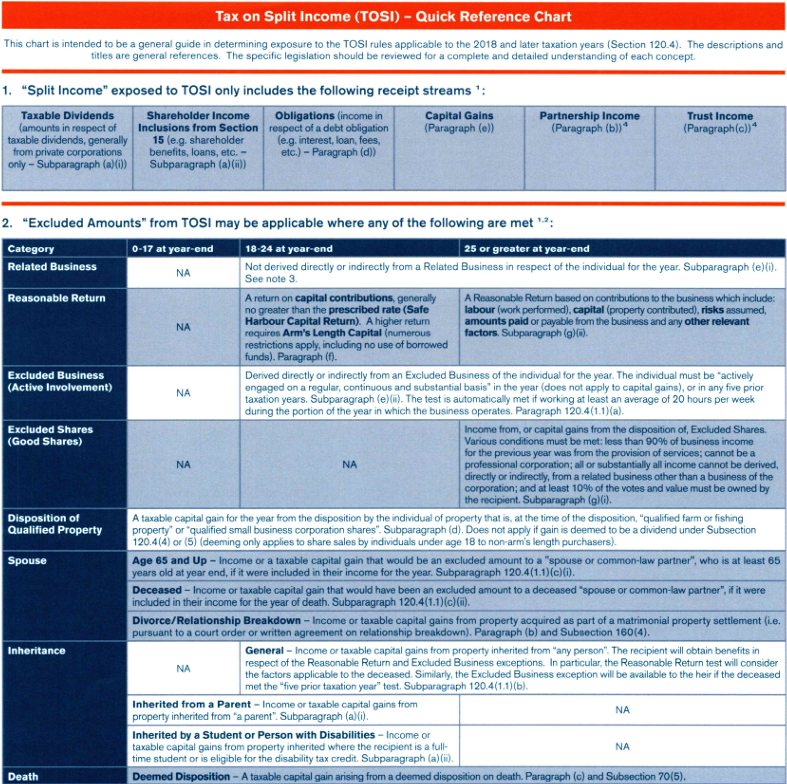
  • 6 – Shareholders – Loans, Benefits & Other Compensation Issues

    Table of Contents

    1. 🧾 Introduction to Shareholder Loans, Transactions, and Other Compensation Benefits
    2. 💳 The Very Common Situation Where There Is a Shareholder Balance
    3. 💰 The Two Ways of Clearing Out the Shareholder Balance — Dividend and Salary
    4. 💵 Clearing Out the Shareholder Balance with Dividends
    5. 💼 Clearing Out the Shareholder Balance with a Salary or Bonus
    6. ⏳ Shareholder Loan Balance Rules and Clearing It Within the Next Year
    7. ⚠️ Beware of Section 15 of the Income Tax Act — Subsections 15(1) and 15(2)
    8. ⚠️ Paying Personal Expenses Through the Corporation and the “Double Tax” Result
    9. 💸 Tax Implications of Borrowing Money from the Corporation
    10. 👔 Benefits in the Capacity of Shareholder vs Employee
    11. ⚠️ Issues with CRA Even When You Think You’ve Covered All the Bases
    12. 🚨 The New TOSI Rules with Respect to Shareholder Benefits
    13. 🚗 How to Compensate Shareholders for the Use of Their Vehicles
    14. 🚗 Paying a Vehicle Allowance and Then Deducting Actual Vehicle Expenses
    15. 🏠 Introduction to Home Office Expense Deductions for Corporate Owner-Managers
    16. 🏠 Home Office Expenses for Corporations – Why CRA Auditors Have Been “All Over the Map”
    17. 🏠 Home Office Expenses in Corporations: The Different Approaches Accountants Asked the CRA About
    18. 🏠 CRA Guidance on Corporate Home Office Expense Methods
    19. 🩺 Offering Group Benefit Plans to Employees and Shareholders
    20. 🩺 Other Common Medical Benefit Plans to Consider as Part of Shareholder Compensation
  • 🧾 Introduction to Shareholder Loans, Transactions, and Other Compensation Benefits

    When working with corporate owner-managers, tax preparers quickly realize that compensation is not limited to just salary or dividends. In real-world practice, shareholders often interact with their corporation in many other ways.

    These interactions can include:

    All of these situations fall under the broader topic of shareholder loans, shareholder transactions, and alternative compensation benefits.

    Understanding these concepts is essential because they often create tax risks and compliance issues if not handled properly.


    🧠 Why This Topic Is Critical for Tax Preparers

    Small business corporations often have shareholder-managers, meaning the same person is:

    Because of this overlap, it becomes very easy for personal and corporate finances to mix together.

    📦 Common real-life scenarios include:

    SituationWhat Happens
    Owner pays personal bills from corporate bank accountCreates shareholder transactions
    Owner withdraws money without declaring dividendsCreates shareholder loan
    Owner uses company vehicle personallyCreates shareholder benefit
    Owner pays personal medical expenses through corporationRequires proper structuring

    Without proper planning, these actions can trigger unexpected taxes or penalties.


    💼 The Three Main Compensation Categories for Owner-Managers

    Before exploring shareholder loans and benefits, it is helpful to understand the three major ways corporate owners receive value from their company.

    📊 Owner Compensation Methods

    Compensation TypeDescription
    💰 SalaryEmployment income paid by the corporation
    💵 DividendsProfit distributions to shareholders
    🧾 Other Benefits / TransactionsVarious financial interactions with the corporation

    Most tax planning focuses on salary and dividends, but in practice, many owners rely heavily on the third category.


    📌 What Is a Shareholder Loan?

    A shareholder loan occurs when money moves between a corporation and its shareholder outside of salary or dividend payments.

    This can happen in two directions.

    📊 Types of Shareholder Loans

    TypeExplanation
    Shareholder owes corporationOwner borrowed money from company
    Corporation owes shareholderOwner contributed funds to business

    Both situations must be properly tracked in accounting records.


    💳 Common Shareholder Transactions in Small Businesses

    In many small businesses, shareholders frequently move money between themselves and the company.

    Some examples include:

    💳 Paying personal expenses with corporate funds
    🏦 Taking money from the corporate bank account
    📈 Injecting personal funds into the business
    🧾 Using corporate credit cards for mixed expenses

    These transactions accumulate in the Shareholder Loan Account.

    📦 Important Concept

    The shareholder loan account acts like a running balance between the corporation and its shareholder.


    ⚠️ Why Shareholder Loans Can Be Dangerous

    If shareholder loans are not handled correctly, they can trigger unexpected taxable income.

    For example:

    📌 The CRA closely monitors these issues because they are often used to avoid taxes improperly.


    🚗 Shareholder Benefits: Personal Use of Corporate Assets

    Another major issue in owner-managed corporations is shareholder benefits.

    A shareholder benefit occurs when the shareholder receives a personal advantage from the corporation without paying fair value.

    📦 Examples of shareholder benefits:

    BenefitDescription
    🚗 Personal use of company vehicleDriving corporate vehicle for personal trips
    🏠 Personal use of corporate propertyUsing corporate-owned home or cottage
    💳 Personal expenses paid by corporationGroceries, vacations, etc.
    ✈️ Corporate travel used personallyNon-business travel funded by company

    If these benefits are not properly reported, the CRA may reassess the shareholder and impose additional taxes.


    🏡 Other Compensation Strategies for Owner-Managers

    Beyond salary and dividends, corporations can provide additional forms of compensation or reimbursements.

    Some common areas include:

    📊 Alternative Compensation Methods

    Compensation MethodPurpose
    🚗 Vehicle expense reimbursementsCover business vehicle use
    🏠 Home office reimbursementsPay for home workspace costs
    🏥 Private health service plansDeduct medical expenses through corporation
    📈 Pension arrangementsProvide retirement planning benefits

    When structured correctly, these strategies can reduce taxes while remaining compliant with CRA rules.


    🚗 Example: Vehicle Expense Planning

    A common situation for owner-managers involves vehicle expenses.

    Questions often arise such as:

    These situations require careful analysis to avoid creating taxable benefits.


    🏡 Example: Home Office Expenses in a Corporation

    Many small business owners work from home, raising questions about home office deductions.

    Key issues include:

    Improper handling of these arrangements can trigger tax complications.


    🏥 Medical Expense Planning Through Corporations

    Another interesting planning strategy involves corporate health plans.

    Corporations may use structures such as:

    StrategyPurpose
    Private Health Services Plan (PHSP)Deduct medical expenses through corporation
    Health Spending AccountsFlexible medical benefit plans

    These arrangements can allow medical expenses to become corporate deductions instead of personal deductions.


    📈 Advanced Compensation Planning Tools

    For highly successful owner-managers, more sophisticated strategies may also be used.

    These often require the assistance of specialized financial professionals.

    Examples include:

    📊 Advanced Retirement Planning Tools

    StrategyDescription
    Individual Pension Plan (IPP)Employer-sponsored retirement plan
    Retirement Compensation Arrangement (RCA)Deferred retirement savings plan
    Corporate investment structuresLong-term wealth planning

    These strategies are usually considered when:


    🧠 The Reality of Small Business Bookkeeping

    One important reality that tax preparers quickly discover is that small business bookkeeping is often messy.

    Common issues include:

    ❌ Personal expenses mixed with corporate transactions
    ❌ Missing documentation
    ❌ Unrecorded withdrawals
    ❌ Incomplete shareholder loan records

    Because of this, tax preparers must often reconstruct transactions and determine the correct tax treatment.


    📌 The Role of the Tax Preparer

    As a tax preparer working with owner-managed corporations, your role includes:

    ✔ Identifying shareholder loan transactions
    ✔ Determining whether benefits are taxable
    ✔ Advising clients on proper compensation methods
    ✔ Ensuring compliance with CRA rules

    Your goal is to protect the client from costly reassessments while optimizing tax efficiency.


    📋 Key Topics Covered in This Area of Corporate Tax Planning

    The study of shareholder transactions usually includes several important areas.

    📦 Core Topics

    TopicWhat It Covers
    Shareholder loan rulesBorrowing from the corporation
    Shareholder benefitsPersonal use of corporate assets
    Expense reimbursementsBusiness vs personal costs
    Health plansCorporate medical deductions
    Retirement planning toolsAdvanced pension structures

    Each of these topics plays a role in how owner-managers extract value from their corporation.


    🧠 Key Takeaways for New Tax Preparers

    Understanding shareholder loans and benefits is essential when working with corporate owner-managers.

    Important concepts include:

    ✔ Shareholders frequently move money between themselves and their corporation
    ✔ These transactions are recorded in the shareholder loan account
    ✔ Improper use of corporate funds can create taxable benefits
    ✔ Corporations may provide additional compensation strategies beyond salary and dividends


    🎯 Final Insight

    For tax preparers, mastering shareholder loans, benefits, and alternative compensation methods is one of the most valuable skills in corporate tax practice.

    These issues arise frequently in small business corporations, where the line between personal and corporate finances often becomes blurred.

    By understanding how these transactions work—and how to structure them properly—you can help clients:

    💰 Minimize taxes
    ⚖️ Stay compliant with CRA rules
    📈 Build long-term financial stability through their corporation.

    💳 The Very Common Situation Where There Is a Shareholder Balance

    One of the most common situations tax preparers encounter when working with owner-managed corporations is a shareholder balance in the books.

    This usually happens when the business owner withdraws money from the corporation throughout the year without formally classifying it as salary or dividends.

    By the time the accountant receives the bookkeeping records at year-end, the corporation often has a large shareholder loan balance that must be properly handled for tax purposes.

    Understanding how these balances arise—and how to deal with them—is an essential skill for any tax preparer working with small business corporations.


    🧠 Why Shareholder Balances Are So Common

    In an ideal world, business owners would meet with their accountant regularly and plan their compensation carefully.

    This would include:

    However, in real practice, many owner-managers operate differently.

    📦 Common real-world situations include:

    SituationWhat Happens
    Owner focuses on running the businessFinancial planning is postponed
    Bookkeeping done laterTransactions are reviewed after year-end
    Owner withdraws funds when neededNo structured compensation plan
    Accountant receives records months laterYear-end adjustments must be made

    As a result, accountants frequently receive a full year of transactions to sort through after the fact.


    💰 How Shareholder Balances Are Created

    A shareholder balance typically arises when the business owner takes money out of the corporation without formally declaring salary or dividends.

    Common examples include:

    📊 Example Scenario

    DescriptionAmount
    Owner withdrawals during the year$85,000
    Salary declared during the year$0
    Dividends declared$0

    At year-end, the accountant must determine how to classify these withdrawals.


    📒 The Accounting Treatment of Owner Withdrawals

    When a shareholder withdraws money from the corporation, the transaction must be recorded in the accounting system.

    Let’s look at how the bookkeeping entry works.

    When the owner writes a check to themselves:

    📊 Accounting Entry

    AccountEntry
    Bank accountCredit
    Shareholder loan accountDebit

    This happens because:

    These withdrawals accumulate in the shareholder loan account.


    📌 What Is a Shareholder Loan Account?

    The shareholder loan account tracks all financial transactions between the shareholder and the corporation.

    It acts as a running balance showing whether:

    📊 Shareholder Loan Account Meaning

    Balance TypeMeaning
    Debit balanceShareholder owes corporation money
    Credit balanceCorporation owes shareholder money

    In most small business cases, the balance ends up being a debit balance, meaning the shareholder has taken more money out of the company than they formally earned.


    ⚠️ Why Tax Preparers Must Pay Close Attention

    The shareholder loan balance is one of the first things accountants examine during year-end preparation.

    Why?

    Because the CRA closely monitors these accounts.

    📌 If a shareholder loan is not handled correctly, the CRA may treat the amount as taxable income to the shareholder.

    This can lead to:

    Therefore, reviewing the shareholder loan account is a critical step in corporate tax preparation.


    📊 Example: A Typical Small Business Situation

    Consider the following example.

    A consulting corporation earns:

    💰 $200,000 in annual revenue

    During the year, the owner writes checks to themselves totaling:

    💰 $85,000

    No salary or dividends were declared during the year.

    At year-end, the bookkeeping shows:

    AccountBalance
    Corporate bank accountReduced
    Shareholder loan account$85,000 debit

    This means the shareholder has borrowed $85,000 from the corporation.


    🧾 What the Accountant Must Decide at Year-End

    Once the year-end financial records are reviewed, the accountant must decide how to deal with the shareholder balance.

    Possible solutions include:

    📦 Common Approaches

    MethodDescription
    Declare dividendsConvert withdrawals into dividends
    Declare salaryTreat withdrawals as employment income
    Repay the loanShareholder returns money to the corporation

    Each option has different tax implications for both the corporation and the shareholder.


    💼 Even When Salary Is Paid, Shareholder Balances Can Still Occur

    Sometimes the owner-manager receives regular salary through payroll, but still withdraws extra money during the year.

    Example scenario:

    DescriptionAmount
    Salary paid through payroll$60,000
    Additional withdrawals$85,000

    In this situation, the shareholder loan account would still show:

    📊 $85,000 debit balance

    This means the owner has taken additional funds beyond their payroll compensation.

    The accountant must still determine how to treat the extra withdrawals.


    🧠 Why These Situations Are So Common

    Many owner-managers treat the corporate bank account almost like a personal account.

    Common reasons include:

    Because of this, accountants frequently receive records with large shareholder loan balances that must be resolved later.


    ⚠️ The Risk of Large Shareholder Balances

    Leaving large shareholder loan balances unresolved can create significant tax risks.

    Potential issues include:

    🚨 Shareholder loan income inclusion
    🚨 Interest benefits assessed by CRA
    🚨 Disallowed deductions
    🚨 Increased audit risk

    This is why tax preparers must review shareholder accounts carefully during corporate tax preparation.


    📋 Best Practice for Tax Preparers

    To avoid complications, many accountants try to implement a compensation plan early in the year.

    A good plan may include:

    ✔ Monthly salary payments
    ✔ Scheduled dividend payments
    ✔ Estimated tax installments
    ✔ Regular bookkeeping reviews

    This helps reduce the likelihood of large unexpected shareholder balances at year-end.


    🧾 When Planning Is Not Possible

    Despite best efforts, many owner-managers only contact their accountant once per year.

    When this happens, tax preparers must:

    1️⃣ Review all withdrawals
    2️⃣ Calculate the shareholder balance
    3️⃣ Determine the best tax treatment
    4️⃣ Implement adjustments before filing the corporate return

    This is a very common part of corporate tax practice.


    📌 Key Takeaways for Tax Preparers

    Understanding shareholder balances is essential when working with owner-managed corporations.

    Important points include:

    ✔ Shareholder balances arise when owners withdraw money without formal compensation planning
    ✔ These withdrawals accumulate in the shareholder loan account
    ✔ A debit balance means the shareholder owes the corporation money
    ✔ The balance must be cleared or properly classified at year-end


    🎯 Final Professional Insight

    In real-world accounting practice, shareholder loan balances are one of the most frequent issues encountered in small business corporations.

    Because many owners withdraw money casually throughout the year, tax preparers must be skilled at:

    📊 Analyzing shareholder accounts
    💰 Determining proper compensation treatment
    ⚖️ Ensuring compliance with CRA rules

    Mastering how to handle shareholder balances will allow you to resolve complex situations efficiently and provide valuable tax planning advice to corporate clients.

    💰 The Two Ways of Clearing Out the Shareholder Balance — Dividend and Salary

    One of the most important tasks for tax preparers working with owner-managed corporations is dealing with the shareholder loan balance at year-end.

    In many cases, the shareholder has withdrawn money from the corporation throughout the year without formally declaring salary or dividends. These withdrawals accumulate in the shareholder loan account, creating a debit balance.

    Before the corporate tax return is finalized, the accountant must determine how to eliminate or “clear” that balance.

    In practice, there are two primary ways to clear a shareholder balance:

    1️⃣ Declare dividends
    2️⃣ Declare salary or bonus

    Each method has different tax consequences and planning considerations, which tax preparers must carefully evaluate.


    📌 Understanding the Goal: Clearing the Shareholder Balance

    When we say “clearing the shareholder balance”, we mean reducing the shareholder loan account to zero or close to zero.

    📦 Why this is important:

    📊 Example Situation

    ItemAmount
    Shareholder withdrawals during year$85,000
    Salary declared$0
    Dividends declared$0
    Shareholder loan balance$85,000 debit

    The accountant must determine how to eliminate this $85,000 balance.


    ⚖️ Debit vs Credit Shareholder Balances

    Understanding the difference between debit and credit balances is essential.

    📊 Shareholder Loan Balance Meaning

    Balance TypeMeaningTax Concern
    Debit balanceShareholder owes corporation moneyPotential tax issues
    Credit balanceCorporation owes shareholder moneyNo issue

    💡 Important Insight

    A credit balance is generally safe, because the shareholder can withdraw that money tax-free.

    However, a debit balance requires attention because it means the shareholder has effectively borrowed from the corporation.


    ⚠️ Why Debit Shareholder Balances Are Problematic

    A debit shareholder balance indicates that the owner has taken money from the company without proper classification.

    This situation can create several problems:

    🚨 Potential CRA reassessments
    🚨 Shareholder loan income inclusion
    🚨 Interest benefit assessments
    🚨 Increased audit scrutiny

    Because of these risks, accountants typically prioritize clearing the balance before finalizing the financial statements.


    🧾 Option 1: Repaying the Shareholder Loan

    Before discussing salary or dividends, the first question accountants usually ask the client is simple:

    💬 “Can you repay the loan to the corporation?”

    If the shareholder can return the funds, the issue disappears.

    📊 Example

    TransactionAmount
    Shareholder loan balance$85,000
    Repayment by shareholder$85,000
    Final balance$0

    Once the money is returned:

    ✔ No taxable income arises
    ✔ No dividend or salary is required

    However, this rarely happens in practice.


    🧠 Why Repayment Is Rare

    Most business owners have already spent the withdrawn money on personal living expenses.

    Typical uses include:

    Because of this, repayment is usually not possible, leaving accountants with two realistic options.


    💵 Option 2: Clearing the Balance with Dividends

    One common method of clearing the shareholder balance is to declare dividends equal to the withdrawn amount.

    📊 Example

    ItemAmount
    Shareholder withdrawals$85,000
    Dividend declared$85,000
    Shareholder loan balance$0

    The dividend is then:


    📌 Corporate and Personal Tax Impact of Dividends

    📊 Tax Treatment

    LevelImpact
    CorporationNo deduction for dividends
    ShareholderDividend income reported personally

    Dividends are usually classified as:

    depending on the corporation’s tax situation.


    💼 Option 3: Clearing the Balance with Salary or Bonus

    The second major option is to treat the withdrawals as salary or a year-end bonus.

    In this scenario, the corporation declares employment income for the shareholder.

    📊 Example

    ItemAmount
    Shareholder withdrawals$85,000
    Salary/bonus declared$85,000
    Shareholder loan balance$0

    The salary would then be:


    📊 Corporate Tax Impact of Salary

    Salary has different tax consequences compared to dividends.

    📦 Corporate Tax Treatment

    ItemResult
    Salary expenseDeductible for corporation
    Corporate taxable incomeReduced

    This can reduce corporate tax liability.


    📊 Personal Tax Impact of Salary

    Salary also has implications at the personal level.

    ImpactDescription
    Employment incomeTaxed at personal marginal rates
    CPP contributionsRequired
    Payroll deductionsRequired

    Because of CPP contributions, salary often results in additional payroll obligations.


    ⚠️ Net Salary Planning Is Required

    When clearing a shareholder loan with salary, accountants must carefully calculate the gross salary required.

    Why?

    Because payroll deductions reduce the net amount received by the shareholder.

    📦 Example

    ItemAmount
    Desired net amount$85,000
    Payroll taxes and CPPDeducted
    Required gross salaryHigher than $85,000

    Tax preparers must calculate the gross salary needed so the net amount offsets the shareholder balance.


    🔄 Combining Salary and Dividends

    In many cases, accountants use a combination of salary and dividends to clear the shareholder balance.

    📊 Example Strategy

    Compensation TypeAmount
    Salary$60,000
    Dividend$25,000
    Total$85,000

    This approach allows tax planners to balance:


    🧠 Why Planning Is Important

    Choosing between salary and dividends is not simply an accounting decision.

    It involves tax planning considerations, including:

    📦 Key Planning Factors

    FactorImportance
    Corporate tax rateDetermines value of salary deduction
    Personal tax bracketAffects dividend vs salary taxation
    CPP contribution goalsSalary generates CPP
    Retirement planningSalary creates RRSP room

    Because every client situation is different, tax preparers must often run multiple scenarios before deciding.


    📋 The Practical Workflow for Tax Preparers

    When reviewing a shareholder loan balance, accountants typically follow this process.

    📦 Step-by-Step Approach

    1️⃣ Identify the shareholder loan balance
    2️⃣ Confirm total withdrawals during the year
    3️⃣ Ask whether the shareholder can repay the funds
    4️⃣ If repayment is not possible, evaluate:

    5️⃣ Run tax planning calculations to determine the best strategy.


    📌 Key Takeaways for New Tax Preparers

    When dealing with shareholder loan balances:

    ✔ A debit balance means the shareholder owes the corporation money
    ✔ Accountants aim to clear the balance at year-end
    ✔ The two main solutions are:

    ✔ Sometimes a combination of both methods provides the best tax result.


    🎯 Final Professional Insight

    Clearing shareholder balances is one of the most common tasks in corporate tax preparation for small business clients.

    Because many owner-managers withdraw funds informally throughout the year, tax preparers must frequently determine how to reclassify those withdrawals at year-end.

    By understanding the differences between salary and dividend strategies, accountants can:

    📊 Optimize tax outcomes
    ⚖️ Maintain CRA compliance
    💼 Provide valuable planning advice to corporate clients.

    💵 Clearing Out the Shareholder Balance with Dividends

    One of the most common ways accountants resolve a shareholder loan balance in owner-managed corporations is by declaring dividends.

    When a shareholder withdraws money throughout the year without formally classifying it as salary or dividends, those withdrawals accumulate in the shareholder loan account. If the balance is debit (due from shareholder), it means the shareholder owes the corporation money.

    To avoid tax problems and clean up the financial statements, accountants often declare dividends equal to the amount withdrawn, effectively clearing the shareholder balance.

    This section explains how the dividend approach works, how it is reported, and the accounting entries required to eliminate the shareholder loan balance.


    📌 Understanding the Situation Before Clearing the Balance

    Before any adjustments are made, accountants typically review the trial balance or general ledger prepared by bookkeeping software such as QuickBooks or other accounting systems.

    A simplified trial balance might look like this:

    📊 Example Business Situation

    ItemAmount
    Revenue$184,800
    Net Income$125,000
    Shareholder Drawings$85,000

    In this case, the shareholder withdrew $85,000 during the year.

    These withdrawals were recorded in the shareholder drawings or shareholder loan account, resulting in a debit balance.

    📦 Balance Sheet Before Adjustment

    AccountBalance
    BankReduced
    Due from shareholder$85,000
    Retained earningsExisting balance

    This “due from shareholder” balance is what we need to eliminate.


    ⚠️ Why the Shareholder Balance Must Be Cleared

    Leaving a shareholder loan balance unresolved can create tax issues with the CRA.

    Potential problems include:

    🚨 Shareholder loan income inclusion
    🚨 Interest benefit calculations
    🚨 Increased audit scrutiny

    Because of these risks, accountants usually remove the debit balance before finalizing financial statements and corporate tax returns.


    💰 Why Dividends Are Often the Preferred Solution

    In many small business situations, declaring dividends is the simplest method of clearing the shareholder balance.

    Benefits of using dividends include:

    ✔ No payroll remittances required
    ✔ No CPP contributions
    ✔ Simple accounting treatment
    ✔ Easy reporting through T5 slips

    Because of these advantages, dividends are often used in the majority of owner-managed corporation cases.


    🧾 Step 1: Determine the Dividend Amount

    The first step is to determine the total shareholder withdrawals during the year.

    📊 Example

    DescriptionAmount
    Shareholder withdrawals$85,000
    Dividend declared$85,000

    The dividend amount usually matches the shareholder loan balance.

    This ensures the shareholder account is fully cleared.


    📄 Step 2: Issue a T5 Slip for the Dividend

    Once the dividend is declared, the corporation must issue a T5 slip reporting the dividend income.

    📦 Key Information on the T5

    ItemDescription
    Shareholder nameIndividual receiving dividend
    SIN numberRequired for reporting
    Dividend amountActual dividend paid

    In many small businesses, the dividend will be classified as an ineligible dividend.

    Why?

    Because the corporation usually qualifies for the Small Business Deduction, meaning it has no GRIP balance available for eligible dividends.


    📊 Example T5 Reporting

    If the dividend is $85,000 of ineligible dividends, it would appear as:

    T5 BoxAmount
    Box 10 – Non-eligible dividends$85,000

    Tax software automatically calculates:

    These calculations determine the shareholder’s personal tax payable.


    📅 Filing the T5 Summary

    After preparing the T5 slip, the corporation must file a T5 summary with the CRA.

    📆 Filing deadline:

    End of February following the calendar year of payment

    Example:

    Dividend YearFiling Deadline
    2024 dividendsFebruary 28, 2025

    The summary reports all T5 slips issued by the corporation.


    📒 Step 3: Record the Dividend Declaration (Accounting Entry)

    Next, the accountant records the declaration of the dividend in the financial statements.

    When a dividend is declared, it reduces retained earnings.

    📊 Journal Entry – Dividend Declaration

    AccountDebitCredit
    Dividends (retained earnings)$85,000
    Dividends payable$85,000

    This entry reflects that:


    📉 Step 4: Apply the Dividend to the Shareholder Loan

    After the dividend is declared, the next step is to apply it to the shareholder loan account.

    This effectively treats the dividend as payment to the shareholder, which offsets the previous withdrawals.

    📊 Journal Entry – Clearing the Loan

    AccountDebitCredit
    Dividends payable$85,000
    Shareholder loan (drawings)$85,000

    This entry eliminates both:


    📊 Balance Sheet After the Adjustment

    Once both entries are recorded, the shareholder balance disappears.

    📦 Balance Sheet After Adjustment

    AccountBalance
    Due from shareholder$0
    Dividends payable$0
    Retained earningsReduced by dividend

    The financial statements are now clean and compliant.


    📉 Impact on Retained Earnings

    Dividends reduce the corporation’s retained earnings.

    📊 Example

    ItemAmount
    Net income$124,925
    Dividend declared$85,000
    Remaining retained earnings$39,925

    This reflects that profits were distributed to the shareholder.


    💼 Corporate vs Personal Tax Impact

    Dividends affect both the corporation and the shareholder differently.

    📊 Tax Treatment Comparison

    LevelImpact
    CorporationNo deduction for dividends
    ShareholderDividend income reported on personal tax return

    Unlike salary, dividends do not reduce corporate taxable income.


    ⚖️ Why Dividends Are Frequently Used

    In practice, dividends are often used because they are administratively simpler.

    Advantages include:

    ✔ No payroll setup required
    ✔ No CPP contributions
    ✔ No monthly CRA remittances
    ✔ Straightforward reporting through T5 slips

    Because of these benefits, many accountants use dividends to clear shareholder balances most of the time.


    🧠 Planning Considerations

    Although dividends are simple, tax preparers should still evaluate whether they are the best option.

    Important factors include:

    📦 Planning Variables

    FactorImpact
    Personal tax bracketAffects dividend taxation
    Corporate tax rateDetermines overall tax efficiency
    CPP planningDividends do not generate CPP
    Retirement planningSalary may create RRSP room

    Sometimes salary or a combination of salary and dividends produces better tax results.


    📋 Practical Workflow for Tax Preparers

    When clearing shareholder balances using dividends, accountants typically follow this process:

    📦 Step-by-Step Approach

    1️⃣ Review the trial balance and shareholder loan account
    2️⃣ Identify total shareholder withdrawals
    3️⃣ Declare dividends equal to the loan balance
    4️⃣ Issue the T5 slip
    5️⃣ Record the dividend declaration entry
    6️⃣ Apply the dividend to the shareholder loan account

    After these steps, the shareholder balance should be fully cleared.


    📌 Key Takeaways

    ✔ Shareholder withdrawals often create debit balances in the shareholder loan account
    ✔ Declaring dividends is one of the most common ways to eliminate that balance
    ✔ The dividend must be reported using a T5 slip and T5 summary
    ✔ Accounting entries are required to:


    🎯 Final Professional Insight

    For many small business corporations, clearing shareholder balances with dividends is the most straightforward solution.

    Because dividends involve minimal administrative complexity and no payroll deductions, they are frequently used to resolve shareholder withdrawals at year-end.

    However, tax preparers should always evaluate both corporate and personal tax impacts before choosing the dividend approach, ensuring the strategy aligns with the client’s overall tax planning objectives.

    💼 Clearing Out the Shareholder Balance with a Salary or Bonus

    In many owner-managed corporations, the shareholder withdraws money during the year without formally declaring salary or dividends. These withdrawals accumulate in the shareholder loan account.

    At year-end, accountants must determine how to clear the debit balance in the shareholder account.

    While dividends are often the simplest solution, another common method is to clear the balance using salary or a year-end bonus.

    However, unlike dividends, clearing a shareholder balance with salary requires more detailed tax planning because payroll deductions must be considered.


    📌 Why Salary Is More Complicated Than Dividends

    When clearing a shareholder balance with dividends, the process is simple:

    ✔ Declare dividend equal to withdrawals
    ✔ Issue T5 slip
    ✔ Clear shareholder loan balance dollar-for-dollar

    With salary, the situation is different because payroll taxes apply.

    📊 Payroll deductions include:

    DeductionDescription
    CPP contributionsBoth employer and employee portions
    Income tax withholdingPayroll tax remittance
    Potential EI contributionsUsually not applicable to owner-managers

    Because of these deductions, the gross salary and net salary are not the same.


    💡 Key Concept: Net vs Gross Compensation

    The amount withdrawn by the shareholder during the year usually represents net cash received, not gross salary.

    Example situation:

    ItemAmount
    Shareholder withdrawals$85,000
    Net income received$85,000
    Gross salary neededHigher than $85,000

    If an accountant simply records $85,000 as salary, the shareholder loan will not be fully cleared.

    Why?

    Because payroll deductions reduce the amount applied to the shareholder account.


    ⚠️ Example Problem: Using $85,000 as Gross Salary

    Suppose the accountant declares a salary of $85,000.

    Payroll deductions may include:

    📊 Example payroll deductions

    DeductionApproximate Amount
    CPP employee portion$2,564
    CPP employer portion$2,564
    Income tax~$19,000

    These deductions must be remitted to the Canada Revenue Agency (CRA).


    📉 Net Amount Received by Shareholder

    If $85,000 is the gross salary, the shareholder will receive significantly less after deductions.

    📊 Example calculation

    ItemAmount
    Gross salary$85,000
    CPP contributions$5,128
    Income tax$19,000
    Net cash received~$60,872

    But the shareholder actually withdrew $85,000 during the year.

    This means the shareholder loan account will still have a remaining balance.


    🚨 Why This Creates a Problem

    Because the withdrawals were $85,000, the salary needs to generate $85,000 net cash, not $85,000 gross.

    If the salary is recorded incorrectly:

    ❌ The shareholder loan balance remains
    ❌ Financial statements remain inaccurate
    ❌ CRA compliance risks increase

    This is why salary planning must focus on the net result.


    🧮 The Correct Approach: Reverse Planning

    When using salary to clear the shareholder loan, accountants must work backwards from the net amount.

    The goal is to determine the gross salary required to produce the desired net amount.

    📦 Planning process:

    1️⃣ Identify shareholder withdrawals
    2️⃣ Estimate payroll deductions
    3️⃣ Calculate required gross salary
    4️⃣ Adjust tax remittance amounts


    📊 Example: Determining Gross Salary

    Suppose the shareholder withdrew:

    💰 $85,000

    To net approximately $85,000 after payroll deductions, the accountant may need to declare a salary around:

    💰 $120,000

    Example calculation:

    ItemAmount
    Gross salary$120,000
    CPP contributions$5,128
    Income tax~$33,600
    Net amount received~$81,272

    This net amount is close to the $85,000 withdrawn, allowing the shareholder balance to be cleared.


    🧾 Payroll Remittance Obligations

    When salary is used, the corporation must remit payroll deductions to the CRA.

    Typical remittances include:

    📊 Payroll remittance example

    ItemAmount
    CPP employee + employer$5,128
    Income tax withheld~$33,600
    Total remittance~$38,728

    These amounts must be remitted by the standard payroll deadline.

    📅 Remittance deadline:
    Usually January 15 for year-end bonuses.


    📄 Reporting the Salary on a T4 Slip

    Once the salary is declared, the corporation must issue a T4 slip.

    The T4 will report:

    BoxDescription
    Box 14Employment income
    Box 22Income tax deducted
    Box 44CPP contributions

    The shareholder will then report the T4 income on their personal tax return (T1).


    📉 Corporate Tax Impact

    One advantage of using salary is that it reduces corporate taxable income.

    📊 Corporate tax treatment

    ItemResult
    Salary expenseDeductible
    Employer CPPDeductible
    Corporate profitReduced

    In contrast, dividends do not reduce corporate income.


    📊 Example Corporate Impact

    Suppose the corporation originally had:

    ItemAmount
    Net income before salary$125,000

    If a salary of $120,000 is declared:

    ItemAmount
    Salary expense$120,000
    Employer CPP$2,564
    Remaining profitMinimal

    The corporation will pay little or no corporate tax.


    🧠 Strategic Considerations

    Choosing between salary and dividends involves several planning factors.

    Important considerations include:

    📦 Key planning factors

    FactorImpact
    CPP contributionsSalary generates CPP
    RRSP contribution roomSalary creates RRSP room
    Corporate tax deductionSalary reduces corporate income
    Administrative complexitySalary requires payroll reporting

    Because of these variables, accountants often run multiple scenarios before choosing a strategy.


    ⚖️ Dividends vs Salary for Clearing Shareholder Loans

    📊 Comparison of the two methods

    FactorDividendsSalary
    Ease of calculationSimpleMore complex
    Corporate tax deductionNoYes
    CPP contributionsNoYes
    Payroll remittancesNoYes
    Reporting slipT5T4

    For this reason, dividends are often used more frequently, but salary may provide better long-term tax planning benefits.


    📋 Practical Workflow for Tax Preparers

    When clearing a shareholder balance using salary or bonus:

    📦 Step-by-step process

    1️⃣ Determine total shareholder withdrawals
    2️⃣ Estimate payroll deductions (CPP and income tax)
    3️⃣ Calculate required gross salary
    4️⃣ Record salary expense in the books
    5️⃣ Remit payroll deductions to CRA
    6️⃣ Apply net salary amount to shareholder loan account

    This ensures the shareholder loan balance is fully cleared.


    📌 Key Takeaways

    ✔ Salary can be used to clear shareholder loan balances
    ✔ Unlike dividends, salary requires gross-up calculations
    ✔ Payroll deductions must be considered when determining gross salary
    ✔ The goal is to generate a net amount equal to shareholder withdrawals


    🎯 Final Professional Insight

    Using salary or a year-end bonus to clear shareholder balances requires careful planning and professional judgment.

    Because payroll deductions reduce the net income received by the shareholder, accountants must calculate the gross salary needed to produce the desired net amount.

    While dividends are often simpler, salary offers important advantages such as:

    📈 CPP contributions
    📉 Corporate tax deductions
    💼 RRSP contribution room

    For tax preparers working with owner-managed corporations, understanding how to structure salary correctly is essential for resolving shareholder loan balances while optimizing the client’s overall tax strategy.

    ⏳ Shareholder Loan Balance Rules and Clearing It Within the Next Year

    When a shareholder withdraws money from their corporation without declaring salary or dividends, the withdrawals accumulate in the shareholder loan account. If this account shows a debit balance, it means the shareholder owes money back to the corporation.

    While the best practice is to clear the shareholder balance during the same fiscal year, Canadian tax rules allow a temporary solution: the shareholder can repay the loan within a specified time period without immediately triggering taxable income.

    However, this strategy must be used carefully because it can create future tax complications if not handled properly.


    📌 What Is the Shareholder Loan Repayment Rule?

    Canadian tax rules allow a shareholder to borrow money from their corporation temporarily without being taxed immediately — provided the loan is repaid within a specific timeframe.

    📦 Basic rule:

    RuleExplanation
    Loan taken from corporationRecorded as shareholder loan
    Repayment deadlineEnd of the next fiscal year
    If repaid on timeNo income inclusion

    This means the shareholder can temporarily defer taxes by treating withdrawals as a loan instead of salary or dividends.


    📅 Understanding the Repayment Timeline

    The repayment deadline depends on the corporation’s fiscal year end.

    📊 Example timeline

    EventDate
    Shareholder withdrawal2024
    Corporate fiscal year endDec 31, 2024
    Repayment deadlineDec 31, 2025

    If the shareholder repays the loan by December 31, 2025, the amount does not become taxable income.


    💰 Example Scenario

    Let’s assume a shareholder withdraws money during the year.

    📊 Example

    ItemAmount
    Shareholder withdrawals in 2024$85,000
    Recorded as shareholder loan$85,000

    At December 31, 2024, the balance sheet shows:

    📦 Balance sheet excerpt

    AccountBalance
    Due from shareholder$85,000

    This balance must be addressed before the end of the next fiscal year.


    🧾 Option 1: Repay the Loan

    The first option is for the shareholder to repay the money back to the corporation.

    📊 Example repayment

    TransactionAmount
    Shareholder loan$85,000
    Repayment by shareholder$85,000
    Remaining balance$0

    If repaid on time:

    ✔ No dividend declared
    ✔ No salary required
    ✔ No taxable income created


    ⚠️ Why Repayment Is Rare

    In practice, most shareholders withdraw money for personal living expenses, which means the money has already been spent.

    Common uses include:

    🏠 Mortgage payments
    🚗 Vehicle expenses
    🛒 Personal spending
    👨‍👩‍👧 Family living costs

    Because of this, many owner-managers cannot realistically repay the loan in cash.


    💡 Option 2: Clear the Loan in the Following Year

    Instead of repaying the loan directly, the shareholder can clear the balance in the following year using salary or dividends.

    Example:

    📊 Scenario

    YearWithdrawalAction
    2024$85,000Recorded as shareholder loan
    2025Dividend declared$85,000 clears loan

    As long as the loan is cleared by the end of 2025, no shareholder loan income inclusion occurs.


    🔄 What Happens If Withdrawals Continue?

    One common problem is that the shareholder continues withdrawing money each year.

    Example scenario:

    📊 Year-by-year withdrawals

    YearWithdrawalsBalance
    2024$85,000$85,000
    2025$85,000$170,000
    Dividend declared$85,000$85,000 remains

    Even though the prior year’s loan is cleared, a new shareholder balance remains.

    This creates a situation where the accountant is constantly clearing the previous year’s withdrawals.


    ⚠️ The “Catch-Up” Cycle Problem

    When shareholders rely on the repayment rule every year, it can create a perpetual cycle of shareholder balances.

    Example cycle:

    📊 Illustration

    YearWithdrawalsDividend DeclaredRemaining Balance
    2024$85,000$85,000
    2025$85,000$85,000$85,000
    2026$100,000$85,000$100,000

    This approach effectively pushes the problem forward every year.


    🚨 CRA Concerns with Ongoing Shareholder Loans

    Although the repayment rule exists, persistent shareholder debit balances can attract CRA attention.

    Potential issues include:

    ⚠️ Questions during audits
    ⚠️ Review of compensation practices
    ⚠️ Scrutiny of shareholder loan records

    If the CRA believes the repayment rule is being abused, they may challenge the arrangement.


    💸 Imputed Interest Benefit

    Even if the shareholder loan is repaid on time, the CRA may still assess a taxable benefit for interest-free borrowing.

    This is known as an imputed interest benefit.

    📦 Why this occurs:

    The shareholder effectively borrowed money from the corporation without paying interest.

    The CRA requires that the shareholder report a taxable benefit based on the prescribed interest rate.


    📊 Example: Imputed Interest Calculation

    Suppose the shareholder borrowed:

    💰 $85,000

    If the CRA prescribed rate is 2%, the taxable benefit would be:

    📊 Calculation

    ItemAmount
    Loan amount$85,000
    Interest rate2%
    Taxable benefit$1,700

    This benefit may be reported as:


    📉 More Accurate Interest Calculations

    For more precise reporting, accountants may calculate the interest based on when withdrawals occurred.

    Instead of applying the rate for the entire year:

    📦 Example approach

    MethodDescription
    Annual estimateApply rate to full amount
    Monthly calculationApply rate based on dates of withdrawals

    Monthly calculations often reduce the taxable benefit.


    Although the shareholder loan repayment rule allows temporary tax deferral, many tax professionals prefer not to rely on it.

    Reasons include:

    ❌ Creates ongoing balance sheet issues
    ❌ Complicates financial reporting
    ❌ May attract CRA scrutiny
    ❌ Leads to future tax planning challenges

    Because of these risks, accountants usually aim to clear shareholder balances during the same fiscal year.


    📋 Best Practice for Owner-Manager Compensation

    Most tax preparers prefer to implement a consistent compensation plan.

    This may include:

    📦 Compensation strategies

    MethodPurpose
    Regular salaryCreates predictable income
    Scheduled dividendsDistributes corporate profits
    Planned tax installmentsAvoids large tax bills

    With a structured plan, the shareholder loan account stays close to zero, avoiding complications.


    📌 Key Takeaways

    ✔ Shareholder loans allow temporary withdrawals from the corporation
    ✔ Loans must usually be repaid by the end of the next fiscal year
    ✔ If repaid on time, the loan does not become taxable income
    ✔ An imputed interest benefit may still apply
    ✔ Ongoing shareholder loan balances can create compliance risks


    🎯 Final Professional Insight

    The shareholder loan repayment rule can provide short-term tax flexibility, but it should be used cautiously.

    While it allows temporary deferral of taxes, relying on it repeatedly can create a cycle of unresolved shareholder balances and potential CRA scrutiny.

    For most owner-managed corporations, the best approach is to maintain a clean compensation strategy—using planned salary, dividends, or bonuses to ensure the shareholder loan account is cleared regularly and transparently.

    ⚠️ Beware of Section 15 of the Income Tax Act — Subsections 15(1) and 15(2)

    When working with corporate owner-managers, one of the most important areas of the Canadian tax system to understand is Section 15 of the Income Tax Act.

    This section exists to prevent shareholders from extracting wealth from their corporation without paying the proper personal tax.

    In practice, many owner-managers accumulate significant profits inside their corporations. Over time, this can lead to situations where they attempt to use corporate funds or corporate assets for personal benefit.

    Section 15 is specifically designed to identify and tax those situations.

    Understanding these rules is essential for tax preparers because shareholder benefit issues are one of the most common areas of CRA reassessment for small businesses.


    📌 What Is Section 15 of the Income Tax Act?

    Section 15 deals with benefits provided to shareholders by a corporation.

    If a corporation provides something of value to a shareholder without proper compensation or tax reporting, the CRA may treat that benefit as taxable income to the shareholder.

    📦 In simple terms:

    If a shareholder receives personal benefits from the corporation without paying for them, the government may treat the value of that benefit as taxable income.


    📊 Key Subsections of Section 15

    Two subsections are particularly important in corporate tax planning.

    SubsectionDescription
    15(1)Shareholder benefits (taxable benefits provided by corporation)
    15(2)Shareholder loans (amounts borrowed from corporation)

    Both rules are designed to prevent tax-free extraction of corporate profits.


    🧠 Why These Rules Exist

    Corporate income in Canada is typically taxed in two stages.

    📊 Two Levels of Taxation

    LevelDescription
    Corporate taxPaid by the corporation on profits
    Personal taxPaid when profits are distributed to shareholders

    When profits remain inside the corporation as retained earnings, the shareholder has not yet paid the second layer of personal tax.

    Section 15 prevents shareholders from bypassing that second tax layer.


    💰 Example: Retained Earnings in a Corporation

    Imagine a corporation that has accumulated:

    💰 $1,000,000 in retained earnings

    This means:

    To access the funds properly, the shareholder should receive the money through:

    Both methods trigger personal taxation.


    ⚠️ The Temptation for Owner-Managers

    Because retained earnings may be large, shareholders sometimes try to access corporate funds indirectly.

    Examples include:

    🏡 Buying personal property through the corporation
    🚤 Purchasing recreational assets
    🏠 Having the corporation pay personal living expenses
    🚗 Using corporate assets for personal purposes

    Without tax rules, shareholders could effectively spend corporate money personally without ever paying personal tax.

    Section 15 prevents this from happening.


    🏡 Example Scenario: Buying Personal Assets Through the Corporation

    Suppose a corporation has $1,000,000 in retained earnings.

    Instead of declaring dividends, the shareholder decides to:

    Asset PurchasedCost
    Cottage$300,000
    Principal residence upgrade$600,000

    The corporation pays for these assets directly.

    From the shareholder’s perspective:

    ✔ They now control valuable personal assets
    ✔ No personal tax has been paid

    Without Section 15, this would effectively allow tax-free extraction of corporate profits.


    🚨 How Section 15 Stops This

    Section 15 allows the CRA to treat the value of personal benefits received from the corporation as taxable income.

    If the corporation purchases assets primarily for the shareholder’s personal use, the CRA may add a taxable benefit to the shareholder’s income.

    📦 Example outcome:

    ItemResult
    Cottage owned by corporationPersonal benefit
    Shareholder using cottageTaxable income assessed

    The shareholder must then pay personal income tax on the value of that benefit.


    📊 Determining the Value of the Benefit

    One of the biggest challenges with Section 15 is determining the fair market value (FMV) of the benefit.

    This value is used to calculate how much taxable income must be reported.

    However, this is often subjective and open to interpretation.


    🏠 Example: Personal Use of Corporate Cottage

    Suppose a corporation purchases a cottage and allows the shareholder to use it personally.

    The taxable benefit could be based on the fair market rental value.

    📊 Example estimate

    ItemAmount
    Monthly rental value$1,500
    Annual benefit$18,000

    The shareholder would then report $18,000 of taxable income.


    ⚖️ CRA vs Taxpayer Disputes

    Because fair market value can be subjective, disagreements often arise.

    📦 Example dispute

    PartyEstimated Benefit
    Accountant estimate$18,000
    CRA estimate$80,000

    The CRA may argue that the true rental value is significantly higher, especially if the property is located in a desirable area.

    This is why Section 15 assessments can become complex and contentious during audits.


    🧾 How Benefits Are Reported

    When a shareholder receives a benefit, it is usually reported as taxable income.

    Depending on the circumstances, it may appear as:

    Reporting MethodExplanation
    T4 slipReported as employment benefit
    Personal income inclusionAdded to shareholder’s taxable income

    The goal is to ensure the shareholder pays personal tax on the benefit received.


    🧠 CRA’s Policy Objective

    The CRA’s position is straightforward.

    📦 Their preferred approach:

    1️⃣ Corporation earns profit
    2️⃣ Corporation pays corporate tax
    3️⃣ Shareholder declares salary or dividends
    4️⃣ Shareholder pays personal tax

    Only after these steps should the shareholder spend the money personally.


    ⚠️ Why Section 15 Is a Major Risk Area

    Shareholder benefit issues are extremely common in small business corporations.

    Typical examples include:

    📊 Common Section 15 situations

    SituationRisk
    Personal expenses paid by corporationShareholder benefit
    Personal use of corporate assetsTaxable benefit
    Shareholder loans not repaidIncome inclusion
    Mixed personal and business transactionsCRA reassessment risk

    Because these transactions happen frequently, Section 15 is one of the most audited areas of corporate taxation.


    📋 Practical Advice for Tax Preparers

    When reviewing owner-managed corporations, tax preparers should always watch for possible shareholder benefits.

    Key warning signs include:

    ⚠️ Personal expenses in corporate accounts
    ⚠️ Large shareholder loan balances
    ⚠️ Corporate purchases of lifestyle assets
    ⚠️ Unclear business purpose for assets

    Identifying these situations early helps prevent future CRA reassessments.


    📌 Key Takeaways

    ✔ Section 15 prevents shareholders from extracting corporate profits tax-free
    ✔ Subsection 15(1) deals with shareholder benefits
    ✔ Subsection 15(2) deals with shareholder loans
    ✔ Personal use of corporate assets may create taxable benefits


    🎯 Final Professional Insight

    For tax preparers working with small business corporations, Section 15 is one of the most important anti-avoidance provisions in Canadian tax law.

    It ensures that shareholders cannot simply use corporate funds for personal purposes without paying personal tax.

    Whenever corporate assets are used personally, tax professionals must ask:

    ❓ Is this a legitimate business expense?
    ❓ Does this create a shareholder benefit?
    ❓ Should the shareholder report additional taxable income?

    By understanding Section 15 and applying it carefully, tax preparers can help clients avoid costly reassessments while maintaining proper compliance with the Income Tax Act.

    ⚠️ Paying Personal Expenses Through the Corporation and the “Double Tax” Result

    One of the most common mistakes made by corporate owner-managers is paying personal expenses through their corporation.

    It may seem harmless—especially for small everyday purchases—but under the Income Tax Act, this situation often triggers a shareholder benefit under Section 15.

    When the CRA identifies personal expenses paid by the corporation, it usually leads to what appears to be “double taxation”:

    1️⃣ The corporation loses the deduction
    2️⃣ The shareholder must report the amount as personal income

    Understanding how this works is extremely important for tax preparers because this issue frequently appears during CRA audits of small businesses.


    📌 Why Owner-Managers Sometimes Pay Personal Expenses Through the Corporation

    In many small businesses, the owner controls the corporate bank account and corporate credit cards.

    Because of this, personal and business expenses sometimes get mixed together.

    Common examples include:

    Personal ExpenseHow It Happens
    🛒 GroceriesCharged on corporate credit card
    🍽️ DiningClaimed as “business meals”
    🛍️ Household purchasesPaid from corporate bank account
    🏡 Home repairsMisclassified as business expenses

    Sometimes this happens accidentally due to poor bookkeeping.
    Other times it happens intentionally because the shareholder believes the expense can be written off through the company.


    🧾 Example Scenario: Personal Groceries Paid by the Corporation

    Consider a simple example involving everyday expenses.

    A shareholder uses a corporate credit card to pay for groceries throughout the year.

    📊 Example

    ItemAmount
    Groceries charged to corporate card$5,000
    Recorded in books asOffice supplies or business expense

    From the accounting perspective, the corporation deducted this amount as a business expense.

    However, groceries are clearly personal expenses, not business expenses.


    🔎 What Happens During a CRA Audit

    When the CRA audits a corporation, auditors often review:

    If the CRA finds personal expenses such as groceries in the records, they will reclassify the transaction.

    📦 CRA audit result:

    ActionResult
    Expense deniedCorporate deduction removed
    Shareholder benefit assessedPersonal taxable income added

    This is where the double tax effect occurs.


    💸 Step 1: Corporate Deduction Is Denied

    The CRA will first disallow the corporate deduction.

    Why?

    Because personal expenses are not deductible business expenses.

    📊 Corporate tax adjustment

    ItemAmount
    Personal expense recorded$5,000
    Deduction denied$5,000

    This increases the corporation’s taxable income by $5,000.

    As a result, the corporation must pay additional corporate tax.


    💰 Step 2: Shareholder Benefit Is Added to Personal Income

    Next, the CRA treats the payment as a shareholder benefit under Section 15(1).

    This means the shareholder effectively received $5,000 of personal value from the corporation.

    📊 Personal tax adjustment

    ItemAmount
    Shareholder benefit$5,000
    Added to personal taxable incomeYes

    The shareholder must now pay personal income tax on the $5,000 benefit.


    ⚠️ Why This Looks Like “Double Tax”

    Because both the corporation and the shareholder are taxed, it can appear as if the same money is taxed twice.

    📊 Example outcome

    LevelTax Impact
    CorporationDeduction denied → higher corporate tax
    Shareholder$5,000 added to personal income

    This creates what accountants often call the “double tax” result.


    🧠 Why the CRA Considers This Fair

    Although it appears like double taxation, the CRA views it differently.

    The rules are designed to place the shareholder in the same position they would have been in if they had paid the expense properly.

    Let’s compare the two situations.


    📊 Proper Way to Pay Personal Expenses

    If the shareholder followed the correct process, the steps would look like this:

    1️⃣ Corporation pays corporate tax on profits
    2️⃣ Shareholder receives salary or dividends
    3️⃣ Shareholder pays personal tax
    4️⃣ Remaining money is used for personal spending

    Example:

    ItemAmount
    Gross income needed~$7,000
    Personal tax paid~$2,000
    Net amount available$5,000

    The shareholder would then use the $5,000 after-tax income to buy groceries.


    ⚠️ What Happened Instead

    In the improper scenario:

    StepAction
    1Corporation paid the expense directly
    2No salary or dividend declared
    3No personal tax paid

    This effectively allowed the shareholder to consume corporate profits without paying personal tax.

    The CRA rules simply correct this situation.


    📺 Another Example: Buying a Personal Item

    Imagine a shareholder buys a $2,000 television using corporate funds.

    Without Section 15 rules, they would receive the TV without paying personal tax.

    However, under CRA rules:

    📊 Tax result

    AdjustmentResult
    Expense deniedCorporation pays more tax
    Shareholder benefit$2,000 added to personal income

    Again, this ensures the shareholder cannot use corporate funds tax-free for personal consumption.


    🚨 Why This Is a Major Audit Risk Area

    Personal expenses inside corporate accounts are one of the most common triggers of CRA reassessments.

    Auditors often review:

    Audit FocusReason
    Credit card transactionsPersonal expenses often appear here
    Shareholder loan accountsPersonal withdrawals recorded here
    Large miscellaneous expensesPossible personal spending

    If documentation is weak, the CRA may reclassify many transactions as shareholder benefits.


    📋 Best Practices for Tax Preparers

    To avoid shareholder benefit problems, tax preparers should advise clients to follow strict practices.

    📦 Recommended controls

    PracticeBenefit
    Separate personal and business credit cardsPrevents mixed expenses
    Review shareholder transactions regularlyDetects problems early
    Use shareholder loan account properlyTracks personal withdrawals
    Reclassify personal expenses promptlyAvoids audit issues

    These steps help ensure corporate financial statements remain clean and defensible.


    📌 Key Takeaways

    ✔ Personal expenses paid by the corporation create shareholder benefits
    ✔ The CRA will usually deny the corporate deduction
    ✔ The shareholder must report the amount as personal income
    ✔ This often creates what appears to be double taxation


    🎯 Final Professional Insight

    For tax preparers working with small business corporations, personal expenses paid through corporate accounts are one of the most frequent compliance issues.

    Although owner-managers sometimes treat corporate funds as personal money, the tax system requires clear separation between corporate and personal spending.

    Whenever a shareholder uses corporate funds for personal purposes, the CRA will typically:

    1️⃣ Deny the corporate deduction
    2️⃣ Tax the shareholder personally

    Understanding this rule helps tax professionals protect clients from unexpected tax bills, penalties, and CRA reassessments.

    💸 Tax Implications of Borrowing Money from the Corporation

    Many owner-managers believe they can simply borrow money from their corporation and repay it later without any tax consequences. In reality, borrowing from a corporation is heavily regulated under the Income Tax Act, particularly Section 15(2).

    If shareholder loans are not handled correctly, the Canada Revenue Agency (CRA) may treat the borrowed money as taxable income to the shareholder, resulting in unexpected taxes, penalties, and interest.

    For tax preparers, understanding how these rules work is essential because shareholder loans are one of the most common issues encountered during corporate audits.


    📌 What Is a Shareholder Loan?

    A shareholder loan occurs when a shareholder withdraws money from the corporation without declaring it as:

    Instead, the amount is recorded in the corporation’s books as a loan owed by the shareholder to the corporation.

    📊 Example

    TransactionAmount
    Money transferred from corporation to shareholder$100,000
    Recorded asShareholder loan

    From an accounting perspective, the corporation is essentially lending money to its owner.


    🧠 Why Shareholder Loans Are Risky

    Borrowing money from a corporation may seem reasonable. After all, shareholders often own the company.

    However, the CRA views these transactions cautiously because they can be used to withdraw corporate profits without paying personal tax.

    Without specific rules, shareholders could simply:

    1️⃣ Borrow corporate funds
    2️⃣ Spend the money personally
    3️⃣ Never declare salary or dividends

    This would allow them to avoid the second layer of taxation that normally applies when profits are distributed.


    📊 Example Scenario: Borrowing Money from the Corporation

    Consider a simple example.

    A shareholder borrows money from their corporation to purchase a cottage.

    📊 Example loan

    ItemAmount
    Loan from corporation$100,000
    PurposeDown payment on cottage

    The shareholder intends to repay the loan later, so no salary or dividend is declared.

    From the shareholder’s perspective, this seems harmless.

    But if the loan is not repaid within the required time period, the CRA may intervene.


    ⚠️ What Happens During a CRA Audit

    Suppose the CRA audits the corporation several years later and discovers the loan.

    Example timeline:

    EventYear
    Shareholder loan taken2016
    Loan not repaid2017–2018
    CRA audit2019

    If the loan remains outstanding beyond the permitted repayment period, the CRA may treat the amount as taxable income in the year the loan was originally taken.


    💰 Income Inclusion Under Section 15(2)

    If the shareholder loan rules are violated, the CRA may add the entire loan amount to the shareholder’s income.

    📊 Example tax adjustment

    ItemAmount
    Loan amount$100,000
    Added to personal income$100,000

    The shareholder must now pay personal income tax on the entire amount.

    This is often unexpected because the shareholder believed the amount was simply a loan, not income.


    🚨 Additional CRA Consequences

    Once the CRA reclassifies the loan as income, several additional consequences may apply.

    📦 Possible penalties

    ConsequenceExplanation
    Personal income taxTax owed on full loan amount
    Interest chargesApplied from original tax year
    Late payment penaltiesIf taxes were not paid
    Unreported income penaltiesPossible in serious cases

    Because the adjustment applies to the original year of the loan, interest and penalties may accumulate for several years.


    📉 Example of Total Financial Impact

    Suppose a shareholder borrowed $100,000 in 2016 and never repaid it.

    If the CRA audits the corporation in 2019:

    📊 Possible outcome

    ItemAmount
    Income inclusion$100,000
    Personal tax payableSignificant
    Interest chargesAccumulated since 2016
    Potential penaltiesPossible

    This can create a large and unexpected tax bill.


    💡 Imputed Interest Benefit

    Even if the loan rules are not violated, there may still be another tax consequence.

    If the shareholder borrows money from the corporation without paying interest, the CRA may assess an imputed interest benefit.

    This benefit reflects the fact that the shareholder received interest-free financing.


    📊 Example: Imputed Interest Calculation

    Suppose the loan is:

    💰 $100,000

    If the CRA’s prescribed interest rate is 1%, the benefit would be:

    📊 Calculation

    ItemAmount
    Loan amount$100,000
    Prescribed rate1%
    Imputed interest benefit$1,000

    The shareholder must report this $1,000 as taxable income.


    📅 How the Prescribed Interest Rate Works

    The CRA publishes a prescribed interest rate, which is used to calculate shareholder loan benefits.

    📦 Key facts

    RuleExplanation
    Prescribed rate set by CRAUpdated quarterly
    Used for interest-free loansDetermines taxable benefit
    Applies annuallyBased on outstanding loan balance

    If interest is not paid at least equal to this rate, the shareholder may face taxable interest benefits.


    ⚠️ Why Shareholder Loans Often Cause Problems

    In many small businesses, shareholder loans are not properly monitored.

    Common situations include:

    SituationResult
    Owner withdraws funds casuallyLoan balance grows
    No repayment planLoan remains outstanding
    Interest not chargedImputed benefit applies
    CRA audit occursIncome inclusion triggered

    Because these loans often remain unresolved for years, they can create major tax problems when discovered during an audit.


    📋 Best Practices for Tax Preparers

    Tax preparers should closely monitor shareholder loan accounts and ensure they are handled properly.

    Recommended steps include:

    📦 Good practices

    PracticeBenefit
    Track shareholder loan balancesPrevent unnoticed growth
    Establish repayment plansAvoid CRA reassessment
    Charge prescribed interestReduce taxable benefits
    Clear balances regularlyMaintain clean financial statements

    By proactively addressing shareholder loans, accountants can prevent serious tax consequences later.


    📌 Key Takeaways

    ✔ Borrowing money from a corporation creates a shareholder loan
    ✔ If the loan is not repaid within the required timeframe, the CRA may treat it as taxable income
    ✔ The entire loan amount may be added to the shareholder’s personal income
    ✔ Interest-free loans may trigger imputed interest benefits


    🎯 Final Professional Insight

    Borrowing from a corporation may appear convenient for owner-managers, but it carries significant tax risks if not handled correctly.

    The CRA closely monitors shareholder loans because they can be used to avoid personal taxation on corporate profits.

    For tax preparers, the key is to ensure shareholder loans are:

    Maintaining discipline around shareholder loans helps protect both the corporation and the shareholder from costly reassessments and unexpected tax liabilities.

    👔 Benefits in the Capacity of Shareholder vs Employee

    One of the most important concepts in corporate tax planning for owner-managers is understanding whether a benefit was received as a shareholder or as an employee.

    This distinction is critical because it determines how the benefit will be taxed under the Income Tax Act.

    If the Canada Revenue Agency (CRA) concludes that a benefit was received because the individual is a shareholder, the benefit will typically be taxed under Section 15 shareholder benefit rules.

    However, if the benefit is received because the individual is an employee, different rules apply and the tax consequences may be more favorable.

    Understanding this difference is essential for tax preparers advising small business corporations.


    📌 Why This Distinction Matters

    Owner-managers often play two roles in their corporation:

    1️⃣ Shareholder (owner of the company)
    2️⃣ Employee (working for the company)

    Many tax issues arise because these two roles become mixed together.

    The CRA carefully analyzes why a benefit was provided.

    📊 CRA’s key question:

    QuestionPurpose
    Was the benefit given because the person is a shareholder?Apply shareholder benefit rules
    Was the benefit given because the person is an employee?Apply employment benefit rules

    This analysis determines whether the benefit is taxed under shareholder rules (Section 15) or employee benefit rules.


    🧠 What Is a Shareholder Benefit?

    A shareholder benefit occurs when a corporation provides something of value to a shareholder because of their ownership of the company.

    This usually involves extracting corporate wealth without declaring:

    Examples include:

    ExampleDescription
    🏡 Corporation buying personal assetsCottage, house, or luxury items
    🚤 Corporate purchase for personal useBoat or recreational vehicle
    💵 Interest-free shareholder loansBorrowing money from corporation

    In these situations, the CRA typically concludes the benefit exists because the person is the owner of the corporation.

    Therefore, the benefit becomes taxable income to the shareholder.


    👔 What Is an Employee Benefit?

    An employee benefit occurs when the corporation provides a benefit as part of employment compensation.

    These benefits are common in many businesses.

    Examples include:

    BenefitExample
    🦷 Health or dental plansGroup insurance coverage
    🚗 Employee vehicle programsCompany vehicles
    💰 Employee loansHousing or relocation loans

    In these situations, the benefit is provided because the individual works for the company, not because they own shares.


    ⚠️ The Challenge for Owner-Managers

    For small business corporations, the shareholder and employee are often the same person.

    This creates a major challenge:

    The CRA must determine which role the individual is acting in.

    📊 Example scenario

    SituationCRA Interpretation
    Owner borrows $100,000 from corporationLikely shareholder benefit
    Employee receives dental insuranceEmployment benefit

    Because owner-managers control the company, the CRA often assumes benefits exist due to ownership rather than employment.


    🔎 CRA’s Typical Approach

    During audits, CRA auditors generally take a cautious approach.

    If a shareholder receives a benefit, auditors typically assume:

    📌 The benefit was received because the individual is a shareholder.

    To challenge this assumption, the taxpayer must demonstrate that the benefit was actually received as an employee.

    This can be difficult.


    📋 Key Test: Are Other Employees Receiving the Same Benefit?

    One of the most important factors the CRA considers is whether the benefit is available to other employees.

    📊 CRA evaluation

    QuestionImportance
    Are similar benefits offered to employees?Strong evidence of employee benefit
    Is the benefit unique to the shareholder?Suggests shareholder benefit

    For example:

    ✔ If all employees have access to a health plan, the shareholder can also participate as an employee.

    ❌ If only the shareholder receives a large loan, it likely indicates a shareholder benefit.


    💼 Example: Employee Benefit Plan

    Suppose a corporation provides a group dental plan to all employees.

    The shareholder-manager also participates in the plan.

    📊 CRA perspective

    FactorResult
    Benefit available to all employeesYes
    Shareholder participates as employeeYes
    Reasonable employment benefitYes

    In this case, the benefit is likely treated as an employee benefit rather than a shareholder benefit.


    💰 Example: Shareholder Loan

    Now consider a situation where the shareholder borrows $100,000 from the corporation.

    Key questions arise:

    QuestionPossible Answer
    Are employees allowed similar loans?Usually no
    Is the loan part of a compensation plan?Often no

    Because the benefit is not offered to other employees, the CRA will usually conclude the loan exists because the person is a shareholder.

    This leads to potential Section 15 shareholder benefit taxation.


    📑 Attempting to Structure Loans as Employee Benefits

    Some taxpayers attempt to structure loans in a way that resembles an employee loan program.

    Possible features include:

    FeaturePurpose
    Written loan agreementFormal documentation
    Interest charged at CRA prescribed rateAvoid interest benefit
    Scheduled repaymentsDemonstrate repayment intention
    Corporate minutes documenting loanEvidence of formal arrangement

    Example loan structure:

    Loan TermsDetails
    Loan amount$100,000
    Repayment period10 years
    Annual repayment$10,000
    Interest rateCRA prescribed rate

    This type of structure helps demonstrate that the loan is legitimate and intended to be repaid.


    ⚠️ Why These Structures Still Face CRA Scrutiny

    Even when proper documentation exists, the CRA may still challenge the arrangement.

    The key issue remains:

    📌 Why was the loan granted?

    If the CRA believes the loan exists because the individual owns the corporation, it may still classify the benefit as a shareholder benefit.


    📊 CRA Risk Factors

    Certain factors increase the likelihood that the CRA will treat a benefit as a shareholder benefit.

    Risk FactorCRA Concern
    Large loan amountsSuggests extraction of profits
    No other employeesHard to prove employee benefit
    Unusual compensation structureMay appear artificial
    Benefits unique to shareholderIndicates ownership privilege

    When these factors exist, the CRA is more likely to reassess the transaction.


    🧾 Documentation That Helps Support Employee Capacity

    If a corporation wants to defend the position that a benefit is received as an employee, strong documentation is essential.

    Recommended documentation includes:

    📦 Supporting evidence

    DocumentPurpose
    Written employment agreementsDefines compensation structure
    Corporate loan agreementsFormalizes loan terms
    Repayment schedulesDemonstrates repayment intent
    Corporate minutesRecords approval of loan

    While documentation does not guarantee success, it can significantly strengthen the taxpayer’s position.


    ⚠️ A Major Grey Area in Corporate Tax

    The distinction between shareholder and employee benefits is one of the most complex and controversial areas of corporate taxation.

    Even well-structured transactions may still be challenged.

    Reasons include:

    Because of this, tax professionals must stay informed about current CRA practices and relevant tax cases.


    📌 Key Takeaways for Tax Preparers

    ✔ Owner-managers can receive benefits as shareholders or as employees
    ✔ The CRA focuses on why the benefit was provided
    ✔ Benefits given because of ownership may trigger Section 15 shareholder benefit rules
    ✔ Benefits available to employees are more likely to be treated as employment benefits


    🎯 Final Professional Insight

    For owner-managed corporations, the line between shareholder benefits and employee benefits can be extremely thin.

    Because shareholders often control corporate decisions, the CRA is cautious about benefits that appear to allow owners to extract corporate profits without paying proper tax.

    As a result, tax preparers must carefully analyze each situation and ensure that any benefits provided by the corporation are:

    Understanding this distinction helps professionals structure transactions in a way that minimizes tax risk and withstands CRA scrutiny.

    ⚠️ Issues with CRA Even When You Think You’ve Covered All the Bases

    When dealing with shareholder loans and benefits, many owner-managers believe that if they carefully follow the rules and document everything properly, they will avoid problems with the Canada Revenue Agency (CRA).

    However, in practice, things are often more complicated.

    Even when a taxpayer appears to have structured the transaction correctly, the CRA may still challenge it. This is especially true in cases involving large shareholder loans, personal asset purchases, or unusual benefit arrangements.

    Understanding this risk is extremely important for tax preparers who advise owner-managed corporations.


    🧠 Why This Issue Happens

    The core issue lies in how the CRA interprets the intention behind transactions.

    Even if the structure looks legitimate on paper, the CRA may argue that the true purpose of the arrangement is simply to allow the shareholder to access corporate funds without paying personal tax.

    Because of this, the CRA often applies a “substance over form” approach.

    📊 What this means:

    ConceptExplanation
    Form of the transactionLegal documents and structure
    Substance of the transactionActual economic purpose

    If the CRA believes the real purpose is to benefit the shareholder, it may still apply Section 15 shareholder benefit rules.


    📊 Example Scenario: A Carefully Structured Shareholder Loan

    Consider an owner-manager who has structured a loan arrangement very carefully.

    The corporation has accumulated $1,000,000 in retained earnings, and the shareholder wants to borrow $300,000 to purchase a cottage.

    Instead of casually withdrawing the funds, the shareholder follows a very formal process.


    📑 Steps Taken to Structure the Loan Properly

    The shareholder attempts to comply with all possible requirements.

    Key steps include:

    📦 Loan structure

    StepAction
    Legal loan agreementPrepared by a lawyer
    Formal repayment scheduleSimilar to a mortgage
    Interest chargedMarket interest rate (e.g., 5%)
    Monthly paymentsPrincipal and interest
    Security providedMortgage registered on property

    This arrangement is designed to mirror a bank loan as closely as possible.


    🏡 Mortgage Security

    To strengthen the arrangement further, the corporation registers a legal mortgage on the property.

    This provides the corporation with the same protection a bank would have.

    📊 Example structure

    Loan detailDescription
    Loan amount$300,000
    Interest rate5%
    Term20 years
    Payment frequencyMonthly
    SecurityRegistered mortgage

    From a legal perspective, the arrangement appears to be a legitimate commercial loan.


    👔 Offering the Benefit to Employees

    To address concerns about shareholder vs employee benefits, the shareholder also introduces a formal employee loan policy.

    This policy states that employees may also apply for loans under similar conditions.

    The company documents this in its:

    In addition, the policy is formally presented to employees.


    📋 Employee Benefit Policy

    Example policy terms:

    FeatureDescription
    Loan availabilityOffered to employees
    Maximum loan amountUp to $300,000
    Interest rateMarket rate
    Security requiredMortgage on property

    The goal is to demonstrate that the loan is not exclusive to the shareholder.


    ⚠️ The CRA’s Possible Response

    Even with all these precautions, the CRA may still challenge the arrangement.

    Auditors may ask a simple but powerful question:

    “Can you show another unrelated company that offers this type of benefit to its employees?”

    This question can be difficult to answer.


    🔎 CRA’s Reasoning

    The CRA may argue that although the structure appears legitimate, the arrangement is not common in normal employment relationships.

    Typical businesses do not provide:

    to their employees.

    Because of this, the CRA may still conclude the loan was granted because the individual is a shareholder.


    📉 A New Challenge: Industry Comparison

    In some cases, CRA auditors look beyond the specific company and ask whether similar benefits exist in the broader marketplace.

    They may request evidence showing:

    📦 Comparative evidence

    Evidence requestedPurpose
    Other companies offering similar loansProve employee capacity
    Industry compensation practicesDemonstrate reasonableness
    Comparable benefit programsSupport legitimacy

    If such examples cannot be found, the CRA may argue the arrangement is not commercially realistic.


    ⚠️ Why This Is Frustrating for Taxpayers

    From the shareholder’s perspective, the arrangement may appear completely reasonable.

    After all:

    However, the CRA may still view the transaction as an attempt to extract corporate funds without paying dividends.


    🧾 Why This Area Is Considered a “Grey Zone”

    Shareholder benefit rules are one of the most uncertain areas of corporate taxation.

    Reasons include:

    FactorImpact
    Subjective interpretationCRA and courts may disagree
    Changing audit practicesNew interpretations emerge
    Court decisionsContinuously shape the rules

    Because of this uncertainty, even carefully structured plans may still face scrutiny.


    📚 Why Court Cases Matter

    In many situations, disputes about shareholder benefits end up in tax court.

    Court decisions help clarify how the rules should be interpreted.

    Tax professionals often study court cases to understand:

    These cases become important reference points for future tax planning.


    📋 Best Practices for Tax Preparers

    Given the uncertainty in this area, tax preparers should take a cautious approach.

    Recommended strategies include:

    📦 Risk management practices

    PracticePurpose
    Document all transactions carefullyDemonstrate legitimate intent
    Avoid unusually large shareholder benefitsReduce audit risk
    Monitor shareholder loan balancesPrevent compliance issues
    Stay updated on CRA policiesAdapt to new interpretations

    Professional judgment and ongoing research are essential when dealing with shareholder transactions.


    📌 Key Takeaways

    ✔ Even well-structured transactions may still be challenged by the CRA
    ✔ Documentation and legal agreements do not guarantee acceptance
    ✔ The CRA may analyze whether similar benefits exist in the marketplace
    ✔ Shareholder benefit rules are constantly evolving


    🎯 Final Professional Insight

    For tax professionals, shareholder benefits and loans remain one of the most complex areas of corporate tax planning.

    Even when every precaution is taken—legal documentation, repayment schedules, market interest rates, and employee policies—the CRA may still challenge the transaction if it appears designed primarily to benefit the shareholder.

    Because of this, accountants must stay informed about:

    By continuously monitoring these developments, tax preparers can build stronger strategies that help clients manage shareholder compensation and benefits while minimizing tax risk.

    🚨 The New TOSI Rules with Respect to Shareholder Benefits

    One of the most significant changes affecting corporate tax planning for owner-managers is the introduction and expansion of the Tax on Split Income (TOSI) rules.

    Originally designed to prevent income splitting with minors, the rules were expanded to apply to many adult family members as well. These rules now affect a wide range of transactions involving dividends, shareholder benefits, and loans involving family members.

    For tax preparers, understanding how TOSI interacts with shareholder benefit rules (Section 15) is critical, because strategies that worked in the past may now trigger very high tax rates.


    📌 What Is TOSI?

    TOSI (Tax on Split Income) is a special tax regime designed to prevent individuals from shifting income to family members who are in lower tax brackets.

    If TOSI applies, the income is taxed at the highest marginal tax rate, regardless of the recipient’s actual income level.

    📊 Key feature of TOSI:

    RuleResult
    Income subject to TOSITaxed at top marginal rate
    Personal tax creditsUsually not allowed
    Basic personal exemptionOften not available

    This eliminates the benefit of shifting income to family members.


    🧠 Why TOSI Matters for Shareholder Benefits

    Many tax planning strategies historically relied on distributing income to family members with little or no income.

    Examples included:

    These strategies worked because the family member receiving the income often had very low tax liability.

    However, with TOSI rules, these same transactions may now be taxed at the highest marginal tax rate, making the strategy ineffective.


    📊 Example Scenario: Shareholder Benefit Involving a Family Member

    Consider the following example involving a shareholder’s child.

    Scott owns a corporation and decides to help his daughter pay for university.

    He transfers $15,000 from the corporation to his daughter.

    This payment is treated as a shareholder benefit under Section 15 because:


    📉 How This Strategy Used to Work

    Before the expanded TOSI rules, this type of strategy was sometimes used for tax planning.

    Here is how the strategy worked.

    📊 Step 1: Income inclusion

    ItemAmount
    Loan or shareholder benefit$15,000
    Reported on daughter’s tax returnYes

    Because the daughter was a student with little income, the tax liability was minimal.

    Example:

    IncomeTax result
    $15,000 incomeVery low tax
    Basic personal exemptionOffset most tax

    Often, the tax payable was only a few hundred dollars or less.


    💰 Step 2: Repayment and Deduction Later

    Later, when the daughter finished school and started working, she would repay the loan to the corporation.

    At that point, the tax rules allowed her to claim a deduction for the repayment.

    📊 Example

    EventAmount
    Daughter salary$60,000
    Loan repayment deduction$15,000

    This deduction could produce a large tax refund, because it reduces income in a higher tax bracket year.


    📊 Why the Strategy Was Attractive

    This created a timing advantage.

    StageTax impact
    Student yearsLittle or no tax
    Working yearsLarge deduction

    In effect, the strategy allowed families to shift income to low-tax years and claim deductions in high-tax years.


    🚨 Why This Strategy No Longer Works

    Under the expanded TOSI rules, this type of income splitting is usually no longer effective.

    If the CRA determines the income is split income, the following happens:

    📊 TOSI tax result

    ItemAmount
    Shareholder benefit$15,000
    Tax rate appliedHighest marginal rate
    Personal creditsOften denied

    Instead of paying little tax, the daughter could now face very high tax on the entire amount.


    📉 Example: TOSI Impact

    Without TOSI:

    IncomeApproximate tax
    $15,000 student incomeMinimal

    With TOSI applied:

    IncomeTax result
    $15,000Taxed at top marginal rate

    This could create a tax liability of several thousand dollars.

    The original strategy becomes completely ineffective.


    ⚠️ When TOSI Is Likely to Apply

    TOSI generally applies when income is received by family members who are not actively involved in the business.

    Common situations include:

    SituationRisk of TOSI
    Dividends to non-working spouseHigh
    Loans to adult childrenHigh
    Shareholder benefits to family membersHigh
    Payments to inactive shareholdersHigh

    If the family member does not contribute meaningfully to the business, the CRA may treat the income as split income.


    👨‍👩‍👧 Why Family Transactions Are Now Riskier

    Because of TOSI, transactions involving family members must be carefully reviewed.

    In particular, tax preparers should examine:

    📦 Key factors

    FactorWhy it matters
    Family relationshipIndicates possible income splitting
    Level of involvement in businessDetermines TOSI exemption
    Nature of the paymentCould be shareholder benefit
    DocumentationHelps support legitimate compensation

    If the CRA concludes the payment is simply an income shifting strategy, TOSI will likely apply.


    📋 Best Practices for Tax Preparers

    When dealing with shareholder transactions involving family members, tax preparers should proceed cautiously.

    Recommended practices include:

    📦 Practical safeguards

    StrategyPurpose
    Review TOSI rules before planningAvoid unintended tax consequences
    Document involvement of family membersSupport legitimate compensation
    Avoid artificial income splittingReduce audit risk
    Monitor shareholder benefits carefullyPrevent reassessments

    Because TOSI rules are complex and frequently interpreted by courts, ongoing education is essential.


    📌 Key Takeaways

    ✔ TOSI rules apply to many shareholder benefits and family transactions
    ✔ Income subject to TOSI is taxed at the highest marginal tax rate
    ✔ Personal exemptions and credits are often not allowed
    ✔ Strategies involving family members must now be carefully evaluated


    🎯 Final Professional Insight

    The expansion of the TOSI rules fundamentally changed many traditional tax planning strategies used by owner-managed corporations.

    Approaches that once allowed families to reduce taxes by shifting income to lower-income relatives are now heavily restricted.

    For tax professionals, the key lesson is simple:

    📌 Always evaluate TOSI implications whenever corporate funds are transferred to family members.

    Failing to consider TOSI can turn what appears to be a smart tax strategy into a costly tax reassessment at the highest marginal tax rate.

    🚗 How to Compensate Shareholders for the Use of Their Vehicles

    Vehicle expenses are one of the most common questions from corporate owner-managers. Business owners frequently use their cars to:

    Because of this, tax preparers must understand how a shareholder can be compensated for using their vehicle for business purposes.

    From a tax perspective, there are two primary ways to structure vehicle use in a corporation:

    1️⃣ The corporation owns the vehicle
    2️⃣ The shareholder owns the vehicle personally and charges the corporation for business use

    Each approach has very different tax consequences, compliance requirements, and risks.


    📊 Two Main Ways to Handle Vehicle Expenses

    ApproachWho Owns the VehicleKey Tax Result
    Corporate ownershipCorporationStandby charge & operating benefit may apply
    Personal ownershipShareholderTax-free mileage reimbursement possible

    For most small businesses, personal ownership with mileage reimbursement is usually the simplest and safest approach.

    Let’s examine both methods in detail.


    🚘 Option 1: The Corporation Owns the Vehicle

    Under this method, the corporation purchases the vehicle and pays for all vehicle-related expenses.

    📦 Typical corporate vehicle expenses paid by the company

    ExpensePaid by Corporation
    Vehicle purchase
    Fuel
    Insurance
    Maintenance & repairs
    Registration & licensing

    The vehicle becomes an asset of the corporation, recorded on the corporate balance sheet.

    While this may seem convenient, the tax rules for personal use of corporate vehicles create complications.


    ⚠️ Personal Use Creates Taxable Benefits

    If a shareholder or employee uses a corporation-owned vehicle for personal purposes, the CRA requires the calculation of taxable benefits.

    These benefits must be added to the individual’s taxable income.

    There are two main types of taxable benefits.


    💰 1️⃣ Standby Charge

    The standby charge represents the benefit of having access to a company vehicle for personal use.

    The general formula is roughly:

    📊 Standby charge calculation

    FactorRule
    Monthly benefit~2% of vehicle cost
    Annual benefit~24% of vehicle cost

    Example:

    Vehicle CostStandby Charge
    $100,000 vehicle$24,000 annual taxable benefit

    This $24,000 must be reported as income for the shareholder or employee.


    💸 2️⃣ Operating Cost Benefit

    In addition to the standby charge, there is also an operating cost benefit if the corporation pays for operating expenses.

    These include:

    Because the corporation is paying these personal-use expenses, an additional taxable benefit must be calculated.


    📉 Example: Corporate Luxury Vehicle

    Suppose a corporation purchases a $100,000 luxury vehicle.

    If the owner-manager uses the vehicle partly for personal driving:

    Benefit TypeApproximate Amount
    Standby charge$24,000
    Operating cost benefitAdditional taxable amount

    The total taxable benefit could become quite large.

    This benefit must be reported on the individual’s:


    ⚠️ Long-Term Issue With Corporate Vehicles

    One major drawback is that the standby charge is based on the original cost of the vehicle, not its current value.

    Example:

    YearVehicle Market ValueStandby Charge Calculation
    Year 1$100,000Based on $100,000
    Year 10$25,000Still based on $100,000

    Even after the vehicle depreciates significantly, the taxable benefit remains tied to the original purchase price.

    This can create ongoing tax costs for many years.


    🚗 Option 2: Shareholder Owns the Vehicle Personally

    A much simpler alternative is for the shareholder to personally own the vehicle.

    Instead of the corporation owning the car, the shareholder charges the corporation for business use.

    This method avoids:

    Instead, the shareholder receives a tax-free reimbursement based on business kilometres driven.


    📊 CRA Prescribed Mileage Rates

    The CRA allows corporations to reimburse employees or shareholders using standard mileage rates.

    Typical example rates (these change annually):

    DistanceCRA Rate
    First 5,000 km~54¢ per km
    Additional km~49¢ per km

    These rates are designed to cover all vehicle costs, including:


    💰 Example: Mileage Reimbursement

    Assume a shareholder drives 10,000 km for business during the year.

    Using an average reimbursement rate of $0.50 per km:

    📊 Calculation

    ItemAmount
    Business kilometres10,000 km
    Rate$0.50 per km
    Reimbursement$5,000

    The corporation pays the shareholder $5,000.

    Key result:

    ✔ Deductible expense for the corporation
    Tax-free payment to the shareholder


    📋 Importance of a Mileage Log

    A detailed kilometre log is critical when using the reimbursement method.

    During a CRA audit, one of the first things auditors request is proof of business mileage.

    Your log should include:

    Required DetailExample
    Date of tripMarch 15
    Start locationOffice
    DestinationClient location
    PurposeClient meeting
    Distance travelled28 km

    Without proper records, the CRA may disallow the deduction.


    📱 Modern Mileage Tracking Tools

    Fortunately, technology has made mileage tracking very easy.

    Many smartphone apps automatically record:

    Examples include:

    Using these tools can significantly reduce audit risk.


    ⚠️ Common Mistake: Paying Car Expenses Through the Corporation

    A frequent problem occurs when the vehicle is personally owned but the shareholder pays expenses through the corporation.

    Examples:

    This creates confusion because the CRA mileage rate already includes these costs.

    At year-end, accountants must reverse and adjust expenses, which complicates bookkeeping.


    📊 Ideal System for Owner-Managers

    The cleanest system for vehicle compensation is:

    StepAction
    Step 1Shareholder owns the vehicle personally
    Step 2Maintain accurate mileage log
    Step 3Submit monthly expense reports
    Step 4Corporation reimburses based on CRA mileage rate

    This method keeps accounting simple and reduces CRA audit risk.


    📌 Key Takeaways

    ✔ Corporate vehicle ownership often creates large taxable benefits
    ✔ Standby charge calculations are based on the original vehicle cost
    ✔ Personally owned vehicles reimbursed using CRA mileage rates are often more efficient
    ✔ Accurate kilometre logs are essential for CRA compliance


    🎯 Final Professional Insight

    For most owner-managed businesses, personally owning the vehicle and claiming CRA mileage reimbursements is the most practical approach.

    It avoids complicated benefit calculations and reduces the risk of large taxable benefits.

    While corporate ownership may work in certain situations, tax preparers should always analyze:

    Choosing the right structure can significantly improve tax efficiency and compliance for corporate owner-managers.

    🚗 Paying a Vehicle Allowance and Then Deducting Actual Vehicle Expenses

    Vehicle compensation is one of the most common issues in owner-managed corporations. While the best practice is usually to reimburse the shareholder based on actual business kilometres, many businesses try to simplify things by paying a fixed vehicle allowance.

    At first glance, this approach seems easy and convenient. However, it can create unexpected tax consequences and CRA scrutiny if it is not structured correctly.

    Understanding how vehicle allowances and employment expense deductions interact is essential for tax preparers working with corporate owner-managers.


    📌 A Common Scenario in Small Businesses

    Many owner-managers do not keep detailed kilometre logs. Instead, they estimate their annual vehicle costs and pay themselves a fixed monthly allowance.

    For example, suppose a shareholder previously claimed approximately $6,000 in vehicle expenses during the year.

    To simplify the process, the shareholder decides to receive:

    📊 Example allowance arrangement

    ItemAmount
    Monthly vehicle allowance$500
    Annual allowance$6,000

    The corporation simply writes a $500 cheque every month to compensate the shareholder for vehicle use.

    From a practical perspective, this seems simple and reasonable.

    However, from a tax perspective, this arrangement creates a problem.


    ⚠️ CRA Rule: Allowances Must Be Based on Kilometres

    Under CRA rules, a vehicle allowance is only non-taxable if it is based on the number of business kilometres driven.

    If the allowance is not based on actual kilometres, it is considered a taxable allowance.

    📊 CRA allowance rules

    Type of AllowanceTax Treatment
    Based on actual kilometresUsually non-taxable
    Fixed monthly allowanceTaxable benefit

    Because a flat $500 monthly allowance is not tied to actual kilometres, it becomes taxable income to the shareholder.


    💰 How the Allowance Is Reported

    When a fixed vehicle allowance is paid, the corporation must treat it as employment income.

    The amount must be reported on the shareholder’s T4 slip.

    📊 Example reporting

    ItemAmount
    Monthly allowance$500
    Annual allowance$6,000
    Reported on T4$6,000 taxable income

    This means the shareholder must pay personal income tax on the allowance.


    🧾 Deducting Actual Vehicle Expenses

    Even though the allowance is taxable, the shareholder may still claim vehicle expenses as employment expenses on their personal tax return.

    This is done using a T2200 form (Declaration of Conditions of Employment).

    The T2200 confirms that the employee (or shareholder-manager) is required to use their vehicle for work purposes.


    📋 How the Deduction Works

    Once the allowance is included as taxable income, the shareholder can deduct actual vehicle expenses related to business use.

    These expenses may include:

    Vehicle ExpenseExamples
    FuelGas or electricity
    InsuranceAnnual insurance premiums
    MaintenanceRepairs and servicing
    RegistrationLicensing fees
    DepreciationCapital cost allowance

    The deductible portion is based on the percentage of business use.


    📊 Example Calculation

    Suppose the shareholder has the following expenses:

    Expense CategoryAmount
    Gas$3,000
    Insurance$2,000
    Repairs$1,500
    Depreciation$2,500
    Total expenses$9,000

    If 60% of vehicle use is business-related, the deductible amount would be:

    📊 Deduction calculation

    ItemAmount
    Total expenses$9,000
    Business use percentage60%
    Allowable deduction$5,400

    This deduction is claimed as an employment expense on the personal tax return.


    ⚠️ CRA Concerns About This Method

    Although this method is technically possible, it is not the CRA’s preferred approach.

    Several issues can arise:

    📦 Potential problems

    IssueExplanation
    Allowance becomes taxableCreates extra reporting requirements
    Complex record keepingActual expenses must still be tracked
    CRA scrutinyEmployment expense claims often reviewed
    Policy changesCRA may tighten rules in the future

    Because of these risks, accountants generally recommend using kilometre-based reimbursements instead.


    🚨 CRA Challenges With Employment Expense Claims

    In recent years, the CRA has examined employment expense claims by shareholder-managers more closely.

    In some cases, the CRA questioned whether owner-managers could legitimately claim:

    Although some CRA assessments were later withdrawn, the issue remains under review.

    Because of this uncertainty, tax professionals should monitor CRA policy updates closely.


    📊 Best Practice for Vehicle Compensation

    The most efficient approach remains the kilometre reimbursement method.

    This method works as follows:

    StepAction
    Step 1Shareholder owns vehicle personally
    Step 2Keep accurate kilometre log
    Step 3Record business kilometres
    Step 4Reimburse using CRA mileage rate

    This approach is usually:

    ✔ Simpler
    ✔ Non-taxable
    ✔ Easier to defend in a CRA audit


    📱 Importance of Accurate Record Keeping

    Regardless of the method used, proper documentation is essential.

    Key records include:

    📦 Recommended documentation

    RecordPurpose
    Mileage logProves business use
    Expense receiptsSupports deductions
    T2200 formRequired for employment expenses
    Expense reportsTracks reimbursements

    Without adequate documentation, the CRA may deny the deduction entirely.


    📌 Key Takeaways

    ✔ A fixed monthly vehicle allowance is considered taxable income
    ✔ The allowance must be reported on the shareholder’s T4 slip
    ✔ Actual vehicle expenses may still be deducted using a T2200
    ✔ CRA policies on shareholder employment expenses are evolving


    🎯 Final Professional Insight

    While paying a fixed vehicle allowance may seem convenient, it often creates additional tax complexity and reporting requirements.

    The preferred method for compensating owner-managers for vehicle use is usually:

    👉 Reimbursing business kilometres using CRA prescribed rates

    This approach avoids taxable allowances, simplifies bookkeeping, and reduces the risk of CRA reassessment during an audit.

    🏠 Introduction to Home Office Expense Deductions for Corporate Owner-Managers

    Home office expenses are one of the most frequently asked tax questions from corporate owner-managers. Many business owners run their corporations from home, work evenings or weekends in a home office, or manage administrative tasks remotely.

    A common question is:

    💬 “Can my corporation pay me for using part of my home as an office?”

    The answer is yes — in many situations this is allowed, and when structured properly it can be a legitimate and tax-efficient expense.

    However, the rules and practices around home office deductions in corporations are different from those for sole proprietors, and tax preparers must understand how they work.

    This section introduces the concept, reasoning, and general methodology for home office expense deductions in corporate situations.


    📌 Why Home Office Expenses Matter for Owner-Managers

    Many corporate owner-managers operate businesses where work is done partially or fully from home.

    Examples include:

    Even if the corporation rents office space elsewhere, the owner may still:

    Because the home office is used for business purposes, it may be reasonable for the corporation to pay compensation for the use of that space.


    💡 Key Concept: Charging the Corporation for Home Office Use

    Instead of the corporation directly owning the home, the shareholder owns the house personally.

    The corporation may compensate the shareholder for using a portion of the home for business purposes.

    This is often treated as a home office charge or rent expense.

    📊 Typical accounting treatment

    ItemTreatment
    Corporation payment to shareholderRent or office expense
    Recorded in corporate financialsDeductible business expense
    Paid to shareholderCompensation for space used

    This creates a business expense for the corporation.


    🧾 Comparison: Personal Business vs Corporation

    The rules differ depending on whether the business is unincorporated or incorporated.

    Personal Business (Sole Proprietor)

    For self-employed individuals, home office deductions are allowed only if strict conditions are met.

    📊 CRA requirements for personal business home office

    RequirementExplanation
    Principal place of businessThe home office is the main place where business is conducted
    Meeting clients regularlyUsed to meet customers or clients regularly
    Limited deductionsCannot create or increase business loss

    These rules are quite restrictive.


    Corporate Owner-Managers

    For corporations, the situation is different.

    There is no specific legislation that directly governs home office expense deductions for corporations.

    Instead, the arrangement is generally treated as:

    ➡️ A business expense paid by the corporation
    ➡️ For space used for business activities

    This provides more flexibility compared to personal business deductions.


    ⚖️ Why the Rules Have Been Confusing

    For many years, there was significant uncertainty regarding corporate home office expenses.

    Different CRA auditors often had different interpretations.

    📊 Common historical problems

    IssueExplanation
    Lack of clear legislationCorporate home office rules not specifically defined
    Different audit interpretationsCRA auditors applied inconsistent approaches
    Confusion about calculationDifferent methods used by different practitioners

    Because of this, tax practitioners sometimes joked that:

    💬 “Ask three auditors and you’ll get four different answers.”

    This created uncertainty when preparing corporate tax returns.


    📢 CRA Guidance on Home Office Expenses

    To address this confusion, the CRA provided clarification during tax roundtable discussions.

    These discussions examined:

    This guidance helped practitioners develop consistent approaches when claiming these deductions.


    📊 How Home Office Charges Are Usually Calculated

    In practice, home office expenses are typically calculated using the same methodology used for personal home office deductions.

    The general process involves determining the percentage of the home used for business.


    📐 Step 1: Determine Workspace Percentage

    The first step is calculating the proportion of the home used as office space.

    📊 Example

    ItemValue
    Total home size2,000 sq ft
    Home office size200 sq ft
    Business use percentage10%

    In this example, 10% of household expenses may relate to business use.


    📊 Step 2: Identify Eligible Expenses

    The next step is identifying expenses related to the home.

    Typical home office expenses include:

    Expense CategoryExamples
    UtilitiesElectricity, heating, water
    Property taxesMunicipal taxes
    InsuranceHome insurance
    InternetIf used for business
    MaintenanceRepairs to the home
    Mortgage interest or rentDepending on ownership

    The corporate charge is calculated by applying the business use percentage to these expenses.


    💰 Example Calculation

    Assume the following annual home expenses:

    ExpenseAmount
    Property taxes$4,000
    Utilities$3,000
    Insurance$1,200
    Maintenance$800
    Total expenses$9,000

    If the home office represents 10% of the house, the allowable charge may be:

    📊 Calculation

    ItemAmount
    Total expenses$9,000
    Business use percentage10%
    Home office charge$900

    The corporation may reimburse $900 for office use.


    ⚠️ Important Compliance Considerations

    Even though corporate home office deductions are generally allowed, they must still meet basic tax principles.

    The expense must be:

    ✔ Reasonable
    ✔ Related to business activity
    ✔ Properly documented

    Excessive or unrealistic claims may trigger CRA scrutiny during an audit.


    📋 Proper Documentation Is Essential

    To support the deduction, tax preparers should ensure the following records exist:

    📊 Recommended documentation

    DocumentPurpose
    Home office calculationShows percentage of home used
    Expense receiptsSupports expense amounts
    Corporate accounting entryRecords expense in books
    Explanation of business useDemonstrates business purpose

    Maintaining proper records greatly improves the ability to defend the deduction during a CRA audit.


    📌 Key Takeaways for Tax Preparers

    ✔ Corporate home office expenses are commonly used by owner-managers
    ✔ There is more flexibility than personal home office deductions
    ✔ The corporation can compensate the shareholder for business use of their home
    ✔ Calculations are usually based on percentage of home used for business


    🎯 Final Professional Insight

    Home office deductions can be a valuable planning tool for corporate owner-managers, especially for businesses where work is regularly performed from home.

    However, because these expenses historically created inconsistent interpretations among CRA auditors, tax preparers should always ensure that:

    With proper documentation and reasonable calculations, home office expense deductions can be a legitimate and effective way to compensate owner-managers for the use of their home workspace.

    🏠 Home Office Expenses for Corporations – Why CRA Auditors Have Been “All Over the Map”

    Home office expenses are one of the most frequently debated deductions in corporate tax planning for owner-managers. Many small business owners operate part of their business from home and naturally ask whether the corporation can deduct home office costs.

    While the concept itself is straightforward, the CRA’s interpretation historically has not been consistent. In practice, different auditors have often taken very different positions, which created confusion for accountants and tax preparers.

    Understanding this issue is important because corporate home office expenses are commonly claimed, and the treatment can vary depending on the method used.


    📌 Why Home Office Expenses Cause Confusion

    When dealing with sole proprietors, the rules for home office deductions are clearly defined in tax legislation.

    For example:

    SituationTax FormRules
    Self-employed individualT2125Specific rules for workspace in home
    Employee claiming expensesT777 with T2200Strict requirements

    However, when dealing with corporations, the situation is different.

    There is no specific legislation in the Income Tax Act that clearly governs home office expenses for corporate owner-managers.

    Instead, the deduction is typically structured as:

    ➡️ A payment from the corporation to the shareholder for the use of home office space.

    Because there are no clear rules, CRA auditors have historically applied different interpretations during audits.


    ⚠️ Why CRA Auditors Focus on This Area

    Although home office deductions are usually relatively small amounts, they frequently attract attention during audits.

    Common reasons include:

    In reality, the tax impact is usually small, because only a portion of home expenses can be claimed and the corporate tax savings are limited.

    Yet, despite the modest amounts involved, the issue often leads to disagreements between accountants and CRA auditors.


    📊 Example Scenario

    Suppose a shareholder allows their corporation to use part of their home as office space.

    The corporation agrees to pay $300 per month for the use of that space.

    Annual payment:

    ItemAmount
    Monthly payment$300
    Annual payment$3,600

    From an accounting perspective, the entry might look like:

    AccountEntry
    Rent expense (corporation)Debit $3,600
    Shareholder loan accountCredit $3,600

    The corporation records a deductible expense, and the shareholder receives compensation for using part of their home.

    However, CRA auditors have sometimes challenged this treatment.


    🧾 Approach 1: The “Rental Income” Method

    One approach auditors have applied is the rental income treatment.

    Under this interpretation:

    1️⃣ The corporation pays rent to the shareholder
    2️⃣ The shareholder must report rental income on their personal tax return

    The shareholder would then complete:

    📄 Form T776 – Statement of Real Estate Rentals

    Example reporting:

    ItemAmount
    Rental income$3,600
    Deductible home expensesPortion of utilities, taxes, etc.

    In many cases, the deduction for expenses will offset most of the rental income.

    However, this approach can create additional complications.


    ⚠️ Potential Problems With the Rental Approach

    Using the rental method can lead to unexpected issues such as:

    📦 Possible complications

    IssueExplanation
    Small rental lossesIf expenses exceed income
    CRA scrutinyRental activity may be reviewed
    Reasonable expectation of profit testCRA may deny ongoing rental losses

    If the rental arrangement produces small losses over several years, CRA may argue that the activity does not have a reasonable expectation of profit, potentially disallowing deductions.

    This is one reason accountants often try to avoid treating the payment as rental income.


    📄 Approach 2: The T4 and T2200 Method

    Another method sometimes proposed by CRA auditors is the employment income approach.

    Under this interpretation:

    1️⃣ The payment from the corporation is treated as employment income
    2️⃣ The shareholder receives a T4 slip for the amount

    Example:

    ItemAmount
    Home office payment$3,600
    Reported on T4$3,600 employment income

    The shareholder then completes a T2200 form confirming that they are required to maintain a home office for work.


    🧾 Deducting Home Office Expenses as an Employee

    Once the T2200 is issued, the shareholder can claim home office expenses using:

    📄 Form T777 – Statement of Employment Expenses

    However, the rules for employee home office deductions are much stricter than for business deductions.


    ⚠️ Restrictions for Employment Expense Claims

    Under the employee deduction rules, many expenses are limited.

    Example comparison:

    ExpenseSelf-EmployedEmployee
    Mortgage interest✔ Allowed❌ Not allowed
    Property taxes✔ Allowed❌ Not allowed
    Utilities✔ Allowed✔ Allowed
    Maintenance✔ Allowed✔ Allowed

    Employees generally cannot claim major home ownership expenses, which significantly reduces the deduction.

    The only exception is for commission employees, who may claim additional expenses.


    📉 Why This Approach Can Be Less Favorable

    Because employee deductions are restricted, the T4 + T2200 method may result in higher personal taxes.

    Example:

    ItemAmount
    T4 income added$3,600
    Allowable deductionsLimited
    ResultHigher taxable income

    For this reason, many accountants prefer alternative structures that minimize personal tax consequences.


    📢 CRA Recognized the Confusion

    Because so many different interpretations existed, tax practitioners raised this issue directly with the CRA during professional roundtable discussions.

    Tax professionals asked the CRA to clarify:

    The CRA responded by reviewing multiple common scenarios used across Canada.

    This guidance helps practitioners develop more consistent strategies for handling home office expenses.


    📌 Key Takeaways for Tax Preparers

    ✔ Home office deductions are common for corporate owner-managers
    ✔ The Income Tax Act does not provide clear rules for corporate home offices
    ✔ CRA auditors historically applied different interpretations during audits
    ✔ Two common audit approaches include:

    Because of this variability, tax preparers must carefully choose the method used when claiming these expenses.


    🎯 Professional Insight

    Home office expenses may seem like a small issue, but they highlight an important reality in tax practice:

    📌 Areas without clear legislation often produce inconsistent audit interpretations.

    For corporate owner-managers, the key is to ensure that:

    Doing so helps reduce the risk of disputes during a CRA audit while still allowing the corporation to claim legitimate business deductions.

    🏠 Home Office Expenses in Corporations: The Different Approaches Accountants Asked the CRA About

    When dealing with home office expenses for corporate owner-managers, accountants historically faced a major challenge: there were no clear legislative rules specifically addressing how these expenses should be handled in a corporate structure.

    As a result, accountants across Canada developed different practical approaches for claiming these deductions. During professional discussions with the Canada Revenue Agency (CRA), tax practitioners asked the CRA to comment on four common methods used in practice.

    These discussions took place during a CRA professional roundtable, where practitioners asked the CRA to provide guidance on how they view these different approaches.

    Understanding these methods is extremely useful for tax preparers because it helps explain how corporate home office expenses are typically structured and where potential tax risks may arise.


    📌 Why Accountants Asked the CRA for Guidance

    Corporate home office expenses are usually not large deductions, but they are extremely common in small businesses.

    Typical situations include:

    Despite the small amounts involved, the lack of formal guidance created uncertainty. Different accountants used different methods, and CRA auditors sometimes disagreed with how the expenses were claimed.

    To resolve this confusion, practitioners asked the CRA to evaluate four widely used approaches.


    📊 The Four Common Approaches Discussed With the CRA

    During the roundtable discussion, tax practitioners asked the CRA to comment on four different ways corporations commonly handle home office expenses.

    ApproachDescription
    1Monthly reimbursement based on estimated costs
    2Reimbursement based on actual receipted expenses
    3Formal rental arrangement between shareholder and corporation
    4GST/HST implications when charging rent to the corporation

    Each of these methods has different tax and administrative implications.


    💰 Approach 1: Monthly Reimbursement Based on Estimated Costs

    This is one of the most common and simplest methods used by accountants.

    Under this approach, the owner-manager estimates the annual cost of operating their home and allocates a portion to business use.


    📊 How the Estimate Is Calculated

    Step 1: Determine total household expenses.

    Example expenses:

    Expense CategoryAnnual Amount
    Property taxes$4,000
    Utilities$3,000
    Insurance$1,200
    Mortgage interest$5,000
    Maintenance$800
    Total$14,000

    Step 2: Calculate the percentage of the home used for business.

    Example:

    Home SizeOffice SizeBusiness %
    2,000 sq ft200 sq ft10%

    Step 3: Determine business portion.

    CalculationAmount
    $14,000 × 10%$1,400

    Step 4: Convert to monthly payment.

    Annual AmountMonthly Payment
    $1,400~$117/month

    The corporation then reimburses the shareholder monthly.


    🧾 Accounting Treatment

    Typical accounting entry:

    AccountEntry
    Rent or office expenseDebit
    Shareholder loan accountCredit

    This is simple and commonly used because it avoids complex reporting requirements.


    📋 Approach 2: Reimbursement of Actual Expenses (Receipted Method)

    The second method is more detailed and documentation-heavy.

    Instead of using estimates, the shareholder provides actual receipts for home expenses.

    Examples include:


    📊 How the Reimbursement Is Calculated

    Step 1: Gather all household expense receipts.

    Step 2: Calculate the business use percentage of the home.

    Step 3: Apply that percentage to total expenses.

    Example:

    Total Home Expenses$14,000
    Business Portion (10%)$1,400

    The corporation then reimburses the shareholder based on documented expenses.


    ✔ Advantages of This Approach

    ✔ Strong documentation
    ✔ Easier to defend during CRA audits
    ✔ More precise calculation

    However, it requires significantly more record keeping.


    🏢 Approach 3: Formal Rental Arrangement

    A third approach is treating the home office as a formal rental arrangement.

    Under this method:

    1️⃣ The corporation signs a lease agreement with the shareholder
    2️⃣ The corporation pays monthly rent for the office space
    3️⃣ The shareholder reports rental income on their personal tax return


    📄 Personal Tax Reporting

    The shareholder would complete:

    📄 Form T776 – Statement of Real Estate Rentals

    Example:

    ItemAmount
    Rental income$3,600
    Deductible expensesPortion of home costs

    While this method may appear straightforward, it can create additional complications such as:

    For this reason, many accountants prefer reimbursement methods instead of formal rental arrangements.


    🧾 Approach 4: GST/HST Considerations

    Another important issue raised with the CRA involved GST/HST implications.

    When one party charges rent to another business entity, it may create sales tax obligations.

    Example scenario:

    PartyTransaction
    ShareholderCharges rent to corporation
    CorporationPays rent for office space

    Because commercial rent is generally subject to GST/HST, the question arises:

    👉 Must the shareholder register for GST/HST and charge tax on the rent?


    📊 Potential GST/HST Implications

    If treated as commercial rent:

    StepRequirement
    Shareholder registers for GST/HSTPossibly required
    Shareholder charges HST on rentRequired if registered
    Corporation claims input tax creditPossible

    This can create unnecessary administrative complexity, especially for small home office arrangements.


    ⚠️ Why This Issue Matters for Tax Preparers

    Even though home office deductions may only produce hundreds of dollars in tax savings, they are extremely common in owner-managed corporations.

    Because of this, tax preparers must understand:


    📌 Key Takeaways

    ✔ There is no specific legislation governing corporate home office deductions
    ✔ Accountants historically used several different methods
    ✔ CRA was asked to comment on four common approaches

    These include:

    1️⃣ Monthly estimated reimbursement
    2️⃣ Reimbursement based on actual expenses
    3️⃣ Formal rental agreements
    4️⃣ GST/HST implications

    Understanding these approaches helps tax preparers choose the most practical and defensible method.


    🎯 Professional Insight

    In practice, most accountants prefer reimbursement methods rather than formal rental arrangements because they are simpler and usually avoid additional reporting obligations.

    The key is ensuring that:

    When these conditions are met, home office reimbursements can be a legitimate and practical deduction for corporate owner-managers.

    🏠 CRA Guidance on Corporate Home Office Expense Methods

    For many years, accountants and tax professionals used different methods to claim home office expenses for corporate owner-managers. Because there was no clear legislative framework, CRA auditors sometimes applied inconsistent interpretations during audits.

    To address this confusion, tax practitioners raised the issue directly with the Canada Revenue Agency (CRA) during professional roundtable discussions. These discussions asked the CRA to comment on the common approaches used by accountants across Canada when corporations reimburse shareholders for home office expenses.

    The CRA eventually provided guidance on how they view these approaches. Their response clarified that, in most cases, corporations can reimburse shareholders for home office costs without creating taxable income for the shareholder, provided the amount is reasonable and represents reimbursement of expenses rather than profit.


    📌 CRA’s Overall Position on Home Office Reimbursements

    The CRA’s position focuses on one key principle:

    💡 The payment is meant to compensate the shareholder for business-related home office costs, not to generate profit.

    If the payment simply reimburses the shareholder for expenses incurred while operating the corporation from home, then:

    ✔ The corporation may deduct the expense
    ✔ The shareholder generally does not need to report income
    ✔ Complex rental reporting may not be required

    This clarification significantly simplified the treatment of home office expenses for corporate owner-managers.


    📊 CRA View on the Different Approaches

    When practitioners asked the CRA about the various methods used in practice, the CRA reviewed the common approaches and provided their interpretation.

    These approaches included:

    ApproachCRA Perspective
    Monthly estimated reimbursementAcceptable if reasonable
    Reimbursement of actual receipted expensesAcceptable and well supported
    Rental income arrangementGenerally unnecessary
    GST/HST implicationsUsually not applicable for typical home office reimbursements

    Let’s examine each approach in more detail.


    💰 Monthly Reimbursement Based on Estimated Costs

    One of the most common approaches is to calculate an estimated monthly reimbursement based on the portion of home expenses attributable to business use.

    The process usually follows these steps:

    1️⃣ Determine total household expenses
    2️⃣ Calculate the percentage of the home used for business
    3️⃣ Multiply expenses by the business-use percentage
    4️⃣ Divide the result into monthly payments


    📊 Example Calculation

    Expense CategoryAnnual Cost
    Property taxes$4,000
    Utilities$3,000
    Insurance$1,200
    Mortgage interest$5,000
    Maintenance$800
    Total$14,000

    Assume 10% of the home is used as an office.

    CalculationResult
    $14,000 × 10%$1,400 annual business portion
    Monthly reimbursement~$117/month

    The corporation can reimburse the shareholder approximately $117 per month.

    According to CRA guidance, this approach is acceptable if the amount is reasonable and based on a logical estimate.


    🧾 Reimbursement of Actual Expenses

    Another approach involves reimbursing the shareholder for actual documented expenses.

    Instead of using estimates, the shareholder provides receipts for home-related expenses.

    Common expenses include:

    Expense TypeExamples
    UtilitiesElectricity, heating, water
    Property taxesMunicipal property taxes
    InsuranceHome insurance
    MaintenanceRepairs or upkeep
    Mortgage interestInterest portion of mortgage

    The reimbursement amount is calculated by applying the business-use percentage to these expenses.


    ✔ Advantages of the Actual Expense Method

    This method is often considered the most defensible during a CRA audit because it relies on documented costs.

    Benefits include:

    ✔ Strong supporting documentation
    ✔ Clear calculation methodology
    ✔ Easier audit defence

    However, it requires more record keeping and documentation from the shareholder.


    🏢 Rental Income Approach (Generally Not Required)

    In the past, some auditors suggested that payments from a corporation to a shareholder for home office space should be treated as rental income.

    Under that approach:

    1️⃣ The corporation pays rent to the shareholder
    2️⃣ The shareholder reports the rent as rental income
    3️⃣ The shareholder files Form T776 – Statement of Real Estate Rentals

    However, CRA guidance clarified that this approach is generally unnecessary when the payment simply reimburses home office costs.

    Because the payment is meant to cover expenses rather than generate profit, the CRA does not usually require the shareholder to report it as rental income.


    💡 Why Rental Reporting Is Usually Avoided

    Treating the payment as rental income can create unnecessary complications such as:

    Because the purpose of the payment is expense reimbursement rather than profit, the rental income approach is usually not required.


    🧾 GST/HST Considerations

    Another question raised during the roundtable discussions involved GST/HST implications.

    If the arrangement were treated as commercial rent, it might trigger GST/HST obligations.

    However, CRA clarified that typical home office reimbursements usually do not create GST/HST obligations.

    This is because the payment is generally treated as expense reimbursement rather than commercial rent.


    📊 Small Supplier Threshold

    If the arrangement were structured as true rental income, GST/HST obligations would depend on the small supplier threshold.

    RuleThreshold
    Small supplier threshold$30,000 per year
    Measured overFour consecutive calendar quarters

    If taxable supplies exceed $30,000, GST/HST registration may be required.

    However, most home office reimbursements are far below this level, meaning GST/HST registration usually does not apply.


    ⚠️ When GST/HST Might Apply

    GST/HST concerns could arise in unusual situations, such as:

    These cases are uncommon in typical small business home office arrangements.


    📌 Practical Guidance for Tax Preparers

    Based on CRA guidance, the most practical approaches are:

    MethodRecommended Use
    Monthly reimbursement (estimated)Simple and commonly used
    Actual expense reimbursementStrong documentation support

    Both approaches are acceptable when:

    ✔ The amount is reasonable
    ✔ The calculation method is logical
    ✔ The reimbursement reflects actual business use of the home


    🎯 Key Takeaways

    ✔ Corporate home office reimbursements are generally allowed
    ✔ Shareholders typically do not need to report the reimbursement as income
    ✔ The rental income approach is usually unnecessary
    ✔ GST/HST is rarely triggered for typical home office reimbursements


    🧠 Professional Insight

    CRA guidance finally provided clarity in an area where auditors previously applied inconsistent interpretations.

    For tax preparers working with corporate owner-managers, the safest approach is to:

    When these conditions are met, home office reimbursements can be a legitimate and straightforward deduction for corporate businesses.

    🩺 Offering Group Benefit Plans to Employees and Shareholders

    When planning compensation strategies for corporate owner-managers, one powerful and often overlooked tool is the group benefit plan.

    Group benefit plans allow a corporation to provide health and medical benefits to employees, while also creating tax advantages for the business and its owner-manager.

    For many small businesses, these plans are one of the most effective ways to move certain personal expenses into the corporation in a tax-efficient way, particularly medical and dental expenses.


    📌 Why Medical Expenses Matter in Tax Planning

    Medical expenses can be significant for many families, including:

    In Canada, individuals can claim medical expenses as a medical expense tax credit on their personal tax return.

    However, this credit has an important limitation.


    ⚠️ The 3% Net Income Threshold

    Under personal tax rules, medical expenses are only eligible for the credit after exceeding a threshold.

    📊 Medical expense threshold rule

    RuleExplanation
    Threshold3% of net income
    Only expenses above threshold qualifyYes

    Example:

    ItemAmount
    Net income$100,000
    3% threshold$3,000
    Medical expenses$4,500
    Eligible portion$1,500

    In this example, only $1,500 qualifies for the tax credit.

    Because of this limitation, many medical expenses produce very little tax relief at the personal level.


    💡 Moving Medical Expenses Into the Corporation

    If the corporation can pay for medical expenses through an employee benefit plan, the treatment can be much more favourable.

    Potential advantages include:

    ✔ Corporate tax deduction for premiums
    ✔ Medical expenses covered through benefits
    ✔ Reduced personal tax burden

    This is why many small business owners consider group benefit plans as part of their compensation structure.


    🏢 What Is a Group Benefit Plan?

    A group benefit plan is an insurance program that provides health-related benefits to employees.

    These plans are typically arranged through:

    The corporation pays monthly or annual premiums, and employees receive coverage for various medical services.


    📦 Typical Coverage in Group Benefit Plans

    Group plans often include a wide range of health benefits.

    📊 Common group benefit plan coverage

    Benefit TypeExamples
    Dental coverageCleanings, fillings, orthodontics
    Prescription drugsMedications
    Vision careEye exams, glasses
    Paramedical servicesChiropractors, physiotherapy
    Massage therapyRegistered massage therapists
    Disability insuranceShort-term or long-term disability
    Life insuranceBasic employee life coverage

    These benefits are similar to what many employees receive when working for larger corporations.


    💰 How the Plan Works

    The process typically follows these steps:

    1️⃣ The corporation purchases a group benefit policy
    2️⃣ The corporation pays insurance premiums
    3️⃣ Employees receive access to health coverage

    For example:

    StepExample
    Monthly premium$400
    Paid by corporationYes
    Employee benefitsMedical coverage

    The premium paid by the corporation is generally deductible as a business expense.


    ⚖️ Tax Treatment of Group Benefits

    The tax treatment of benefits depends on the specific type of coverage provided.

    Some benefits are taxable to employees, while others are non-taxable.


    📊 Examples of Taxable vs Non-Taxable Benefits

    Benefit TypeTaxable to Employee?
    Life insurance coverageYes
    Accidental death insuranceYes
    Dental benefitsUsually non-taxable
    Health benefitsUsually non-taxable
    Prescription coverageUsually non-taxable

    Insurance companies typically provide an annual report showing any taxable benefits, which must be reported on employee T4 slips.


    📋 Reporting Requirements

    At the end of the year, the insurance provider usually issues a benefit summary report showing:

    These taxable benefits must be included in the employee’s payroll reporting.

    📊 Reporting process

    StepAction
    Insurance company sends reportShows taxable benefits
    Payroll system updatedTaxable amounts recorded
    T4 slips issuedBenefits reported to CRA

    👩‍💼 Can the Shareholder Participate in the Plan?

    Yes — and this is one of the biggest advantages.

    A shareholder-owner manager can participate in the same group benefit plan as employees.

    This works because the shareholder is also an employee of the corporation.

    As long as the owner is actively working in the business, they are treated the same as any other employee in the plan.


    ⚖️ Why This Avoids Shareholder Benefit Problems

    When the owner receives the same benefits as other employees, the benefit is considered received in their capacity as an employee, not as a shareholder.

    This distinction is important because:

    ✔ Employee benefits are allowed compensation
    ✔ Shareholder-only benefits can trigger tax issues under shareholder benefit rules

    Providing the same benefit plan to employees helps ensure the arrangement remains tax compliant.


    🧑‍💼 What If the Corporation Has No Other Employees?

    Many small corporations have only one employee — the owner.

    Even in this case, group benefit plans can still be implemented.

    Insurance providers often create pooled plans for multiple small businesses.

    Example structure:

    Business OwnerBusiness Type
    JanetConsulting company
    CharlieLandscaping business
    SamanthaGift basket company

    Even though each owner runs a separate company, they can be grouped into a shared insurance pool to create a group benefits plan.


    📌 Why Insurers Use This Structure

    Insurance companies combine multiple small businesses into a single risk pool, allowing them to offer group benefits even if each business only has one employee.

    This makes it possible for solo owner-managers to access group health coverage.


    💡 Advantages of Group Benefit Plans for Owner-Managers

    Group benefit plans can provide several strategic advantages.

    📊 Key benefits

    AdvantageExplanation
    Corporate tax deductionPremiums are deductible
    Access to health coverageDental, medical, etc.
    Lower personal tax impactAvoid personal medical expense limits
    Employee retentionAttractive benefit package

    For small businesses with employees, these plans also help recruit and retain talent.


    ⚠️ Factors That Affect Premium Costs

    Insurance premiums depend on several factors:

    If employees make frequent claims, premiums may increase over time.


    📌 Key Takeaways for Tax Preparers

    ✔ Group benefit plans allow corporations to provide medical benefits to employees and owners
    ✔ Corporate premiums are generally deductible business expenses
    ✔ Many health benefits are non-taxable to employees
    ✔ Shareholders can participate as employees of the corporation


    🎯 Professional Insight

    Group benefit plans are one of the most common and legitimate ways to move certain personal expenses into a corporation in a tax-efficient manner.

    For corporate owner-managers, they can be an excellent part of a comprehensive compensation strategy, providing both:

    When structured correctly, group benefit plans provide a practical and CRA-accepted solution for managing medical expenses within a corporate structure.

    🩺 Other Common Medical Benefit Plans to Consider as Part of Shareholder Compensation

    After exploring traditional group benefit plans, many corporate owner-managers quickly realize one major drawback — they can become expensive. Traditional group insurance plans require the corporation to pay monthly premiums regardless of whether employees actually use the benefits.

    For small businesses with limited staff, this can become a significant cost. Fortunately, there are more flexible alternatives that allow corporations to cover medical expenses while maintaining strong tax efficiency.

    Two of the most common alternatives used in Canada are:

    Both options allow corporations to deduct medical expenses as business expenses, while employees or shareholders receive tax-efficient reimbursement for medical costs.


    💡 Why Medical Benefit Planning Matters for Owner-Managers

    Medical expenses can add up quickly for many families. Common expenses include:

    Medical Expense TypeExamples
    🦷 DentalCleanings, fillings, orthodontics
    👓 VisionEye exams, glasses, contacts
    💊 PrescriptionsMedication
    💆 ParamedicalChiropractor, physiotherapy, massage
    🧠 Mental healthTherapy sessions
    🏥 Other treatmentsSpecialist services

    At the personal tax level, medical expenses are subject to a limitation before they provide any real tax benefit.

    📌 Important Rule
    Medical expenses only produce a tax credit for amounts exceeding 3% of the individual’s net income.

    For high-income owner-managers, this means many medical expenses generate little or no personal tax benefit.

    Moving those expenses into the corporation through a medical benefit plan can often be far more tax efficient.


    ⚠️ The Limitation of Traditional Group Benefit Plans

    Traditional group insurance plans work well for larger businesses, but for small companies they can present challenges.

    IssueExplanation
    💸 Fixed monthly premiumsPaid even if no one uses benefits
    📈 Premium increasesCan rise if employees claim frequently
    🧾 Limited flexibilityPlan design controlled by insurer

    For small corporations with only a few employees, many businesses prefer pay-as-you-go benefit structures.

    That is where PHSPs and HSAs become powerful alternatives.


    🏥 Private Health Services Plan (PHSP)

    A Private Health Services Plan (PHSP) is a specialized reimbursement plan that allows a corporation to pay or reimburse employees for eligible medical expenses.

    Unlike traditional insurance plans, PHSPs are usually administered by a third-party trustee or administrator rather than an insurance company.


    ⚙️ How a PHSP Works

    The process is straightforward:

    1️⃣ The employee receives a medical service
    2️⃣ The employee pays the provider
    3️⃣ The receipt is submitted to the plan administrator
    4️⃣ The employee is reimbursed for the expense
    5️⃣ The corporation deducts the reimbursement as a business expense


    📊 PHSP Example

    StepExample
    Dental treatment cost$1,000
    Employee pays dentist$1,000
    Receipt submittedYes
    Reimbursement received$1,000

    The corporation then records:

    Corporate ExpenseAmount
    Medical reimbursement$1,000
    Administrative fee$100
    Total deduction$1,100

    Typically, the administrator charges 5%–10% of the reimbursed expense as an administration fee.


    🎯 Benefits of a Private Health Services Plan

    PHSPs offer several advantages for small business owners:

    AdvantageWhy It Matters
    💰 Pay only when expenses occurNo fixed insurance premiums
    📉 Lower long-term costsEspecially for small teams
    🧾 Corporate tax deductionReimbursements are deductible
    👨‍👩‍👧 Flexible coverageCovers many medical services

    Because the corporation only pays when employees actually incur expenses, PHSPs are often more economical than traditional benefit plans.


    👩‍💼 Can the Owner Participate?

    Yes — the owner-manager can participate in the plan.

    This works because the owner is also an employee of the corporation.

    As long as the owner:

    ✔ actively works in the business
    ✔ receives the same type of benefit as employees

    the benefit is considered received in the capacity of an employee, not a shareholder benefit.

    This distinction is crucial for CRA compliance.


    ⚠️ Reasonableness Still Applies

    As with many tax deductions, reasonableness is important.

    Normal expenses such as:

    are typically acceptable.

    However, extremely large or unusual claims may raise questions.

    ⚠️ Example of Potential CRA Scrutiny
    Cosmetic surgery or other non-essential treatments may be challenged if they appear unreasonable or unrelated to employee benefits.


    💳 Health Spending Accounts (HSA)

    Another popular alternative is the Health Spending Account (HSA).

    HSAs work similarly to PHSPs but include a predetermined spending limit.

    This allows the employer to control costs more effectively.


    ⚙️ How Health Spending Accounts Work

    The employer assigns each employee an annual medical spending allowance.

    Employees can then use that allowance for eligible medical expenses.

    Example:

    EmployeeAnnual HSA Limit
    Regular staff$3,000
    Managers$5,000
    Executives$10,000

    Employees choose how to use their allowance within that limit.


    📊 Example HSA Reimbursement

    ExpenseAmount
    Dental work$2,000
    Physiotherapy$800
    Massage therapy$200
    Total reimbursement$3,000

    If the employee’s HSA limit is $3,000, the corporation reimburses the full amount.


    Health Spending Accounts offer significant flexibility.

    BenefitExplanation
    🧾 Employee choiceEmployees decide how to use funds
    💰 Employer cost controlAnnual limits cap expenses
    🏥 Wide coverageMany eligible medical services
    📉 Tax efficiencyCorporate deduction allowed

    This structure is widely used by professional corporations and small owner-managed businesses.


    👔 Different Benefit Levels for Different Employees

    HSAs can be structured with different tiers of benefits.

    For example:

    Employee CategoryHSA Limit
    Staff$3,000
    Senior staff$5,000
    Executives$10,000

    This is acceptable provided the structure is reasonable and applied consistently within employee groups.

    For example, if several executives receive the same benefit level, the owner can also participate at that level.


    💰 Why Corporations Paying Medical Expenses Can Be Advantageous

    Consider a shareholder expecting $10,000 of medical expenses in a year.

    Personal Payment Scenario

    StepResult
    Owner pays expenses personallyAfter-tax dollars
    Medical credit threshold appliesLimited tax relief

    Corporate Benefit Plan Scenario

    StepResult
    Corporation reimburses expenses$10,000
    Corporate deduction allowedYes
    Personal tax impactOften none

    In many cases, this results in greater overall tax efficiency.


    📦 Key Takeaways for Tax Preparers

    📌 Important Planning Points

    ✔ Traditional group insurance plans can be costly for small corporations
    Private Health Services Plans reimburse actual medical expenses
    Health Spending Accounts allow employers to cap annual costs
    ✔ Both options can allow corporations to deduct medical expenses as business expenses


    🎯 Final Professional Insight

    Medical benefit planning is an important component of owner-manager compensation strategies. For many small corporations, PHSPs and HSAs offer a flexible, cost-effective alternative to traditional insurance plans.

    When implemented properly, these structures allow medical expenses to be paid with pre-tax corporate dollars instead of personal after-tax income, which can significantly improve overall tax efficiency for corporate business owners.

  • 5 – Filing, Administrative & Practitioner Issues with Dividends

    Table of Contents

    1. 📘 Introduction to the Filing and Administrative Process for Dividends
    2. 🏛 Review the Classes of Shares to Ensure Dividends Can Be Paid
    3. 📊 Calculations May Be Necessary to Determine Per Share Dividend Amounts
    4. ⚖️ Consider the New Rules for Paying Dividends – The Over-Arching Principle (TOSI Explained)
    5. 🚂 TOSI – Weaving Through the Complexities of the New Rules
    6. 🚂 Getting Off the TOSI Train and Meeting an Exception
    7. 🚪 What Are the Exceptions and Excluded Amounts to TOSI?
    8. 📊 Quick Reference Chart & CRA Resources to Help You Navigate the Complex TOSI Rules
    9. 👷 Excluded Business Test for Active Involvement in the Business
    10. 💰 Reasonable Return Test for Reasonable Return on Capital Put Into the Business
    11. 🏢 Excluded Shares Test for Non-Service Related Business Corporations
    12. 📜 Letter to Lawyer to Update the Minute Book (Dividend Declaration Guide)
    13. ⚖️ Can Accountants Do the Minute Book Update as Part of Their Practice?
    14. 📊 How Frequently Should You Declare and Pay Dividends? (For Corporate Owner-Managers)
    15. 💰 Are There Any Remittances for Dividends? (Personal Tax Payment Implications)
    16. 🧾 Choosing to Pay Eligible or Ineligible Dividends
    17. 📄 Preparing and Filing the Year-End T5 Slip and Summary for Dividends Paid
    18. 🧓 Instructing or Helping Clients Determine Their Current CPP Status
  • 📘 Introduction to the Filing and Administrative Process for Dividends

    When working with corporate owner-managers, compensation does not always come in the form of salary.

    The second major compensation method is:

    💰 Dividends

    Dividends can be tax-efficient — but they require proper legal documentation, tax compliance, and administrative discipline.

    As a tax preparer, you must understand:

    This section builds the foundation.


    💡 What Is a Dividend?

    A dividend is a distribution of after-tax corporate profits to shareholders.

    Unlike salary:

    Instead:

    Dividends are investment income — not employment income.


    ⚖️ Salary vs Dividend — Administrative Comparison

    Salary

    Dividend

    Different income types require completely different compliance processes.


    🏛 Dividends Must Be Properly Declared

    This is where many beginners make mistakes.

    Dividends cannot simply be “taken out” of the company.

    They must be:

    Proper declaration usually requires:

    Without documentation, the dividend may not legally exist.


    In many cases, you will need to:

    If multiple share classes exist, dividends must follow the share structure rules.

    Administrative discipline protects the client.


    🚨 The TOSI Rules (Tax on Split Income)

    Dividend planning changed significantly due to TOSI rules.

    Under TOSI:

    This restricts “income sprinkling.”

    TOSI commonly affects:

    Before recommending dividends to family members, you must determine whether:

    Never assume dividend splitting is permitted.


    👨‍👩‍👧 When TOSI May Not Apply

    TOSI may not apply if:

    Each case must be reviewed carefully.

    This is now a core compliance step in dividend planning.


    🧾 Filing Requirements for Dividends

    When dividends are paid, you must:

    T5 slips are generally due by the end of February following the calendar year.

    Late filing penalties apply.


    📋 Administrative Checklist Before Paying Dividends

    Before dividends are issued:

    This checklist should become routine in your practice.


    🧠 Why Proper Administration Matters

    Improper dividend handling can lead to:

    Clean administration reduces audit risk.


    🏆 Key Takeaway

    Dividends are not simpler than salary — they are different.

    They require:

    ✔ Proper legal declaration
    ✔ Careful TOSI review
    ✔ Accurate documentation
    ✔ Timely T5 filing
    ✔ Clear communication with shareholders

    Understanding dividend administration is essential for any tax preparer working with corporate owner-managers.

    🏛 Review the Classes of Shares to Ensure Dividends Can Be Paid

    Before declaring or planning any dividend, you must confirm one critical thing:

    Do the shareholder’s shares actually allow dividends to be paid?

    This is the first administrative step in dividend planning — and it is often overlooked by beginners.

    Dividends are not simply “money taken out of the company.” They must be legally permitted under the corporation’s share structure.


    📘 Why This Step Comes First

    Even if:

    You cannot proceed unless the share class allows it.

    Ignoring this step can lead to:


    📂 Step 1: Review the Minute Book (Always)

    Never rely on what the client tells you.

    Many clients say:

    “We both own the company.”

    That is not enough.

    You must physically review:

    The minute book tells you:

    This step protects you.


    🧾 Understanding Share Classes (Beginner Friendly)

    Corporations can issue different types of shares:

    Each class can have:

    The dividend rights are what matter for compensation planning.


    🟢 Scenario 1: Single Class of Common Shares

    If:

    Dividends are usually straightforward.

    This is the simplest structure.


    🔵 Scenario 2: Multiple Classes for Income Splitting

    Often corporations are structured like this:

    This structure allows flexibility in dividend allocation.

    However — you must confirm that:


    ⚠️ Common Restriction #1: Dividend Caps

    Some incorporations (especially online templates) include clauses such as:

    Dividends limited to a fixed percentage (e.g., 8%) of stated value.

    Example:

    If shares have $100 stated value and an 8% cap:

    Maximum dividend = $8 per share

    You cannot legally declare a large discretionary dividend.

    If you attempt to, the dividend may not be valid.


    ⚠️ Common Restriction #2: Preferred Shares Paid First

    Preferred shares often contain priority clauses like:

    Preferred shareholders must receive dividends before common shareholders.

    If:

    You may be legally required to pay the preferred shareholder first.

    If ignored, this can:

    Always check priority rules.


    🚨 Why This Matters Even More Today

    Dividend payments are increasingly scrutinized, especially where family members are involved.

    With modern income-splitting restrictions and compliance reviews, tax authorities may examine:

    If your dividend plan does not align with share rights, problems can arise quickly.


    📞 When Share Structure Prevents Your Plan

    If you discover that:

    Do not try to “work around” the issue.

    Recommend consultation with:

    They may suggest:

    These changes must be done properly to avoid tax consequences.


    📋 Professional Best-Practice Checklist

    Before declaring dividends, confirm:

    ✔ Corporation has sufficient retained earnings
    ✔ Shareholder owns dividend-eligible shares
    ✔ No dividend caps exist
    ✔ No priority rules conflict
    ✔ Share register matches intended payment
    ✔ Documentation will be prepared

    Document your review in your working papers.


    🏆 Final Takeaway

    Dividend planning starts with structure.

    Before calculating tax savings or preparing T5 slips, you must first confirm:

    📖 The share class allows dividends to be paid — in the amount and manner you intend.

    If you master this step, you prevent administrative errors and protect both your client and your professional reputation.

    📊 Calculations May Be Necessary to Determine Per Share Dividend Amounts

    When declaring dividends in a corporation, you cannot simply decide how much each shareholder will receive.

    Dividends must always be calculated:

    💡 On a per-share basis

    This is not optional. It is how dividends are legally declared and recorded in corporate minute books.

    If you skip this step, your documentation will be incorrect.


    🧠 Why Dividends Must Be Calculated Per Share

    Dividends are paid:

    Per share — not per person.

    The total dividend declared must be divided among the issued and outstanding shares of a specific class.

    That per-share amount determines:

    This is basic corporate law administration.


    🔹 Example 1: Single Class of Common Shares

    Assume:

    Step 1: Calculate Dividend Per Share

    Total dividend ÷ Total shares

    $100,000 ÷ 100 shares = $1,000 per share

    Step 2: Allocate to Shareholders

    Jason:
    67 shares × $1,000 = $67,000

    Richard:
    33 shares × $1,000 = $33,000

    There is no flexibility here.
    Common shares must share equally per share.

    You cannot choose a different split.


    🔹 Example 2: Two Different Classes of Shares

    Now assume:

    The board declares:

    Step 1: Calculate Per Share for Each Class

    Common shares:
    $67,000 ÷ 100 shares = $670 per share

    Special shares:
    $33,000 ÷ 100 shares = $330 per share

    Important Rule

    Each share class has its own per-share calculation.

    You do not mix share classes.

    If you mistakenly apply:

    $1,000 per share to both classes

    You would incorrectly allocate $100,000 to each class — doubling the intended dividend.

    This is why careful calculations matter.


    🔹 Example 3: Clearing a Shareholder Loan (Odd Amounts)

    Sometimes dividends are declared to clear a shareholder loan balance.

    Assume:

    Step 1: Calculate Per Share

    $41,282.50 ÷ 37 shares = $1,115.7432 per share

    Yes — fractional cents are acceptable.

    Dividends can include decimals.

    You must calculate precisely to match the declared total.

    If you round improperly, the total dividend will not reconcile.


    📂 Why This Matters for Documentation

    Corporate resolutions typically state:

    “A dividend of $X per share is declared on Class ___ shares.”

    Not:

    “We are paying $100,000 total.”

    The per-share amount is what makes the declaration legally valid.

    It is also what lawyers record in the minute book.


    📋 Administrative Checklist for Per-Share Calculations

    Before preparing dividend documentation:

    ✔ Confirm number of issued and outstanding shares
    ✔ Confirm share class being paid
    ✔ Confirm total dividend declared
    ✔ Divide total by shares in that class
    ✔ Calculate exact per-share amount
    ✔ Multiply per-share amount by shares held by each shareholder
    ✔ Confirm totals reconcile exactly


    ⚠️ Common Mistakes Beginners Make

    ❌ Dividing by total shares across all classes
    ❌ Forgetting different classes require separate calculations
    ❌ Rounding incorrectly
    ❌ Allocating dividends based on percentages without calculating per-share
    ❌ Declaring total amount without computing per-share figure


    🏛 Why Accuracy Is Important

    Dividend records may be reviewed by:

    If per-share amounts do not reconcile:


    🏆 Final Takeaway

    Dividends are always declared:

    📌 On a per-share basis
    📌 By share class
    📌 Based on issued and outstanding shares

    Whenever you declare a dividend:

    1. Identify the class
    2. Count the shares
    3. Divide total dividend by shares
    4. Allocate accurately

    Master this step and your dividend administration will be precise, professional, and legally sound.

    ⚖️ Consider the New Rules for Paying Dividends – The Over-Arching Principle (TOSI Explained)

    Dividend planning in Canada changed dramatically after the introduction of the Tax on Split Income (TOSI) rules.

    If you are becoming a tax preparer, this is one of the most important mindset shifts you must understand.

    Before TOSI, many corporations used dividend sprinkling (also called income splitting) to reduce overall family tax.

    Today, the rules are much stricter.

    This section will give you the big-picture principle you must always keep in mind when advising on dividends.


    📜 What Are the TOSI Rules?

    The TOSI rules were introduced through federal legislation (Bill C-74) and apply to certain types of income, including dividends received from private corporations.

    They are enforced by the Canada Revenue Agency.

    If TOSI applies:

    💥 The dividend is taxed at the highest marginal personal tax rate.

    No dividend tax credit benefit.
    No low-income family advantage.
    No income-splitting benefit.

    In simple terms:
    If you try to split income improperly, the tax savings disappear.


    🎯 The Over-Arching Principle (The 300,000-Foot View)

    Forget the complex rules for a moment.

    Here is the guiding principle:

    If the only reason a person owns shares is to save tax — TOSI will likely apply.

    Ask yourself this:

    If the answer is “no” to all of the above…

    And they are receiving dividends…

    That is a red flag.


    🧠 Think Like an Independent Third Party

    A helpful way to analyze dividend situations is to step back and ask:

    If this person was NOT related to the owner, would the company give them shares and pay them dividends?

    If the answer is:

    “No, that would make no business sense.”

    Then you may be dealing with TOSI exposure.

    Corporations do not normally give equity and dividends to people who:

    If the only explanation is tax savings, that’s the danger zone.


    👨‍👩‍👧 Why Family Dividends Are Under Scrutiny

    Most TOSI situations involve:

    Before TOSI, it was common to:

    Now, those arrangements are carefully examined.

    If the dividend recipient is not genuinely contributing to the business, the income may be reclassified under TOSI.


    🚨 What Happens If TOSI Applies?

    If caught by TOSI:

    This can significantly increase the tax bill.


    📌 Important Distinction: Salary vs Dividend

    TOSI mainly targets dividend income and certain other types of income.

    Salary paid for actual work is generally not affected in the same way, provided it is reasonable.

    That is why, in some cases, paying a reasonable salary may be safer than paying dividends.


    🔍 The Logical Test You Should Always Apply

    Before advising on dividend payments, ask:

    1. Why does this shareholder own shares?
    2. What value did they provide to the corporation?
    3. Would an unrelated third party in the same position receive dividends?
    4. Is this arrangement commercially reasonable?
    5. Is the primary motivation tax savings?

    If the arrangement exists solely for tax reduction, you are likely on what some practitioners informally call the “TOSI train.”


    🏛 Legislative Background (For Context)

    The TOSI regime was expanded significantly in 2018 to address income sprinkling in private corporations.

    It reflects a policy decision that:

    Income should be taxed in the hands of those who genuinely earned or invested for it.

    As a tax preparer, you are not just calculating numbers — you are evaluating substance.


    📋 Practical Mindset for Beginners

    When reviewing a client file:

    ✔ Identify all shareholders
    ✔ Determine relationships between them
    ✔ Understand their involvement in the business
    ✔ Review capital contributions
    ✔ Review loan guarantees
    ✔ Review historical dividend patterns

    Then apply the overarching principle:

    If this looks like pure tax splitting with no real business purpose, assume TOSI risk until proven otherwise.


    🏆 Final Takeaway

    The TOSI rules changed dividend planning completely.

    You must move from:

    “Can we split income to save tax?”

    To:

    “Does this shareholder genuinely deserve dividends based on capital, risk, or contribution?”

    If not, the dividend may be taxed at the highest rate.

    Master this overarching principle, and you will be far better prepared to navigate the detailed TOSI rules that follow.

    🚂 TOSI – Weaving Through the Complexities of the New Rules

    The Tax on Split Income (TOSI) rules have fundamentally changed how dividends can be paid within family-owned corporations.

    If you are training to become a tax preparer, you must understand this:

    ⚠️ Dividend sprinkling is no longer simple — and often no longer effective.

    TOSI adds layers of complexity that directly impact owner-manager compensation planning.

    Let’s break this down in a structured, beginner-friendly way.


    🧾 First: TOSI Is Not Completely New

    TOSI has existed in some form since 1999.

    You may have heard of the “kiddie tax.”

    Under the original rules:

    This rule still exists.

    For example:

    If a 17-year-old receives a $100,000 dividend:

    That income is taxed at the highest personal rate in their province.

    There is no income-splitting advantage.


    🔍 What Changed With the New TOSI Rules?

    The major expansion of TOSI occurred in 2018.

    The goal was to eliminate most forms of:

    The rules are administered by the Canada Revenue Agency.

    They now apply to:

    This is where complexity increases.


    📌 Who Does TOSI Potentially Apply To?

    TOSI applies to income received:

    By a specified individual
    From a related business

    In simple English:

    If someone receives dividends from a business controlled by a related person (usually family), TOSI may apply.

    This includes situations involving:

    It is intentionally broad.


    💥 What Happens If TOSI Applies?

    If income is caught under TOSI:

    In practice:

    The tax savings disappear.


    👶 Age Categories Matter

    One reason TOSI is complex is because different rules apply depending on age:

    Each age bracket has different qualification criteria.

    This is why reviewing shareholder age is now a standard compliance step.


    🧠 The Core Practical Rule

    Always ask:

    Is this shareholder genuinely involved in the business?

    If they are not:

    Then dividends paid to them are high risk for TOSI.

    If the only reason they own shares is to reduce tax:

    That is exactly what the legislation targets.


    ⚙️ Why TOSI Is So Complex

    The legislation uses broad language like:

    “Specified individuals receiving income from a related business directly or indirectly.”

    That wording captures:

    It is intentionally comprehensive.

    That is why TOSI analysis often feels overwhelming.


    📉 Practical Reality for Owner-Managers

    Because of TOSI:

    Many corporations now avoid paying dividends to:

    Instead, they may:

    This shifts planning away from dividend sprinkling and back toward employment-based compensation.


    ⚠️ Why We Call It the “TOSI Train”

    Once income falls under TOSI:

    It is difficult to escape the highest-rate taxation.

    The goal becomes:

    Identifying exclusions before paying dividends.

    If you cannot confidently qualify for an exclusion, the conservative approach may be to avoid dividends altogether.


    📋 Beginner Compliance Checklist

    When reviewing dividends:

    ✔ Identify all shareholders
    ✔ Confirm ages
    ✔ Confirm involvement in business
    ✔ Confirm capital contribution
    ✔ Review related ownership structures
    ✔ Review holding companies or trusts
    ✔ Assess whether an exclusion applies

    If no clear exclusion applies:

    Assume TOSI risk.


    🏛 The Current Landscape

    The expanded TOSI rules are relatively new in legislative history.

    Administrative interpretation continues to evolve.

    The Canada Revenue Agency may refine enforcement patterns over time.

    For now, conservative planning is common.


    🏆 Final Takeaway

    TOSI changed dividend planning permanently.

    You must shift from:

    “How can we split income?”

    To:

    “Does this shareholder legitimately qualify to receive dividends?”

    If not, the income will likely be taxed at the highest personal rate.

    Understanding this framework is essential before diving into the specific exclusions and detailed tests that follow.

    🚂 Getting Off the TOSI Train and Meeting an Exception

    When analyzing dividends under the Tax on Split Income (TOSI) rules, you must start with the correct mindset:

    🔴 Assume TOSI applies first.
    🟢 Then look for an exception.

    This is the safest and most professional way to approach dividend planning for corporate owner-managers.

    Think of TOSI like a train 🚂.

    By default, every dividend recipient is on the train.

    Your job as a tax preparer is to determine whether they can legally step off.


    🧠 The Default Position: Everyone Is On the TOSI Train

    Before you begin analyzing exclusions, understand this:

    Under the expanded TOSI rules administered by the Canada Revenue Agency, dividends paid from a related business are generally assumed to be subject to TOSI unless an exception applies.

    That means:

    All start on the train.

    The burden is on you to determine whether they qualify to get off.


    🚪 The “Doors” – Each Exception Is a Way Off the Train

    Imagine each TOSI exception as a door on the train.

    If the dividend recipient qualifies under any one exception, they step off.

    Once they are off:

    ✅ TOSI no longer applies to that income.
    ❌ You do not need to test the other exceptions.

    This is extremely important.

    You do not need to satisfy all exceptions.

    You only need to satisfy one.


    🔍 How the Analysis Works in Practice

    When reviewing a dividend payment, you work through the exclusions systematically.

    For example:

    You test each category one by one.

    If one applies, you stop.

    The person steps off the TOSI train.


    📦 Key Concept: You Don’t Re-Board the Train

    Once a shareholder qualifies under one exception:

    They are not required to pass other tests.

    For example:

    If someone qualifies under the excluded shares exception:

    You do not need to worry whether they qualify under the excluded business test.

    They are already off the train.

    This prevents unnecessary over-analysis.


    ⚖️ Example Scenario

    Assume:

    You test:

    1. Excluded business? ❌ No.
    2. Excluded shares? ✅ Yes.

    At that point, you stop.

    TOSI does not apply.

    You do not continue testing other exceptions.


    📋 Why This Structured Approach Is Critical

    The TOSI legislation is complex and layered.

    Without structure, it can feel overwhelming.

    By using the “train and doors” approach, you:

    ✔ Start from a conservative position
    ✔ Work methodically through exceptions
    ✔ Avoid missing an applicable exclusion
    ✔ Avoid unnecessary panic
    ✔ Apply consistent analysis across clients

    This makes your workflow repeatable and defensible.


    ⚠️ Common Mistake Beginners Make

    Many new tax preparers:

    This is incorrect.

    Failure to meet one exception does not mean failure overall.

    You must test each possible exit.


    🧾 Why This Matters for Owner-Managers

    Family-owned corporations often involve:

    Without a systematic process, it is easy to misapply TOSI.

    The “TOSI Train” framework helps simplify decision-making in complex files.


    📌 Administrative Best Practice

    When reviewing dividend payments:

    1. Assume TOSI applies.
    2. Document each exception reviewed.
    3. Note which exception applies (if any).
    4. Stop once one exception is satisfied.
    5. Keep documentation in your working papers.

    This protects both you and your client.


    🏁 Final Takeaway

    TOSI analysis is not about proving someone qualifies under every rule.

    It is about finding one valid exception.

    Remember:

    🚂 Everyone starts on the train.
    🚪 Each exception is a door.
    ✅ One open door is enough.

    Once off the train, the dividend is no longer subject to TOSI.

    This structured mindset will make navigating the complex TOSI rules far more manageable as you move deeper into each individual exception.

    🚪 What Are the Exceptions and Excluded Amounts to TOSI?

    Once you understand that everyone starts on the TOSI train, the next logical question is:

    👉 How does someone legally get off?

    Under the expanded Tax on Split Income (TOSI) regime administered by the Canada Revenue Agency, certain “excluded amounts” are carved out.

    If a dividend qualifies as an excluded amount, it is not subject to TOSI and will be taxed normally.

    For small business owner-managers, there are three primary exclusions you must understand:

    1. 🧠 Reasonable Return (Logic Test)
    2. 👷 Excluded Business (Active Involvement Test)
    3. 🏢 Excluded Shares (Good Shares Test)

    While legislation includes more technical categories, these three are the most relevant for corporate owner-manager planning.

    Let’s break them down clearly.


    🧠 1️⃣ The Reasonable Return Test (The Logic Test)

    This is often called the “reasonable return” exception.

    At its core, it asks:

    Is the dividend reasonable based on the shareholder’s contributions?

    Contributions may include:

    If the dividend reflects a reasonable return relative to those contributions, it may qualify as an excluded amount.


    📌 Practical Example

    Imagine:

    That is roughly a 5% return.

    From a commercial perspective, that is reasonable.

    Now compare that to:

    That is not commercially reasonable in an arm’s length scenario.

    The government asks:

    Would an unrelated third party receive this return?

    If the answer is no, TOSI risk increases.


    ⚠ Important Clarification

    This test becomes stricter for individuals aged 18–24.

    The legislation applies more restrictive standards to younger shareholders.

    This means the “reasonable return” test is more limited for that age group.


    👷 2️⃣ Excluded Business (Active Involvement Test)

    This is the most important exclusion for small owner-managed businesses.

    It is commonly referred to as the active involvement test.

    To qualify:

    The individual must be actively engaged in the business on a regular, continuous, and substantial basis.

    This is often interpreted as meeting a bright-line threshold of 20 hours per week during the year (or historically meeting that threshold in prior years).


    🏗 Example – Clearly Active

    George clearly qualifies under the excluded business rule.

    Dividends paid to him are not subject to TOSI.


    👩‍💼 Example – Spouse Involvement

    If documentation supports regular and continuous involvement, she may qualify under the excluded business exception.

    This is where documentation matters:

    ✔ Timesheets
    ✔ Payroll records
    ✔ Role descriptions
    ✔ Evidence of duties


    🚨 Warning

    If a shareholder:

    They likely do not meet this exclusion.


    🏢 3️⃣ Excluded Shares (The “Good Shares” Exclusion)

    This is the most technical and restrictive exclusion.

    To qualify, several conditions must be met, including:


    ⚖ Why This Is Complicated

    This exclusion:

    ❌ Generally does not apply to professional corporations

    ❌ Often does not apply to service-based businesses

    The government intentionally limited this exclusion for service-type corporations.

    It is more commonly available for:


    📊 Quick Comparison Table

    Exclusion TypeKey RequirementMost Relevant ForComplexity Level
    🧠 Reasonable ReturnDividend must reflect fair commercial returnShareholders who contributed capitalModerate
    👷 Excluded BusinessActive, regular, substantial involvementOwner-managers & working spousesMost Common
    🏢 Excluded Shares10% vote & value + non-service incomeNon-service businessesHigh

    🎯 Which Exclusion Matters Most for Small Businesses?

    For typical owner-managed corporations:

    👉 The Excluded Business (Active Involvement) test is the most practical and commonly used.

    The Reasonable Return test may apply in capital-heavy structures.

    The Excluded Shares test is less common in service-based corporations.


    📌 Practical Workflow for Tax Preparers

    When reviewing dividends:

    1. Start with the assumption that TOSI applies.
    2. Test for Excluded Business first.
    3. If not met, test Reasonable Return.
    4. If applicable, analyze Excluded Shares.
    5. Document your reasoning.

    If any one exclusion applies:

    ✅ TOSI does not apply.
    🚪 The shareholder steps off the train.


    ⚠ The Overarching Reality

    TOSI was designed to eliminate pure dividend sprinkling.

    If dividends are paid to:

    They are high-risk for TOSI.

    The legislation forces business owners to justify dividend payments with economic substance.


    🏁 Final Takeaway

    For small business owner-managers, TOSI analysis revolves around three pillars:

    🧠 Is the return reasonable?
    👷 Is the shareholder actively involved?
    🏢 Do the shares qualify as excluded shares?

    Mastering these three concepts gives you a strong foundation for navigating dividend planning under modern TOSI rules.

    As a developing tax preparer, this framework will allow you to approach dividend files with structure, confidence, and compliance awareness.

    📊 Quick Reference Chart & CRA Resources to Help You Navigate the Complex TOSI Rules

    The Tax on Split Income (TOSI) rules are among the most complex provisions in Canadian personal tax planning.

    Even experienced practitioners attend multi-hour seminars just to stay current.

    As a beginner tax preparer, your goal is not to memorize every paragraph of legislation — it is to develop:

    ✔ A structured approach
    ✔ A decision-making framework
    ✔ A reliable reference tool
    ✔ Awareness of where to research further

    This is where a quick reference chart and official guidance from the Canada Revenue Agency become essential.


    🧾 Step 1: What Income Is Even Subject to TOSI?

    Before you look at exceptions, you must confirm whether the income is the type captured by TOSI.

    The quick reference chart breaks income into specific categories, including:

    While legislation lists categories individually, practically speaking:

    If a shareholder receives income from a related business, assume TOSI risk exists.

    Once income is identified as potentially caught, you are “on the TOSI train.”

    Now the analysis begins.


    🚪 Step 2: Use the Chart to Identify Excluded Amounts (Your Exit Doors)

    The reference chart organizes all excluded amounts into clear categories.

    Each row represents a potential exit from TOSI.

    If one applies, the dividend is taxed normally.

    You do NOT need to qualify under every exception.

    You only need one.


    🧠 The Most Relevant Exclusions for Small Business Owner-Managers

    While the chart lists many technical exclusions, for small owner-managed corporations, focus primarily on:

    👷 Excluded Business (Active Involvement)

    The individual must be actively engaged in the business on a regular, continuous, and substantial basis.

    This is the most common and practical exclusion.


    🧠 Reasonable Return

    The dividend must reflect a reasonable return based on:

    If it resembles what an arm’s length investor would receive, it may qualify.


    🏢 Excluded Shares

    This requires meeting multiple technical tests including:

    This exclusion is detailed and often does NOT apply to service-based corporations (e.g., doctors, lawyers, accountants).


    📌 Other Exclusions You Must Be Aware Of

    Even if they are less common in small business files, you must understand they exist:

    🏞 Disposition of Qualified Property

    Includes:

    These may be excluded from TOSI in capital gain situations.


    👵 Age 65+ Spousal Exception

    If a spouse is age 65 or older, dividends may qualify for exclusion similar to pension income splitting concepts.

    This prevents unfair taxation on long-built family capital.


    ⚖ Divorce or Relationship Breakdown

    Property received under court order or written separation agreements may qualify for exclusion.


    ⚰ Death & Deemed Disposition

    Capital gains triggered on death are not meant to be subject to punitive TOSI treatment.


    🎁 Inheritance

    If adult children inherit shares, certain exclusions may apply.

    The chart helps identify whether:


    📊 Why the Chart Is So Powerful

    Instead of flipping through legislative paragraphs, the chart gives you:

    It allows you to visually:

    1. Identify the income
    2. Identify the age bracket
    3. Test the exclusions
    4. Confirm documentation requirements

    🗂 Age Categories Matter — Always Check This First

    The chart separates rules by age:

    Age GroupTOSI Strictness
    0–17Automatic highest tax (kiddie tax)
    18–24More restrictive tests
    25+Broader exclusions available

    This is critical.

    Many beginners forget that age directly affects eligibility for exclusions.


    📚 Why You Still Need to Review CRA Guidance

    The chart is a summary tool.

    But you must also:

    The Canada Revenue Agency regularly publishes:

    TOSI is still evolving.

    Enforcement patterns are developing.


    ⚠️ Important Professional Reality

    Entire professional seminars are devoted solely to TOSI.

    This means:

    If unsure, conservative planning is often safer.


    🧩 Practical Workflow Using the Chart

    When reviewing a dividend file:

    1️⃣ Identify income type
    2️⃣ Confirm shareholder age
    3️⃣ Assume TOSI applies
    4️⃣ Review exclusions row-by-row
    5️⃣ Stop once one exclusion applies
    6️⃣ Document the analysis

    This structured process makes complex legislation manageable.


    🏁 Final Takeaway

    The quick reference chart is not a shortcut.

    It is a navigation map.

    TOSI is complex because it tries to prevent artificial income splitting while allowing legitimate business participation.

    As a developing tax preparer, your responsibility is:

    ✔ Know what income is caught
    ✔ Understand the main exclusions
    ✔ Use structured tools
    ✔ Stay current with CRA guidance
    ✔ Document every decision

    Mastering this framework will give you confidence when analyzing dividend compensation under modern TOSI rules.

    👷 Excluded Business Test for Active Involvement in the Business

    When dealing with dividends under the Tax on Split Income (TOSI) regime, this is the exclusion you will rely on the most as a tax preparer working with corporate owner-managers.

    For small family-owned corporations, the Excluded Business Test (Active Involvement Test) is often the strongest and most practical way to avoid TOSI applying to dividend income.

    If this test is met:

    ✅ The dividend becomes an “excluded amount”
    🚪 The shareholder steps off the TOSI train
    💰 Dividends are taxed normally — not at the highest marginal rate

    This section will give you a complete, practical understanding of how this exclusion works and how to apply it in real client files.


    📌 Why the Excluded Business Rule Exists

    The government and the Canada Revenue Agency recognize a simple reality:

    Family members often genuinely work in family businesses.

    If someone:

    It would be unfair to tax their dividends at the punitive TOSI rate.

    So the law allows an exclusion — but only if strict conditions are satisfied.


    🔎 Core Eligibility Requirements

    To qualify under the Excluded Business Test, the following conditions must be met:

    1️⃣ The individual must be 18 years of age or older
    2️⃣ The individual must be actively engaged in the business
    3️⃣ The engagement must be regular, continuous, and substantial

    Each of these words matters.


    🚫 Age Requirement – No Minors Allowed

    The exclusion does not apply to anyone under 18.

    If a minor receives dividends:

    ❌ The kiddie tax rules apply
    ❌ Automatic taxation at the highest marginal rate

    There is no workaround through the excluded business test for minors.


    🔥 The Bright-Line Rule: 20 Hours Per Week

    To simplify administration, the CRA introduced a bright-line threshold.

    If the individual works:

    📌 An average of at least 20 hours per week
    📌 During the portion of the year the business operates

    Then the “regular, continuous and substantial” test is automatically considered met.

    This is extremely important.

    It gives you an objective measurement.


    🏗 What Does “During the Portion of the Year the Business Operates” Mean?

    Some businesses are seasonal.

    Examples include:

    If a business operates only four months per year:

    The 20-hour average applies only during those operating months.

    You do not need 20 hours per week for the entire 12 months.


    🧠 Real-Life Application Examples

    ✅ Example 1 – Full-Time Owner-Manager

    Clearly qualifies.

    No TOSI concern under this exclusion.


    ✅ Example 2 – Spouse Working 25 Hours Per Week

    If averaging 20+ hours per week:

    Dividends can qualify as excluded amounts.


    ❌ Example 3 – Adult Child Working 8–10 Hours Per Week

    Likely fails the bright-line test.

    Dividends would likely be subject to TOSI.


    📅 The Five-Year Historical Lookback Rule

    This is one of the most powerful aspects of this exclusion.

    Even if the individual does NOT meet the 20-hour threshold in the current year, the exclusion can still apply if:

    ✔ The individual worked an average of 20 hours per week
    ✔ In any five prior taxation years

    Important clarifications:


    🧩 Example of the Five-Year Rule in Action

    Adult child:

    Even though they no longer work in the business:

    They may still qualify under the excluded business test.

    This allows long-term dividend flexibility.


    📂 Documentation: Your Protection in Case of CRA Review

    Meeting the rule is one thing.

    Proving it is another.

    The CRA evaluates this on a factual, case-by-case basis.

    You must maintain documentation.


    ✔ Timesheets
    ✔ Payroll records
    ✔ T4 slips
    ✔ Employment agreements
    ✔ Job descriptions
    ✔ Email communications
    ✔ Proof of responsibilities
    ✔ Historical payroll summaries
    ✔ Board resolutions referencing roles

    If audited, documentation will determine success or failure.


    ⚠ Common Practical Challenge: Historical Proof

    The five-year rule creates a real issue:

    Most small businesses did not historically track detailed hours for family members.

    If you plan to rely on past years:

    You may need to reconstruct evidence using:

    The CRA has indicated flexibility, but proof must still be reasonable and credible.


    📊 What Counts as “Substantial” Work?

    The 20-hour test helps — but the work must also be meaningful.

    Strong Examples of Substantial Work:

    Risky or Weak Examples:

    Substance matters.

    The more essential the work is to business operations, the stronger your position.


    📌 Quick Reference Summary Table

    RequirementMust Be Met?Key Notes
    Age 18+YesNo minors qualify
    20 hours/week averageYes (bright-line)During operating period
    OR 5 prior qualifying yearsYesNot consecutive
    Regular, continuous, substantialYesEvaluated factually
    DocumentationCriticalProtects against reassessment

    🎯 Why This Is the Most Important TOSI Exclusion for Owner-Managers

    For small corporations:

    This exclusion preserves dividend flexibility for genuine contributors.

    Without it, many family businesses would be forced to abandon dividend planning entirely.


    🏁 Final Takeaway for New Tax Preparers

    When reviewing dividend files under TOSI:

    1️⃣ Confirm the individual is 18 or older
    2️⃣ Verify 20 hours per week average (or 5 prior qualifying years)
    3️⃣ Ensure work is meaningful and substantial
    4️⃣ Gather and preserve documentation
    5️⃣ Record your analysis in working papers

    If those elements are satisfied:

    🚪 The shareholder steps off the TOSI train
    💰 Dividends are not subject to the highest marginal tax rate

    Master this exclusion first.

    It will be the cornerstone of your dividend planning strategy under modern TOSI rules.

    💰 Reasonable Return Test for Reasonable Return on Capital Put Into the Business

    The Reasonable Return Test is one of the formal “excluded amount” exceptions under the Tax on Split Income (TOSI) rules.

    While the Excluded Business (20-hour active involvement test) is often the primary tool for small business owner-managers, the Reasonable Return Test becomes extremely important in situations involving:

    If structured and documented properly, dividends paid under this test can avoid TOSI and be taxed normally.

    Let’s break this down carefully and practically.


    🧾 Step One: Age Categories Change the Rules

    Under TOSI, the rules differ depending on age at year-end. The Canada Revenue Agency separates shareholders into:

    The Reasonable Return Test applies very differently depending on which category the shareholder falls into.


    👶 Ages 0–17: No Access to the Reasonable Return Test

    For minors:

    ❌ The kiddie tax rules apply
    ❌ Dividends are taxed at the highest marginal rate
    ❌ No reasonable return calculation is permitted

    There is no flexibility here.


    🎓 Ages 18–24: Restricted Reasonable Return (Prescribed Rate Model)

    For individuals aged 18 to 24, the government assumes limited independent capital and imposes strict limits.

    Here, the reasonable return is generally limited to:

    This is highly mechanical and restrictive.


    📌 Example – 20-Year-Old Contributes Capital

    Suppose:

    Reasonable return = $50,000 × 5% = $2,500.

    A dividend around $2,500 may qualify.

    A dividend of $25,000 likely would not.

    The legislation is intentionally conservative for this age group.


    🧑 Age 25 and Over: Broader, Flexible Logic Test

    Once a shareholder is 25 or older at year-end, the analysis becomes more nuanced and flexible.

    Now the test becomes:

    🧠 Is the dividend reasonable based on the individual’s total contributions to the business?

    This is sometimes called the “logic test.”


    🔎 What Counts as a Contribution?

    For individuals 25 and older, the following factors may support a reasonable return:


    💰 Capital Contributed

    Example:
    If a spouse invested $200,000 at incorporation and receives a $10,000 dividend (5%), that may be reasonable.


    🏢 Property Contributed

    If a shareholder contributed a building used by the corporation, that is a meaningful economic contribution.


    👷 Work Performed (Even Under 20 Hours)

    Unlike the Excluded Business Test:

    If a spouse handles marketing, vendor negotiations, compliance oversight, or administrative review, that work may support a reasonable return.


    ⚠ Risk Assumed

    This is often overlooked but powerful.

    Examples include:

    If a spouse guarantees a $500,000 operating line of credit, that is substantial economic risk.

    That risk supports dividend payments.


    📜 Historical Contributions

    Past involvement and capital contributions can matter.

    If a shareholder:

    Those historical factors may justify ongoing reasonable returns.


    📊 Age Comparison Table

    FactorAges 18–24Age 25+
    Capital ContributionYes (strict)Yes
    Prescribed Rate FormulaYesNo
    Labour ContributionVery limitedYes
    Risk AssumedLimitedYes
    Subjective Case-by-Case AnalysisLimitedYes

    🧠 What Does “Reasonable” Actually Mean?

    There is no fixed percentage for those 25 and older.

    Instead, the CRA evaluates:

    The key professional question becomes:

    Would an unrelated investor receive a similar return?

    If yes, your position strengthens.

    If no, TOSI risk increases.


    📌 Practical Examples

    ✅ Scenario 1 – Moderate Return on Capital

    5% return.

    Likely commercially defensible.


    ⚠ Scenario 2 – Minimal Contribution, Large Dividend

    Very difficult to defend as reasonable.


    ✅ Scenario 3 – Loan Guarantee + Partial Involvement

    Combined risk + involvement may support a reasonable return.


    📂 Documentation Checklist

    If relying on this test, documentation is critical.

    Maintain:

    ✔ Share subscription agreements
    ✔ Loan agreements
    ✔ Property transfer documentation
    ✔ Loan guarantee contracts
    ✔ Financial statements
    ✔ Historical dividend records
    ✔ Capital contribution ledgers
    ✔ Board minutes referencing capital and risk

    Without documentation, the argument weakens significantly.


    ⚖ Difference Between Active Involvement and Reasonable Return

    Active Involvement TestReasonable Return Test
    Mechanical (20 hours/week)Analytical & subjective
    Bright-line thresholdCase-by-case evaluation
    Focus on labourFocus on capital, risk, labour
    Most commonSecondary but powerful

    The reasonable return test is more flexible — but also more judgment-based.


    🎯 When Should You Use This Test?

    Use this test when:

    Avoid using it to justify aggressive income splitting.


    📦 Professional Insight

    In practice, for small owner-managed corporations:


    🏁 Final Takeaway

    The Reasonable Return Test allows dividends to escape TOSI if they reflect genuine economic contributions.

    Remember:

    🔹 Ages 18–24 → Strict prescribed-rate limits
    🔹 Age 25+ → Broader economic analysis
    🔹 Must reflect real capital, labour, or risk
    🔹 Documentation is essential
    🔹 Dividend must be commercially defensible

    This test requires professional judgment, economic reasoning, and careful documentation — but when applied correctly, it becomes a powerful tool in dividend planning under modern TOSI rules.

    The Excluded Shares Test is one of the most technical — and often misunderstood — exceptions under the Tax on Split Income (TOSI) rules administered by the Canada Revenue Agency.

    For a beginner tax preparer, here is the key takeaway right from the start:

    ⚠️ This exclusion is narrow.
    ⚠️ It does NOT apply to most professional corporations.
    ⚠️ It does NOT apply to most service-based businesses.
    ⚠️ It requires strict ownership and structural conditions.

    This section will give you a complete, structured understanding so you can confidently analyze whether a client qualifies.


    📘 What Is the Excluded Shares Test?

    Under TOSI legislation, dividends received by certain individuals will not be subject to TOSI if those dividends are paid on shares that qualify as “excluded shares.”

    If shares qualify:

    ✔ Dividends are taxed at normal marginal rates
    ✔ TOSI does not apply
    ✔ No highest-rate penalty taxation

    However, all conditions must be satisfied.


    🧾 Step 1: Age Requirement (25 or Older)

    The shareholder must be:

    If the individual is between 18–24 years old:

    ❌ The excluded shares test is unavailable.
    They must instead rely on the reasonable return test (with prescribed rate limitations).


    🗳 Step 2: Ownership Threshold — 10% Vote AND 10% Value

    The shareholder must own:

    Both requirements must be met.

    ⚠ Important Clarifications:

    This requirement forces genuine equity ownership — not token share issuance.


    🚫 Step 3: Professional Corporations Are Excluded

    This is one of the most critical restrictions.

    The excluded shares test does NOT apply to:

    Even if the spouse owns 50%, even if over 25, even if fully voting — this exclusion is unavailable.

    Professional corporations were specifically carved out of this exception.


    🏗 Step 4: The 90% Services Income Restriction

    The corporation must not earn:

    ❗ 90% or more of its income from the provision of services.

    If 90% or more of revenue is service income → excluded shares fail.

    📌 What Is Considered “Service Income”?

    Common examples:

    If the business primarily provides labour, expertise, or time — it is likely a service business.


    📊 Quick Qualification Overview

    RequirementMust Be Met?
    Shareholder 25+✅ Yes
    Own ≥10% votes✅ Yes
    Own ≥10% value✅ Yes
    Not a professional corporation✅ Yes
    Not 90%+ services income✅ Yes

    If any requirement fails → excluded shares do not apply.


    This is where complexity increases.

    Consider this structure:

    Operating Company → pays dividends → Holding Company → pays dividends → family shareholder

    If the holding company’s income is derived from a related business, the excluded shares test may fail.

    The legislation attempts to prevent:

    So if the dividend ultimately comes from a related operating business, TOSI risk remains.


    🧠 Why This Rule Exists

    The government introduced TOSI reforms to stop:

    The excluded shares test was designed to protect:

    It was not designed to preserve income splitting in professional or service contexts.


    📦 Example 1 – Manufacturing Corporation (Possible Qualification)

    Facts:

    ✔ Age requirement met
    ✔ 10% vote requirement met
    ✔ 10% value requirement met
    ✔ Not professional
    ✔ Not service income

    ✅ Excluded shares likely apply.

    Dividends may escape TOSI.


    ⚖ Example 2 – Consulting Business (Fails Services Test)

    Facts:

    ❌ 90% services income restriction triggered.

    Excluded shares unavailable.

    Must rely on active involvement or reasonable return instead.


    🏥 Example 3 – Professional Corporation (Fails Automatically)

    Facts:

    ❌ Professional corporation exclusion.

    The excluded shares test does not apply.


    🏢 Example 4 – Holding Company Structure

    Facts:

    Because income originates from a related operating business:

    ⚠ Excluded shares may not apply.
    ⚠ TOSI analysis required at individual level.

    Holding companies do not automatically fix TOSI.


    📂 Documentation Checklist for Practitioners

    If attempting to rely on excluded shares, review:

    ✔ Articles of incorporation
    ✔ Share structure (classes & voting rights)
    ✔ Share register
    ✔ Ownership percentages
    ✔ Revenue breakdown (services vs goods)
    ✔ Corporate group structure
    ✔ Holding company relationships

    Never assume eligibility without structural review.


    🔍 Practical Reality for Most Small Businesses

    In real-world small business practice:

    This is why, practically, most owner-managers rely more heavily on:

    1️⃣ Excluded Business (20-hour active involvement test)
    2️⃣ Reasonable Return Test

    The excluded shares test is secondary — and highly limited.


    ⚠ Why This Rule Is Confusing

    This exclusion is complex because it combines:

    It is structural, not operational.

    You must analyze corporate design — not just dividend payment.


    🎯 Final Professional Takeaway

    The Excluded Shares Test is:

    🔹 Age restricted (25+)
    🔹 Ownership-based (10% vote & value)
    🔹 Not available for professional corporations
    🔹 Not available for primarily service businesses
    🔹 Complicated in holding company structures

    It was intentionally drafted narrowly.

    As a new tax preparer, your approach should be:

    1️⃣ First test Active Involvement (20-hour rule).
    2️⃣ Then analyze Reasonable Return.
    3️⃣ Only then consider Excluded Shares — carefully and structurally.

    If the ownership structure looks designed primarily to split income, TOSI risk is high.

    Understanding this hierarchy will make you far more confident when advising owner-managed corporations under modern dividend rules.

    📜 Letter to Lawyer to Update the Minute Book (Dividend Declaration Guide)

    When dividends are declared in a corporation, it is not enough to simply record them in the accounting software or report them on the T2 return.

    Dividends must be:

    If this step is skipped, the dividend may be legally defective, even if tax was reported correctly.

    As a tax preparer, this is where you move from “tax technician” to “corporate advisor.”

    Let’s walk through this properly and practically.


    ⚖ Why the Minute Book Must Be Updated

    When a corporation declares dividends:

    Without this documentation:

    ⚠ The dividend may not be legally enforceable.
    ⚠ Lawyers may flag deficiencies later during reorganizations.
    ⚠ Buyers may question validity in due diligence.
    ⚠ CRA may question corporate compliance.

    This is why year-end dividend letters to lawyers are essential.


    🗂 What the Year-End Letter to the Lawyer Accomplishes

    Your letter:

    1️⃣ Confirms the dividends declared
    2️⃣ Provides exact per-share calculations
    3️⃣ Specifies declaration and payment dates
    4️⃣ Identifies share classes involved
    5️⃣ Supplies totals for resolution drafting
    6️⃣ Ensures the minute book is legally updated

    You are giving the lawyer everything needed to draft:


    📅 Important Dates to Include

    The letter must clearly specify:

    💡 Practical Tip:

    Many practitioners declare dividends a few days before year-end and pay a few days later — rather than declaring and paying on December 31.

    Example:

    Is this mandatory? No.

    But it adds clarity and corporate formality.


    📊 Per-Share Calculations Are Mandatory

    Dividends must be declared per share, not simply as a lump sum.

    If a corporation has:

    Then:

    Total dividend = 73,661 × 0.695 = $51,194.40

    This is the number that must appear in the resolution.


    🏢 Sample Breakdown Format for Lawyer Letter

    Below is a structured format you can use in your letter.

    🔹 Corporation Year-End

    December 31, 20XX

    🔹 Dividends Declared

    Declared on: December 27, 20XX
    Paid on: December 29, 20XX

    🔹 Dividend Details by Share Class

    Share ClassShares OutstandingDividend Per ShareTotal Dividend
    Class A73,661$0.695$51,194.40

    If multiple classes exist, repeat the breakdown:

    Share ClassShares OutstandingDividend Per ShareTotal Dividend
    Class B10,000$1.25$12,500

    Each class must be calculated separately.


    🧮 Why Per-Share Detail Matters

    Dividends are declared at the class level.

    You cannot:

    ❌ Arbitrarily allocate different amounts to shareholders of the same class.
    ❌ Declare $100,000 and split it unevenly if they hold identical shares.

    The calculation must respect:

    This protects legal integrity.


    📑 Eligible vs Ineligible Dividends

    Your letter should also clarify whether dividends are:

    This matters for:

    Make sure classification is correct before issuing instructions.


    ✍ What the Lawyer Does With Your Letter

    Once received, the lawyer will:

    1️⃣ Draft director resolution declaring dividend
    2️⃣ Record per-share amount
    3️⃣ Record payment date
    4️⃣ Insert documentation into minute book
    5️⃣ Update corporate registers

    You are not drafting the legal resolution — you are supplying the numerical and tax details.


    🛑 Common Mistakes to Avoid

    ❌ Forgetting to specify declaration date
    ❌ Forgetting payment date
    ❌ Not calculating per-share amount
    ❌ Using rounded totals that don’t tie
    ❌ Ignoring share class distinctions
    ❌ Failing to confirm shares outstanding
    ❌ Declaring dividends when retained earnings insufficient

    Always verify share count before sending instructions.


    📂 Documentation Checklist Before Sending Letter

    ✔ Confirm share register
    ✔ Confirm issued & outstanding shares
    ✔ Confirm share classes
    ✔ Confirm dividend classification
    ✔ Confirm sufficient retained earnings
    ✔ Confirm declaration date
    ✔ Confirm payment date
    ✔ Recalculate totals

    Never rely on memory or assumptions.


    🧠 Why This Is So Important for You as a Tax Preparer

    When preparing year-end corporate files:

    If the minute book is not updated:

    Your letter prevents these issues.


    🏗 Example Full Instruction Summary (Simplified Format)

    Please update the minute book of ABC Corp. to reflect the following dividend declaration:

    Corporate Year-End: December 31, 20XX

    Dividends declared on December 27, 20XX
    Dividends payable on December 29, 20XX

    Class A Shares:

    That is sufficient for the lawyer to prepare proper documentation.


    📌 Final Professional Takeaway

    Declaring dividends involves three layers:

    1️⃣ Tax reporting (T2 and T5)
    2️⃣ Accounting entries
    3️⃣ Legal documentation in the minute book

    All three must align.

    As a tax preparer, your responsibility includes ensuring:

    This simple letter prevents future corporate headaches.

    If you build the habit of preparing structured, detailed dividend instruction letters every year, you will:

    ✔ Protect your client
    ✔ Protect yourself
    ✔ Maintain corporate integrity
    ✔ Avoid legal cleanup work later

    And that is what separates basic compliance from professional practice.

    ⚖️ Can Accountants Do the Minute Book Update as Part of Their Practice?

    This is one of the most common questions new practitioners ask:

    🧐 “Can I update a client’s minute book myself?”
    🧐 “Is it required every year?”
    🧐 “Do I need a lawyer involved?”

    If you’re becoming a tax preparer, this is an important professional boundary question — not just a technical one.

    Let’s break this down clearly from:


    📘 First: What Is a Corporate Minute Book?

    A corporate minute book is a legal record containing:

    It is not an accounting file.

    It is a legal document repository.


    From a strict legal standpoint:

    ✅ Yes — the minute book must be updated annually.
    ✅ Yes — dividend declarations must be recorded.
    ✅ Yes — director resolutions must be documented.

    Failure to update it means the corporation is not technically compliant with corporate law requirements.

    So legally?

    ✔ It must be updated.
    ✔ Dividends must be declared properly.
    ✔ Resolutions must be recorded.


    🏢 What Happens in Real-World Small Business Practice?

    Here’s the reality in small owner-managed businesses:

    When does it usually get updated?

    🔎 When CRA audits
    🔎 When shares are sold
    🔎 When estate planning occurs
    🔎 When there is a shareholder dispute
    🔎 When the company is sold

    Otherwise?

    It often sits untouched.


    🔍 Who Actually Looks at the Minute Book?

    When the Canada Revenue Agency audits a corporation, one of the first requests is:

    “Please provide the corporate minute book.”

    Why?

    They want to confirm:

    They usually do not scrutinize every dividend resolution in detail.

    But if something is missing, it can become an issue.


    🧠 So… Can Accountants Update It?

    This is where things become nuanced.

    Technically:

    Yes — accountants can draft resolutions.

    But…

    ⚠️ Minute books contain legal documents.
    ⚠️ Lawyers are licensed to prepare legal documents.
    ⚠️ Professional accounting bodies often discourage preparing legal documents.

    If you are a CPA or licensed professional, your regulatory body may frown upon preparing legal corporate documents without legal training.


    📦 Risk-Based Practical Guidance

    Let’s break this into scenarios.


    🟢 Scenario 1: Sole Owner-Manager (Low Risk)

    Example:

    In this case:

    ✔ Risk is low.
    ✔ Disputes unlikely.
    ✔ No minority shareholders.

    Some accountants:

    This is common in small practices.


    🟡 Scenario 2: Family Corporation (Moderate Risk)

    Example:

    Here:

    ⚠️ TOSI issues arise.
    ⚠️ Shareholder friction possible.
    ⚠️ Estate issues possible.

    Better practice:


    🔴 Scenario 3: Unrelated Shareholders (High Risk)

    Example:

    In this case:

    ❌ Do NOT update minute book yourself.
    ❌ Do NOT draft final shareholder resolutions.

    Why?

    If a dispute occurs:

    Always refer these to corporate lawyers.


    🛡️ Best-Practice Risk Framework

    SituationRecommended Action
    Sole shareholderPossibly draft template (low risk)
    Family-ownedPrefer lawyer involvement
    Unrelated shareholdersLawyer only
    Complex share classesLawyer only
    ReorganizationsLawyer only

    📝 Smart Compromise Strategy

    If you want to stay involved but reduce liability:

    ✔ Prepare a draft resolution template
    ✔ Mark it clearly as “Draft – For Legal Review”
    ✔ Ask client’s lawyer to review and finalize
    ✔ Or ask your regular corporate lawyer for approved templates

    Even better:

    Ask a corporate lawyer to provide you with standard templates you can use going forward.

    This way:


    📬 Always Do This (No Exceptions)

    Regardless of who updates the minute book:

    ✔ Always send a year-end letter to the client.
    ✔ Always send a dividend summary letter to the lawyer.
    ✔ Always include declaration dates and per-share calculations.
    ✔ Always include dividend classification (eligible/non-eligible).

    Even if the client ignores it, you have documented that you instructed them properly.

    That protects you.


    ⚠️ What Happens If You Do Nothing?

    If the minute book is not updated for years:

    Eventually:

    Many small businesses delay updating to save money — but it eventually catches up.


    🧩 Key Professional Question

    Ask yourself:

    “If something goes wrong, do I want to defend this document in court?”

    If the answer is no — let a lawyer prepare it.


    🏁 Final Professional Takeaway

    Yes — minute books legally must be updated annually.

    Yes — accountants sometimes draft resolutions for simple sole-owner businesses.

    But:

    🔹 Sole owner → Possibly manageable
    🔹 Family structure → Caution
    🔹 Unrelated shareholders → Always lawyer

    The safest professional habit?

    Always provide detailed dividend instruction letters and let the lawyer finalize the minute book.

    That keeps you in your lane as a tax professional — and protects your practice long-term.

    📊 How Frequently Should You Declare and Pay Dividends? (For Corporate Owner-Managers)

    Dividends are one of the most common ways corporate owner-managers compensate themselves. However, a question that often arises for tax preparers and business owners is:

    💬 How often should dividends be declared and paid?

    Should they be monthly, quarterly, or once per year?

    The answer is not strictly defined by tax law. Instead, it depends on corporate practice, documentation, and the specific needs of the shareholder(s). Understanding how dividends are typically handled in practice is essential for tax preparers who advise corporate clients.


    🧾 What Does It Mean to “Declare” a Dividend?

    Before discussing frequency, it’s important to understand what declaring a dividend actually means.

    📌 Dividend Declaration is a formal corporate action where the company’s directors approve distributing profits to shareholders.

    This typically involves:

    📦 Key Components of a Proper Dividend Process

    StepAction
    1️⃣Board of directors declares the dividend
    2️⃣Dividend amount is determined
    3️⃣Payment is made to shareholders
    4️⃣Corporate records updated in the minute book
    5️⃣T5 slips issued to report the dividend

    ⚠️ Important: Dividends cannot legally exist until they are formally declared.


    📅 The Most Common Practice: Annual Dividends

    For small owner-managed corporations, the most common approach is:

    Declaring dividends once per year (usually at year-end).

    This is extremely common in real-world tax practice.

    💼 Here’s how it typically works:

    1. The shareholder withdraws money from the corporation throughout the year.
    2. Those withdrawals accumulate in the Shareholder Loan Account.
    3. At year-end, the accountant calculates the total withdrawals.
    4. The company declares a dividend equal to the withdrawals.
    5. The shareholder loan balance is cleared.

    📊 Example

    DescriptionAmount
    Total withdrawals during the year$80,000
    Dividend declared at year-end$80,000
    T5 issuedYes
    Shareholder loan balanceCleared

    📌 Result: The withdrawals are reclassified as dividend income instead of a shareholder loan.


    ⚙️ Can Dividends Be Declared More Frequently?

    Yes. Corporations can legally declare dividends at any frequency.

    Common options include:

    FrequencyTypical Use
    MonthlyStructured dividend compensation
    QuarterlyBusinesses with periodic distributions
    AnnuallyMost small owner-managed businesses

    However, monthly or quarterly dividends are rarely used in small businesses.

    Why?

    Because annual declarations are simpler and administratively easier.


    💼 Example: Monthly Dividend Structure

    Some business owners prefer to treat dividends like a monthly paycheck.

    Example:

    MonthDividend Paid
    January$4,000
    February$4,000
    March$4,000

    In this scenario:

    ✔ Each dividend must technically be declared by director resolution
    ✔ The payment date should be documented
    ✔ Corporate records must reflect the payments

    📌 Lawyers or accountants may update the minute book with monthly dividend declarations.


    📊 Example: Quarterly Dividends

    A shareholder may prefer quarterly payments instead.

    Example:

    QuarterDividend
    Q1$5,000
    Q2$5,000
    Q3$5,000
    Q4$5,000
    Total Annual Dividend$20,000

    This approach works well when dividends are only a portion of compensation, combined with salary.

    Example structure:

    Compensation TypeAmount
    Salary$60,000
    Dividends$20,000
    Total Compensation$80,000

    🧠 Why Most Small Businesses Prefer Annual Dividends

    Most accountants recommend year-end dividend declarations for small corporations because they are:

    Simpler administratively
    Easier for bookkeeping
    Flexible for tax planning
    Compatible with shareholder loan clearing

    📦 Benefits of Annual Dividends

    💡 Pro Tip for Tax Preparers:
    Annual dividends allow you to decide the dividend amount during tax planning, after reviewing the company’s financial results.


    ⚠️ The Shareholder Loan Issue

    One concern when shareholders withdraw money during the year is the Shareholder Loan Account.

    📌 When a shareholder withdraws funds before dividends are declared, the withdrawal is technically treated as:

    💰 A loan from the corporation to the shareholder

    If this loan remains unpaid, tax problems may arise.

    However, in practice:

    ➡ The loan is usually cleared with a year-end dividend declaration.


    💡 What About Imputed Interest?

    Under tax law, if a shareholder borrows money from their corporation interest-free, there could technically be an imputed interest benefit.

    This means the shareholder might need to report a taxable benefit.

    📊 Theoretical Scenario

    SituationTax Treatment
    Shareholder withdraws $50,000Treated as shareholder loan
    No interest chargedPossible imputed interest benefit
    Dividend declared laterLoan cleared

    📌 In theory, interest could be calculated daily.

    However…

    🧾 Real-world tax audits rarely apply daily interest calculations for small owner-managed corporations.

    Instead, auditors typically focus on:


    🧑‍💼 Auditor Practice in the Real World

    In most cases, tax auditors are satisfied if:

    ✔ The shareholder withdrawals match the declared dividend
    ✔ The dividend is properly documented
    ✔ A T5 slip is issued

    Example:

    DescriptionAmount
    Withdrawals during year$80,000
    Dividend declared$80,000
    T5 issuedYes

    Result:

    ✅ Shareholder loan cleared
    ✅ Dividend reported for tax purposes
    ✅ Audit risk minimized


    More formal dividend policies are sometimes necessary in:

    🏢 Larger corporations
    👥 Companies with multiple shareholders
    ⚖️ Businesses with legal governance requirements

    These companies may adopt:

    📌 Example Policy

    Policy TypeDescription
    Monthly dividend policyDeclared on the last day of each month
    Quarterly dividend policyDeclared at end of quarter
    Annual dividend policyDeclared at fiscal year end

    📚 Best Practice for Tax Preparers

    For most small owner-managed businesses, the recommended approach is:

    ✔ Track shareholder withdrawals during the year
    ✔ Review the shareholder loan balance at year-end
    ✔ Declare a dividend to clear the balance
    ✔ Issue a T5 slip for the dividend

    📦 Simple Workflow

    StepAction
    1Review shareholder withdrawals
    2Determine dividend amount
    3Prepare dividend resolution
    4Record in minute book
    5Issue T5 slip

    📌 Key Takeaways

    🧾 Dividends can be declared at any frequency — monthly, quarterly, or annually.

    However:

    Annual dividends are the most common practice for small corporations.
    ✔ They simplify bookkeeping and tax planning.
    ✔ Frequent dividends are mainly used in larger or more formal corporate structures.

    💡 Bottom Line for Tax Preparers

    For small owner-managed businesses:

    🏆 Year-end dividend declarations are usually the most practical and efficient approach.

    They reduce administrative burden while ensuring proper tax reporting and compliance.

    💰 Are There Any Remittances for Dividends? (Personal Tax Payment Implications)

    When corporate owner-managers decide how to compensate themselves, they often compare salary vs dividends. One major administrative difference between these two compensation methods is tax remittances.

    For tax preparers and business owners, understanding how dividend taxes are paid — and when payments are required — is essential for proper planning and compliance.

    The key takeaway is simple:

    📌 Dividends do NOT require payroll remittances to the CRA.

    However, that does not mean dividends are tax-free. Instead, the taxes are handled on the shareholder’s personal tax return.

    Let’s break this down step by step.


    🧾 Salary vs Dividends: The Administrative Difference

    One of the biggest differences between salary and dividends is how taxes are remitted to the CRA.

    📊 Comparison Table

    FeatureSalaryDividends
    Payroll deductions required✅ Yes❌ No
    Income tax withheld✅ Yes❌ No
    CPP contributions✅ Yes❌ No
    EI contributionsSometimes❌ No
    CRA remittances requiredMonthlyNone
    Slip issuedT4T5

    💡 Important Insight for Tax Preparers

    Salary involves payroll compliance, while dividends are handled through personal tax filing.


    📅 What Are Payroll Remittances?

    When a corporation pays salary, it must withhold and remit taxes to the CRA.

    These include:

    💼 Employee Tax Deductions (ETD)

    Deadline

    Payroll remittances are typically due:

    📅 By the 15th of the following month

    Example:

    Salary PaidRemittance Due
    JanuaryFebruary 15
    FebruaryMarch 15
    MarchApril 15

    ⚠️ The CRA treats these funds as trust funds, meaning they must be remitted promptly.

    Missing these deadlines often leads to:


    💸 Dividends Do NOT Require CRA Remittances

    Dividends operate very differently.

    When a corporation pays a dividend to a Canadian resident shareholder, the company:

    Does NOT withhold tax
    Does NOT remit tax to the CRA
    Does NOT file payroll remittance forms

    Instead:

    📌 The corporation simply pays the dividend to the shareholder.

    Example:

    Dividend PaidTax WithheldCRA Remittance
    $100,000$0$0

    The company’s only responsibility is to:

    📄 Issue a T5 slip reporting the dividend income.


    📄 The Role of the T5 Slip

    Dividends paid by Canadian corporations must be reported using a T5 slip.

    The T5 reports:

    📅 T5 Filing Deadline

    FormDeadline
    T5 Slip issued to shareholderEnd of February
    T5 Summary filed with CRAEnd of February

    Once the T5 is issued, the shareholder reports the dividend on their personal tax return (T1).


    🧑‍💼 When Does the Shareholder Pay Tax on Dividends?

    Dividends are taxed when the shareholder files their personal income tax return.

    📅 Typical timeline:

    EventTiming
    Dividend receivedDuring the year
    T5 issuedFebruary
    Personal tax filing deadlineApril 30
    Tax payment dueApril 30

    💡 This means there can be a significant delay between receiving dividends and paying tax.


    ⏳ The First-Year Tax Deferral Advantage

    Because no taxes are withheld, dividends often create a temporary tax deferral.

    Example scenario:

    EventDate
    Dividend receivedJuly 2024
    T5 issuedFebruary 2025
    Personal tax dueApril 30, 2025

    💰 This creates a deferral period of several months before taxes must be paid.

    📦 Example

    ItemAmount
    Dividend received$150,000
    Estimated personal tax$45,000
    Tax payment dateApril 30 next year

    This allows the shareholder to use the funds for several months before paying tax.


    ⚠️ Why This Deferral Only Happens Once

    The deferral advantage usually only occurs in the first year dividends are received.

    Why?

    Because the CRA introduces tax installment requirements once taxes become large enough.


    💳 CRA Personal Tax Installments

    If a taxpayer owes more than $3,000 in tax, the CRA typically requires quarterly installment payments.

    📊 Installment Schedule

    Installment DatePayment Due
    March 151st installment
    June 152nd installment
    September 153rd installment
    December 154th installment

    These payments are advance payments toward next year’s tax bill.


    📊 Example: Dividend Installment Scenario

    Suppose a shareholder receives:

    💰 $200,000 in dividends

    Estimated personal tax:

    💵 $60,000

    The CRA may require installments like this:

    QuarterInstallment
    March 15$15,000
    June 15$15,000
    September 15$15,000
    December 15$15,000

    Total installments:

    💰 $60,000

    These payments help prevent large balances owing at tax time.


    ⚠️ What Happens If Installments Are Not Paid?

    Some taxpayers choose not to make installment payments.

    If this happens:

    📉 The CRA will charge interest on the unpaid installments.

    However:

    📌 The CRA typically does not aggressively pursue installment payments the same way it enforces payroll remittances.


    📦 Real-World Behavior of Many Business Owners

    Many owner-managers prefer to pay their entire tax bill at year-end instead of making quarterly installments.

    Example:

    Dividend Income$90,000
    Estimated tax$25,000
    Installments paid$0
    Tax paidApril 30

    The CRA will likely charge:

    💸 Installment interest

    Some taxpayers accept this interest as a cost of convenience.


    ⚠️ When Installment Penalties Can Apply

    Interest charges are common, but penalties may apply if installment interest becomes too high.

    📌 CRA rule:

    If installment interest exceeds $1,000, penalties may be added.

    Example scenario:

    SituationResult
    Small missed installmentsInterest only
    Large missed installmentsInterest + penalties

    This becomes more likely when dividend income is very large.


    📌 Why Dividends Are Administratively Easier

    From a compliance perspective, dividends are often simpler to administer than salary.

    📊 Administrative Comparison

    FactorSalaryDividends
    Payroll setupRequiredNot required
    Monthly remittancesRequiredNot required
    CRA deadlinesStrictFlexible
    Compliance riskHighLower

    💡 For this reason, many small business owners prefer dividends when possible.


    🧠 Practical Advice for Tax Preparers

    When advising clients who receive dividends:

    ✔ Explain that no tax is withheld on dividends
    ✔ Remind them they will owe personal tax later
    ✔ Warn them about installment obligations
    ✔ Help them estimate future tax payments

    📦 Good practice includes:


    🧾 Key Takeaways

    📌 Dividends do NOT require payroll remittances to the CRA.

    Instead:

    💡 Important points to remember:

    ✔ No payroll deductions
    ✔ No monthly remittances
    ✔ Personal taxes due by April 30
    ✔ CRA may require quarterly installments after the first year


    📚 Final Tip for New Tax Preparers

    Understanding dividend remittances is essential when advising corporate clients.

    🧠 Dividends shift the tax responsibility from the corporation to the individual shareholder.

    This provides administrative flexibility, but also requires proper personal tax planning to avoid unexpected tax bills, interest, or installment penalties.

    🧾 Choosing to Pay Eligible or Ineligible Dividends

    When a Canadian corporation pays dividends to its shareholders, those dividends must be classified as either eligible dividends or non-eligible (ineligible) dividends.

    For tax preparers and corporate advisors, understanding how to choose between these two types of dividends is essential for effective tax planning.

    The classification affects:

    This section explains how eligible and ineligible dividends work, when each type is used, and how to plan strategically for clients.


    📌 What Are Eligible vs Ineligible Dividends?

    Canadian corporations generally earn income that is taxed at two different corporate tax rates:

    1️⃣ Small business tax rate (lower rate)
    2️⃣ General corporate tax rate (higher rate)

    The type of tax paid determines which type of dividend can be distributed.

    📊 Dividend Types Overview

    Dividend TypeCorporate Tax Rate PaidPersonal Tax Result
    Eligible DividendsHigher corporate tax rateLower personal tax
    Ineligible DividendsLower small business tax rateHigher personal tax

    💡 Key Idea

    Eligible dividends are taxed more favorably at the personal level because the corporation has already paid higher corporate tax on that income.


    🏢 The Two Corporate Income Pools

    Corporations effectively have two pools of income that determine what type of dividends can be paid.

    📉 1. Lower-Rate Income Pool (Small Business Income)

    This pool contains income taxed at the small business tax rate.

    Small businesses in Canada often receive the Small Business Deduction (SBD), which reduces the corporate tax rate on the first portion of active business income.

    📊 Example

    IncomeCorporate Tax Rate
    First $500,000 of active business incomeSmall business rate (~12–15%)

    Income taxed at this lower rate can only be distributed as ineligible dividends.


    📈 2. General Rate Income Pool (GRIP)

    Income taxed at the higher corporate tax rate is tracked in a special pool called:

    📘 GRIP (General Rate Income Pool)

    This pool allows corporations to pay eligible dividends.

    📦 Simple Definition

    GRIP represents corporate income that was taxed at the general corporate tax rate, making it eligible for more favorable dividend treatment.


    📑 Where Do Tax Preparers Find the GRIP Balance?

    The GRIP balance is tracked in the corporate tax return.

    📄 It appears on:

    Schedule 53 – General Rate Income Pool (GRIP)

    This schedule tracks:

    ⚠️ Important for Tax Preparers

    Always ensure Schedule 53 is properly updated, since it determines whether eligible dividends can legally be declared.


    📊 Example: Corporate Income and GRIP

    Let’s look at a simplified example.

    A corporation earns $1,000,000 of profit.

    Because of the Small Business Deduction:

    Portion of IncomeCorporate Tax Treatment
    First $500,000Small business rate
    Remaining $500,000General corporate rate

    Result:

    Income TypeDividend Type Allowed
    $500,000 small business incomeIneligible dividends
    $500,000 general rate incomeEligible dividends

    The second portion generates GRIP balance.


    💰 Why Eligible Dividends Are Taxed More Favorably

    Eligible dividends receive a larger dividend tax credit at the personal level.

    Although eligible dividends have a larger gross-up, the dividend tax credit reduces the overall tax burden.

    📊 Example Comparison

    Dividend TypeDividend ReceivedGrossed-Up IncomePersonal Tax (Example)
    Ineligible Dividend$80,000$93,600~$9,000
    Eligible Dividend$80,000$110,400~$5,700

    💡 Result

    Even though the grossed-up income is higher, the tax credits are stronger, resulting in lower tax overall.


    📦 Why Most Small Businesses Pay Ineligible Dividends

    Many small corporations primarily earn income that qualifies for the Small Business Deduction.

    Because of this:

    ➡ Their income is taxed at the lower corporate rate
    ➡ The income enters the lower-rate pool
    ➡ Only ineligible dividends can be paid

    📌 Therefore:

    Most small owner-managed corporations primarily distribute ineligible dividends.

    Eligible dividends become available when corporations:


    🧠 Practical Decision: Which Dividend Should Be Paid?

    When a corporation has GRIP available, there may be a choice between paying:

    In most cases, eligible dividends are preferred because they produce lower personal tax.

    📊 Typical Decision Framework

    SituationPreferred Dividend Type
    GRIP balance availableEligible dividend
    Only small business incomeIneligible dividend
    Retirement planningDepends on strategy

    👴 Retirement Planning Considerations

    Dividend planning becomes especially important when shareholders approach retirement.

    One factor to consider is government benefit clawbacks, particularly:

    💰 Old Age Security (OAS)


    📉 Why Eligible Dividends Can Trigger OAS Clawbacks

    Eligible dividends have a larger gross-up factor.

    This increases taxable income, even if the cash dividend is the same.

    Example:

    Dividend TypeDividendTaxable Income After Gross-Up
    Eligible dividend$50,000$69,000
    Ineligible dividend$50,000~$58,500

    Higher taxable income may cause:

    🚨 OAS clawbacks

    This reduces government pension benefits.


    📊 Retirement Planning Strategy

    For younger owner-managers:

    ✔ Paying eligible dividends earlier in life often makes sense because:

    However, in retirement:

    📌 Some planners prefer ineligible dividends because:


    🧾 Example: Dividend Planning Over Time

    Consider a business owner who retires at age 65.

    During Working Years

    StrategyReason
    Pay eligible dividendsLower personal tax

    During Retirement

    StrategyReason
    Pay ineligible dividendsReduce taxable income and protect OAS

    📦 Strategic Tax Planning Tip

    💡 Always consider the shareholder’s future income sources.

    Important factors include:

    A large dividend gross-up can push income above government thresholds.


    📊 Key Tax Planning Questions for Practitioners

    When advising clients, tax preparers should ask:

    📌 Does the corporation have GRIP available?
    📌 What is the client’s current personal income level?
    📌 Is the client approaching retirement?
    📌 Will the dividend trigger OAS clawback?

    The answers will guide the optimal dividend strategy.


    📋 Practical Workflow for Tax Preparers

    When preparing dividend planning:

    Step 1: Review Corporate Tax Return

    Check:

    📄 Schedule 53 – GRIP balance


    Step 2: Determine Available Dividend Types

    GRIP Available?Dividend Options
    YesEligible or Ineligible
    NoIneligible only

    Step 3: Model Personal Tax Impact

    Estimate:


    Step 4: Choose the Most Efficient Dividend Type

    Select the option that:

    ✔ Minimizes total tax
    ✔ Avoids unnecessary clawbacks
    ✔ Fits long-term financial planning


    📌 Key Takeaways for New Tax Preparers

    🧾 Corporations can distribute two types of dividends:

    The type depends on how the corporation’s income was taxed.

    ✔ Income taxed at higher corporate rates → Eligible dividends
    ✔ Income taxed at small business rates → Ineligible dividends

    💡 Important planning insights:


    🎯 Final Professional Insight

    Dividend planning is not just about current tax savings — it is also about long-term financial strategy.

    Smart tax preparers consider:

    📊 Corporate tax history
    👴 Future retirement income
    💰 Government benefit thresholds
    📑 Corporate dividend pools

    Understanding how to balance eligible vs ineligible dividends allows practitioners to provide high-value tax planning advice to corporate owner-managers.

    📄 Preparing and Filing the Year-End T5 Slip and Summary for Dividends Paid

    Whenever a corporation pays dividends to shareholders, the payment must be reported to both the shareholder and the Canada Revenue Agency (CRA). This reporting is done using the T5 slip and the T5 summary.

    For tax preparers, preparing these forms correctly is a critical year-end compliance task. Fortunately, the process is much simpler than payroll reporting, because dividends do not require withholding taxes or remittances.

    This section explains what a T5 slip is, when it must be filed, how to complete it correctly, and the practical workflow used by tax professionals.


    📌 What Is a T5 Slip?

    A T5 slip is a tax form used to report investment income, including:

    When a corporation pays dividends to shareholders, it must issue a T5 slip for each shareholder who received dividends during the year.

    📦 Purpose of the T5 Slip

    PurposeExplanation
    Report dividend incomeShows the amount of dividends received
    Inform shareholdersHelps shareholders report income on their personal tax return
    Report to CRACRA receives a copy to match against personal tax filings

    💡 Key Concept

    A T5 slip ensures that dividend income paid by corporations is properly reported on the shareholder’s personal tax return.


    📅 T5 Filing Deadline

    Dividends reported on T5 slips follow a strict filing deadline.

    📆 Deadline:
    February 28 (or February 29 in leap years) following the calendar year in which dividends were paid.

    📊 Example

    Dividend PaidT5 Filing Deadline
    2024 dividendsFebruary 28, 2025

    By this deadline, the corporation must:

    ✔ Provide T5 slips to shareholders
    ✔ File the T5 summary with the CRA
    ✔ Submit copies of all T5 slips to the CRA


    🧾 What Is the T5 Summary?

    The T5 summary is a form that accompanies all the T5 slips filed by a corporation.

    Think of it as a cover page that summarizes the total dividends reported.

    📦 T5 Summary Purpose

    FunctionDescription
    Consolidates dividend totalsShows total dividends paid
    Lists number of slips issuedCounts all shareholders receiving dividends
    Reports totals to CRAProvides a summary of all T5 slips

    The CRA uses this form to ensure the total of all individual T5 slips matches the corporate report.


    💰 Types of Dividends Reported on the T5

    When completing the T5 slip, the corporation must specify whether dividends are:

    1️⃣ Eligible dividends
    2️⃣ Non-eligible (ineligible) dividends

    This classification affects how the dividend is taxed on the shareholder’s personal tax return.

    📊 Dividend Reporting Boxes

    T5 BoxDividend Type
    Box 10Non-eligible (ineligible) dividends
    Box 24Eligible dividends

    📊 Example: Reporting an Ineligible Dividend

    Assume a corporation pays a shareholder:

    💰 $80,000 in ineligible dividends

    On the T5 slip:

    BoxAmount
    Box 10$80,000

    The tax software or CRA system automatically calculates:

    These amounts are used by the shareholder when preparing their personal tax return.


    📊 Example: Reporting an Eligible Dividend

    Now assume the corporation pays:

    💰 $80,000 in eligible dividends

    On the T5 slip:

    BoxAmount
    Box 24$80,000

    Because eligible dividends receive a larger gross-up, the shareholder’s taxable income becomes higher, but they also receive a larger dividend tax credit, which often reduces the final tax payable.


    ⚖️ Can a Dividend Be Both Eligible and Ineligible?

    Yes. A dividend payment can be split between eligible and ineligible portions.

    This happens when:

    📊 Example Scenario

    A corporation pays a total dividend of:

    💰 $80,000

    However, only $35,000 of GRIP is available.

    The dividend would be reported as:

    Dividend TypeAmount
    Eligible dividend$35,000
    Ineligible dividend$45,000
    Total dividend$80,000

    On the T5 slip:

    BoxAmount
    Box 24$35,000
    Box 10$45,000

    This allows corporations to distribute available eligible dividends first, while the remaining amount is classified as ineligible.


    🧾 Corporate Schedules That Must Match the T5

    When preparing dividend reporting, several corporate tax schedules must align.

    📄 Important schedules include:

    SchedulePurpose
    Schedule 3Dividends paid
    Schedule 53GRIP balance tracking
    T5 slipsDividend reporting to shareholders
    T5 summaryTotal dividend reporting to CRA

    Tax preparers must ensure these documents match exactly to avoid discrepancies.


    🚫 No CRA Remittances for Dividends

    One major advantage of dividend reporting is the lack of payroll remittance requirements.

    Unlike salary payments:

    ❌ No income tax withholding
    ❌ No CPP deductions
    ❌ No EI deductions
    ❌ No monthly CRA remittances

    📦 This means the T5 process is administratively simpler than payroll reporting.


    📊 Dividends vs Payroll Reporting

    FeaturePayroll (Salary)Dividends
    Withholding taxesRequiredNot required
    Monthly remittancesRequiredNone
    CRA payroll accountRequiredNot required
    Reporting slipT4T5
    Filing deadlineEnd of FebruaryEnd of February

    💡 For tax preparers, dividends are often much easier to administer than payroll.


    🧠 Typical Year-End Workflow for Tax Preparers

    Preparing T5 slips usually happens during corporate year-end tax preparation.

    📋 Standard workflow:

    Step 1: Determine Total Dividends Paid

    Review:


    Step 2: Identify Dividend Type

    Check whether dividends are:

    ✔ Eligible
    ✔ Ineligible
    ✔ A combination of both

    This depends on the GRIP balance and corporate tax calculations.


    Step 3: Prepare T5 Slips

    Create a T5 slip for each shareholder.

    Include:


    Step 4: Prepare T5 Summary

    Summarize:


    Step 5: File with CRA

    By February 28, the corporation must:

    ✔ Provide T5 slips to shareholders
    ✔ File T5 summary with CRA
    ✔ Submit copies of all slips


    📌 Common Scenario for Small Businesses

    Most small Canadian corporations earn income below the Small Business Deduction limit.

    As a result:

    ✔ Corporate income is taxed at the small business rate
    ✔ The corporation does not accumulate GRIP
    ✔ Dividends are usually entirely ineligible

    📦 Example

    Corporate ProfitDividend Type
    $300,000Ineligible dividends

    This makes the T5 reporting straightforward, since only Box 10 is used.


    ⚠️ Common Mistakes to Avoid

    New tax preparers should watch for these frequent errors.

    ❌ Forgetting to file T5 slips
    ❌ Missing the February deadline
    ❌ Misclassifying eligible vs ineligible dividends
    ❌ Not updating GRIP calculations
    ❌ Mismatching T5 slips with corporate schedules

    💡 Even though dividends are administratively simple, accuracy in classification is critical.


    📚 Key Takeaways for Tax Preparers

    📌 Whenever a corporation pays dividends, it must:

    ✔ Issue T5 slips to shareholders
    ✔ File a T5 summary with the CRA
    ✔ Meet the February filing deadline

    Key points to remember:


    🎯 Final Professional Insight

    From a compliance perspective, T5 reporting is one of the simplest administrative tasks in corporate taxation.

    However, accurate preparation still requires tax preparers to:

    📊 Understand dividend classifications
    📑 Track GRIP balances properly
    🧾 Ensure corporate schedules reconcile with reported dividends

    Mastering the preparation of T5 slips and summaries is a fundamental skill for anyone working with corporate owner-managed businesses.

    🧓 Instructing or Helping Clients Determine Their Current CPP Status

    When advising corporate owner-managers about salary vs dividend compensation, one critical factor often overlooked is the Canada Pension Plan (CPP).

    While dividends can offer short-term tax savings, they do not generate CPP contributions, which can significantly affect a client’s future retirement income.

    A good tax preparer should not only calculate taxes but also help clients understand the long-term impact of their compensation choices. One of the most practical steps is helping clients review their CPP contribution status periodically.


    📌 Why CPP Status Matters for Owner-Managers

    In many owner-managed corporations, shareholders prefer to take dividends instead of salary because dividends avoid certain payroll deductions.

    However, this creates an important consequence:

    📉 Dividends do NOT generate CPP contributions.

    📊 Salary vs Dividends – CPP Impact

    Compensation TypeCPP ContributionsRetirement Pension Impact
    Salary✔ RequiredBuilds CPP retirement pension
    Dividends❌ Not requiredNo CPP pension accumulation

    💡 This means that clients who take only dividends may receive significantly lower CPP benefits in retirement.


    💰 CPP Contribution Savings from Dividends

    One reason business owners prefer dividends is the immediate cash savings.

    CPP contributions are shared between the employee and employer, and in an owner-managed corporation, the shareholder effectively pays both portions.

    📊 Approximate Example

    ScenarioAmount
    Salary income$70,000
    CPP contribution (employee + employer)~ $7,000+ combined

    Because dividends avoid CPP:

    💰 A shareholder may save thousands of dollars per year.

    📌 Many business owners view this as a cash flow advantage.


    ⚠️ The Hidden Trade-Off: Lower Retirement Benefits

    Although avoiding CPP contributions saves money today, it can significantly reduce future retirement income.

    CPP benefits are calculated based on:

    If a shareholder takes dividends for many years, their CPP record may show very little pensionable income.

    📦 Example Scenario

    SituationResult
    20 years paid by dividendsNo CPP contributions
    CPP pension recordVery low
    Retirement benefitMinimal CPP payments

    🧠 Why Clients Often Ignore CPP Early On

    Many younger business owners initially dismiss CPP concerns.

    Common client reactions include:

    💬 “CPP probably won’t exist when I retire.”
    💬 “I’d rather keep the money now.”
    💬 “I’ll invest it myself instead.”

    While these views are understandable, tax preparers should still explain the long-term implications.

    📌 Your role is to inform and document the decision, not force the client to choose one option.


    🖥️ The Best Tool: Checking CPP Status Through Service Canada

    One of the most effective ways to help clients understand their CPP situation is to have them review their personal CPP record online.

    This information is available through Service Canada.

    Clients can see:

    📦 This often provides a clear picture of their retirement outlook.


    📊 What Clients Can See in Their CPP Account

    When logged into their Service Canada account, clients can view several key pieces of information.

    Information AvailableDescription
    Contribution historyShows annual CPP contributions
    Pensionable earningsIncome used to calculate CPP
    Estimated retirement pensionApproximate monthly CPP payment
    Early retirement estimatesCPP amount if taken before age 65

    Seeing these numbers often helps clients better understand the consequences of dividend-only compensation.


    👀 Why Reviewing CPP Status Can Be an Eye-Opener

    When clients review their CPP record, they sometimes discover unexpected results.

    For example:

    📊 Example Situation

    Years WorkedCPP Contribution Years
    30 years of workOnly 10 years contributed

    Estimated CPP benefit:

    💰 $300 per month

    This can surprise many business owners who assumed their retirement income would be higher.


    🧓 Retirement Income Planning Considerations

    CPP is only one component of retirement income.

    Other common retirement income sources include:

    However, if clients have not invested elsewhere, CPP may become more important.


    📋 Best Practice for Tax Preparers

    A useful professional practice is to review a client’s CPP status periodically.

    Many practitioners recommend checking every few years.

    📊 Suggested Review Frequency

    Client SituationReview Frequency
    Young entrepreneursEvery 3–5 years
    Mid-career owner-managersEvery 3 years
    Near retirementAnnually

    This helps ensure clients remain aware of their retirement position.


    🧾 Example Client Conversation

    Here is a simple way to introduce the topic during a planning discussion:

    💬 “Since you’ve been taking dividends instead of salary, you haven’t been contributing to CPP. It might be helpful to log into your Service Canada account and check your estimated retirement pension.”

    This approach:

    ✔ Educates the client
    ✔ Encourages informed decisions
    ✔ Protects the tax preparer professionally


    ⚖️ When Clients Might Reconsider Salary

    After reviewing their CPP status, some clients decide to adjust their compensation strategy.

    Common adjustments include:

    StrategyPurpose
    Partial salaryGenerate CPP contributions
    Salary + dividend mixBalance tax savings and retirement benefits
    Increased RRSP contributionsReplace CPP benefits

    There is no single correct approach, but reviewing the numbers helps clients make informed decisions.


    📌 Why Documentation Matters for Tax Preparers

    From a professional perspective, it is helpful to document discussions about CPP implications.

    Reasons include:

    ✔ Protecting the advisor from future complaints
    ✔ Demonstrating proper client guidance
    ✔ Maintaining good client records

    📦 Example File Note

    “Reviewed CPP contribution status with client. Client aware dividends do not generate CPP contributions and confirmed compensation strategy.”


    ⚠️ Clients May Still Choose Dividends Only

    Even after reviewing CPP information, some clients will still choose dividend-only compensation.

    Common reasons include:

    📌 This is acceptable as long as the client understands the consequences.


    🧠 Key Takeaways for Tax Preparers

    When advising owner-managers about dividends:

    ✔ Remember that dividends do not generate CPP contributions
    ✔ Inform clients about the impact on future pension benefits
    ✔ Encourage clients to review their CPP status through Service Canada
    ✔ Periodically revisit the conversation as circumstances change


    📚 Final Professional Insight

    Tax planning for corporate owner-managers is not just about minimizing current taxes. It also involves helping clients understand long-term financial consequences.

    By encouraging clients to periodically review their CPP contribution status, tax preparers can help them make more informed decisions about:

    In many cases, simply seeing their estimated CPP pension amount can change how clients think about their compensation structure and retirement plans.

  • 4 – Filing, Administrative & Practitioner Issues with Salaries & Wages

    Table of Contents

    1. 🧾 Introduction to Filing, Administrative & Practitioner Process for Salaries
    2. 👥 Who Will Be Administering the Payroll? – Understanding the Different Options Available
    3. 💰 Declaring & Paying Year-End Bonuses: Rules Every Tax Preparer Must Know
    4. 🧮 Using Software to Calculate Payroll Instead of Payroll Tables – Professional Methodology Guide
    5. 📅 Making Sure Bonus Payment Dates Are Considered and Payments Are Made Properly
    6. 📄 Year-End Enclosure & Instruction Letter for Payment of Declared Bonuses
    7. 👨‍👩‍👧 Each Family Member Should Have a Payroll File Just Like Any Other Employee
    8. ⚠️ Why You Could Be Asking for Trouble with No Tax or CPP Deductions
    9. 📅 Importance of the January 15 Date for Bonus and Salary Planning
    10. 🔥 You Are Going to Be Busy the First 2 Weeks of January (And That’s Exactly How It Should Be)
    11. 🧾 Reconciling Payroll Accounts & Preparing T4 Slips (Complete Beginner Guide)
    12. ⚠️ What Can Go Wrong If You Only Look at Gross Pay and Not Net Pay
    13. 🧮 Using the CRA Online Calculator to Determine Net Pay
  • 🧾 Introduction to Filing, Administrative & Practitioner Process for Salaries

    When you move from tax planning to real-world execution, this is where your value as a tax preparer truly shows. Planning compensation is important — but administering salaries correctly is what keeps your client compliant, audit-proof, and stress-free.

    This section is your ultimate beginner-friendly knowledge base on how to properly handle salary administration for corporate owner-managers.


    🎯 Why Salary Administration Matters

    As a tax preparer, your role is not just advisory — it’s operational.

    When a corporation pays salary (including to owner-managers), you are responsible for ensuring:

    ⚠️ Remember: Payroll deductions are considered trust funds by the CRA. This is not “company money.” It belongs to the government once deducted.

    Payroll mistakes are one of the fastest ways for a business to get unwanted attention.


    🏢 What Is Salary Administration?

    Salary administration is the execution side of compensation planning.

    It includes:

    You are ensuring that what was planned is properly implemented.


    💰 Understanding Source Deductions (The Core of Payroll)

    When salary is paid, the corporation must withhold:

    These are called Source Deductions or Employee Deductions.

    🧠 Key Concept:

    Even if the employee is the owner-manager, they are treated like any other employee for payroll purposes.


    📅 Payroll Remittances: Timing Is Everything

    The corporation must remit payroll deductions to the CRA by specific deadlines.

    Deadlines depend on the corporation’s remitter type:

    Missing deadlines results in:


    ⚠️ IMPORTANT NOTE — Director Liability

    If payroll deductions are not remitted, corporate directors can be held personally liable.

    Yes — personally.

    This makes payroll one of the most sensitive compliance areas in tax practice.


    🎁 Bonuses: Special Administrative Considerations

    Owner-managers often receive bonuses at year-end to:

    But bonuses must be:

    📝 Bonus Best Practice Checklist:

    Failure to do this correctly can result in:


    ⏳ Tax Deferral Opportunities (Advanced but Essential)

    Depending on the corporation’s fiscal year-end, you may create temporary tax deferral opportunities by:

    This can sometimes create up to a 6-month deferral window.

    ⚠️ These strategies must be executed precisely to remain compliant.


    👨‍👩‍👧 Family Members on Payroll: What You Must Know

    Paying family members can be legitimate — but CRA scrutiny is high.

    You must ensure:

    With TOSI (Tax on Split Income) rules in place, improper family payroll can cause serious tax consequences.


    🧾 Year-End Payroll Reconciliation

    At year-end, you must:

    🧠 Pro Tip: Always compare:

    Payroll Register Total
    vs.
    CRA Statement of Account

    Discrepancies must be resolved immediately.


    🧼 Maintaining a Clean CRA Payroll Account

    A “clean” payroll account means:

    Businesses with clean payroll accounts generally experience:

    CRA prioritizes payroll enforcement because it involves trust funds.


    📌 Practical Workflow for Tax Preparers

    Here is your administrative workflow blueprint:

    Step 1: Setup

    Step 2: Each Payroll Run

    Step 3: Monthly/Quarterly

    Step 4: Year-End


    🚨 Common Mistakes Beginners Make

    Avoid these — and you avoid 80% of payroll problems.


    📊 Salary vs. Dividends (Administrative Perspective)

    From an administration standpoint:

    SalaryDividends
    Requires payroll setupNo payroll required
    Source deductions requiredNo source deductions
    CPP implicationsNo CPP
    Strict remittance deadlinesSimpler filing

    As a practitioner, salary means more compliance work — but also more structure.


    🔎 What CRA Cares About Most

    1. Timely remittances
    2. Accurate deductions
    3. Proper documentation
    4. Matching year-end slips
    5. Trust fund integrity

    If you master these five pillars, you will rarely have payroll issues.


    🧠 Mindset Shift: From Planner to Administrator

    A good tax planner gives ideas.

    A great tax professional ensures:

    Payroll administration is where professionalism shows.


    📘 Final Takeaway for New Tax Preparers

    If you are new to tax:

    💼 Master payroll administration and you instantly become more valuable to corporate clients.

    👥 Who Will Be Administering the Payroll? – Understanding the Different Options Available

    Once you decide that a corporate owner-manager will receive salary, the next critical question is:

    🧠 Who is actually going to run the payroll?

    As a tax preparer, this decision directly impacts:

    This section will give you a complete beginner-friendly blueprint to understand all payroll administration options — and how to guide your client properly.


    🎯 Why This Decision Is So Important

    Payroll is not just “writing a cheque.”

    It involves:

    If payroll is not handled properly, the CRA can assess:

    So before anything else — you must determine who is responsible.


    🏢 Option 1: Third-Party Payroll Service (Most Structured Option)

    Examples of payroll providers in Canada include:

    ✅ How It Works

    If the corporation already has employees and uses a payroll service:

    🎯 Why This Is Often the Best Option

    📦 Best For: Corporations with existing employees.


    👨‍💼 Option 2: Client Runs Payroll Manually

    This is common when:

    🛠 How Manual Payroll Works

    The client must:

    1. Calculate gross salary.
    2. Calculate income tax, CPP, EI.
    3. Pay themselves net salary.
    4. Remit source deductions to CRA (usually by the 15th of the following month).
    5. Maintain proper payroll records.

    ⚠️ HIGH-RISK AREA: Manual Payroll

    Manual payroll increases risk because:

    📌 As a tax preparer, you must provide written instructions if the client runs payroll themselves.


    📧 Why Written Instructions Are Critical

    If you are NOT administering payroll, you must protect yourself.

    Provide the client with a clear written outline including:

    🛡️ This protects:


    🏢 Option 3: Your Accounting Firm Administers Payroll

    Your firm can act as the third-party administrator.

    🔄 How This Works

    The client:

    Your firm:


    📌 Benefits of Your Firm Running Payroll


    🧠 Decision Framework for Tax Preparers

    Ask these questions:

    1. Does the company already use a payroll provider?
    2. Are there other employees?
    3. Is the owner organized and disciplined?
    4. Is the salary fixed or variable?
    5. Does the client understand remittance deadlines?

    Based on the answers, recommend:

    ScenarioRecommended Option
    Existing employeesPayroll service
    Owner-only corporationManual or firm-administered
    Disorganized clientPayroll service or firm-administered
    Growing businessPayroll service

    🗓 Understanding Remittance Deadlines

    Most small corporations are monthly remitters.

    That means:

    🗓 Payroll deductions must be remitted by the 15th of the following month.

    Example:

    Missing this deadline can result in penalties ranging from 3% to 20%.


    🚨 CRA Takes Payroll Extremely Seriously

    Why?

    Because payroll deductions are considered trust funds.

    The company is holding:

    Failure to remit can trigger:


    📦 Best Practice Checklist for Tax Preparers

    Whenever implementing a salary strategy:


    🧾 Sample Instruction Outline (For Manual Clients)

    You may send a structured email covering:

    ⚠️ Always keep a copy in your client file.


    🔍 Common Beginner Mistakes to Avoid


    🧠 Golden Rule for New Tax Preparers

    If you plan the salary — you must confirm the payroll execution.

    Planning without execution equals compliance risk.


    📘 Final Takeaway

    There are three primary ways payroll can be administered:

    1. 🏢 Third-party payroll provider
    2. 👤 Client manually
    3. 🧾 Your firm administers

    Your job is to:

    Mastering this step ensures that your compensation strategy is not just theoretical — it’s properly implemented, defensible, and CRA-compliant.

    💰 Declaring & Paying Year-End Bonuses: Rules Every Tax Preparer Must Know

    Year-end bonuses are one of the most powerful tools in corporate tax planning for owner-managers. But they are also one of the most misunderstood and incorrectly executed areas in practice.

    If you are new to tax preparation, this guide will walk you step-by-step through:

    This is your complete beginner knowledgebase on corporate bonuses.


    🎯 Why Year-End Bonuses Matter

    A bonus allows a corporation to:

    But here’s the key:

    ⚠️ Declaring a bonus and paying a bonus are two completely different things.

    If you don’t follow the rules precisely, the corporation can lose its deduction.


    🧾 Step 1: Declaring the Bonus (Accounting Treatment)

    At fiscal year-end, if the corporation has extra profit and decides to pay it as a bonus:

    📌 The corporation declares the bonus.

    Basic Journal Entry at Year-End:

    This reduces corporate taxable income immediately.

    But — and this is critical — the bonus is not yet paid.


    ⚠️ IMPORTANT: The 180-Day Rule

    Under Canadian tax rules:

    🗓 The bonus must be paid within 180 days of the corporation’s fiscal year-end to remain deductible.

    If it is not paid within 180 days:


    💵 Step 2: Paying the Bonus Properly

    When the bonus is paid:

    It must go through payroll.

    That means:


    🚫 Common Beginner Mistake

    Writing a cheque for the full bonus amount without payroll deductions.

    That is incorrect.

    Bonuses are considered employment income and must be processed like salary.


    🏦 Who Gets What?

    Let’s break it down clearly:

    If a bonus of $35,000 is declared:


    📅 When Are Payroll Remittances Due?

    For most small owner-managed corporations:

    🗓 Remittances are due by the 15th of the month following payment.

    Example:

    Failure to remit on time results in:

    CRA treats payroll deductions as trust funds.


    🧮 Calculating Bonus Withholding – The Smart Way

    When processing a large bonus:

    Using CRA’s simple online payroll calculator may result in:

    While this eventually balances at tax filing time, it can:


    💡 Best Practice for Tax Preparers

    Use professional tax software to estimate:

    This ensures:


    📌 CPP Considerations

    If the owner has already reached the annual CPP maximum through regular salary:

    Always confirm CPP maximums before processing.


    📄 T4 Reporting

    At year-end:

    The total compensation reported on the T4 includes:

    The bonus is not reported separately — it becomes part of total employment income.


    📦 Complete Bonus Compliance Checklist

    Before Declaring:

    At Year-End:

    Before 180 Days:

    After Payment:


    🚨 Large Corporation Consideration

    If the corporation’s total payroll exceeds CRA thresholds:

    It may become:

    Always verify remitter type before processing large bonuses.


    🧠 Strategic Timing Insight

    Bonuses create planning flexibility because:

    This can create temporary tax deferral opportunities when structured correctly.

    But execution must be precise.


    ❌ Mistakes That Trigger CRA Problems


    🛡 Why CRA Scrutinizes Bonuses

    Bonuses can be used to:

    So CRA enforces:

    Follow the rules and bonuses are perfectly legitimate.

    Ignore them and reassessments happen quickly.


    📘 Beginner Summary – What You Must Remember

    ✔️ A bonus reduces corporate income when declared
    ✔️ It must be paid within 180 days
    ✔️ It must go through payroll
    ✔️ Net pay goes to owner
    ✔️ Deductions go to CRA
    ✔️ Remittance due by 15th of following month
    ✔️ Use proper software for accurate withholding


    🏆 Final Professional Takeaway

    Bonuses are one of the most frequently used compensation tools in owner-managed corporations.

    Mastering the declaration and payment rules allows you to:

    When done properly, bonuses are powerful.

    When done carelessly, they are expensive.

    🧮 Using Software to Calculate Payroll Instead of Payroll Tables – Professional Methodology Guide

    When processing a large bonus or irregular salary payment, relying strictly on payroll tables (or automated payroll calculators) can result in significant over-withholding of tax.

    As a modern tax preparer, your goal is not just compliance — it’s accurate withholding, proper remittance, and optimized cash flow for your client 💼💰

    This section gives you a complete, beginner-friendly methodology for using tax software to calculate payroll more precisely.


    🎯 Why Payroll Tables Often Over-Withhold

    Payroll tables (including calculators from the Canada Revenue Agency) are designed to:

    For large one-time bonuses, this causes:

    While technically correct, this may not reflect the employee’s true annual tax liability.


    🖥 Why Use Tax Software Instead?

    Professional tax software such as Profile allows you to:

    This produces accurate withholding instead of inflated withholding.


    🧠 Step-by-Step Professional Methodology

    🔹 Step 1: Gather Current Payroll Information

    Before calculating the bonus tax:

    ⚠️ CPP status is critical. If the maximum has not been reached, additional CPP must be deducted.


    🔹 Step 2: Determine Total Annual Compensation

    Add:

    Example:

    This is what the final T4 will reflect.


    🔹 Step 3: Run a Mock Personal Tax Return

    Using tax software:

    1. Enter total employment income.
    2. Enter CPP contributions.
    3. Enter tax already deducted.
    4. Include any known deductions (RRSPs, donations, etc.).
    5. Calculate total tax payable.

    This gives you the true total tax liability.


    🔹 Step 4: Calculate Tax Attributable to the Bonus

    Now compare:

    The difference equals:

    💡 Tax attributable to the bonus

    This is the income tax you should remit when paying the bonus.


    📊 Example (Simplified Illustration)

    Assume:

    Difference:

    $24,950 − $12,700 = $12,250

    👉 Therefore, income tax to withhold on the $35,000 bonus = $12,250

    Instead of withholding $17,000+ using payroll tables, you withhold $12,250.


    💰 Net Bonus Calculation

    Bonus: $35,000
    Less income tax: $12,250
    Less CPP (if max reached): $0
    Less EI (if exempt): $0

    Net payment to owner:

    👉 $22,750

    The client receives significantly more cash immediately — while remaining compliant.


    🏦 If a Payroll Service Is Being Used

    If the company uses providers like:

    You may need to:

    Always document instructions clearly.


    📅 Remittance Deadline Reminder

    After paying the bonus:

    🗓 Income tax withheld must be remitted by the 15th of the following month (for most small businesses).

    Even when using tax software, remittance rules do not change.


    📦 Advanced Planning Opportunity

    Using software allows you to include:

    This may reduce required withholding further.

    ⚠️ However:

    If assumptions are incorrect, the client may owe tax at filing.

    Everything balances when the tax return is filed — but accurate documentation protects you.


    🛡 Risk Management Best Practices

    Before reducing withholding:

    Professional documentation reduces liability exposure.


    🚨 When to Be Conservative

    Use caution if the client:

    In such cases, standard payroll withholding may be safer.


    📘 Payroll Tables vs. Software – Comparison

    MethodResult
    Payroll TablesHigher withholding
    Tax Software SimulationAccurate marginal tax
    Over-withholdingRefund later
    Accurate withholdingBalanced tax position

    🏆 Professional Insight

    Using tax software for payroll bonus calculations:

    You are not avoiding tax.

    You are calculating it correctly.


    🧠 Final Takeaway for New Tax Preparers

    ✔ Simulate full-year income
    ✔ Calculate marginal tax on bonus
    ✔ Adjust withholding accordingly
    ✔ Confirm CPP status
    ✔ Remit by deadline
    ✔ Document everything

    Mastering this methodology moves you from beginner to strategic tax professional.

    📅 Making Sure Bonus Payment Dates Are Considered and Payments Are Made Properly

    When declaring a year-end bonus, calculating the correct tax is only half the job.

    The other half — and just as important — is making sure the payment dates are correct and strictly followed.

    As a tax preparer, this is where compliance risk lives ⚠️
    Miss a date, and the corporation could lose its deduction.

    This section gives you a complete beginner-friendly knowledgebase on handling bonus payment timelines properly.


    🎯 Why Bonus Payment Dates Matter

    When a corporation declares a bonus at year-end:

    If payment timing rules are not followed:


    🕒 The 180-Day Rule (Critical Rule)

    Under Canadian tax law:

    📌 A declared bonus must be paid within 180 days of the corporation’s fiscal year-end to remain deductible.

    If it is paid on the 181st day?

    ❌ Deduction is denied.

    The rule is strict. There is no grace period.


    🧮 How to Calculate the 180 Days

    You must calculate exactly 180 days from the fiscal year-end date.

    Example:

    💡 Best practice: Use a reliable date calculator or calendar tool to avoid manual counting errors.


    ⚠️ Important: The Payment Must Actually Occur

    It is not enough to:

    The bonus must be:

    And the payment date must be:

    On or before the 180th day.


    🛑 Never Use the Last Possible Day

    🚨 Professional Best Practice

    Do NOT instruct the client to pay on the final 180th day.

    Instead:

    If the legal deadline is January 27:

    👉 Tell the client to pay by January 20.

    Risk management is part of professional tax practice.


    💰 Understanding the Two Separate Payment Dates

    When paying a bonus, there are actually two important dates:

    1️⃣ Bonus Net Payment Date (180-Day Rule)

    2️⃣ Payroll Remittance Date

    After the bonus is paid:

    Example:

    These are two separate compliance deadlines.


    📦 Full Bonus Payment Timeline Example

    Let’s walk through a structured example:

    If all steps are completed on time:

    ✔ Bonus deductible
    ✔ Owner paid
    ✔ CRA paid
    ✔ Compliance maintained


    🚨 What Happens If the 180-Day Rule Is Missed?

    If the bonus is not paid within 180 days:

    This is expensive and avoidable.


    🛡 Professional Responsibility & Documentation

    As a tax preparer, your responsibility includes:


    📝 Always Send Written Instructions

    Include in your client communication:

    This protects:


    📊 Internal Control Checklist for Tax Preparers

    Before closing the corporate file:


    💡 Practical Tip for New Tax Preparers

    Create a simple system:

    Proactive communication reduces compliance risk.


    🏆 Professional Insight

    Bonus compliance is not about tax calculations only.

    It is about:

    Many tax problems do not come from complex planning.

    They come from missed deadlines.


    🧠 Final Takeaway

    When dealing with bonuses:

    ✔ Declare properly
    ✔ Calculate accurately
    ✔ Pay within 180 days
    ✔ Remit by the 15th of following month
    ✔ Never wait until the last day
    ✔ Document everything

    Mastering bonus payment logistics separates beginner preparers from true professionals.

    Timing is just as important as tax calculation.

    📄 Year-End Enclosure & Instruction Letter for Payment of Declared Bonuses

    When a corporation declares a year-end bonus, your job as a tax preparer is not finished after calculating the numbers.

    You must also formally instruct the client in writing on:

    This is where the Year-End Enclosure Letter becomes one of your most powerful professional tools.

    This section is your complete beginner-friendly guide to drafting and using bonus instruction letters properly.


    🎯 Why an Instruction Letter Is Absolutely Necessary

    After year-end is completed:

    Without written instructions:

    A properly drafted enclosure letter protects:


    🧾 What Is a Year-End Enclosure Letter?

    A Year-End Enclosure Letter is the formal letter provided to clients when delivering:

    It summarizes:


    📅 The 180-Day Payment Rule Must Be Clearly Stated

    The letter must clearly say:

    The declared bonus must be paid on or before the 180th day following the fiscal year-end.

    Be precise. Include:

    🛑 Professional Best Practice

    Never recommend paying on the final deadline day.

    Instead:


    💰 Clearly Break Down the Payment Amounts

    Your instruction letter should include:

    Everything must be spelled out.

    Example structure:

    This ensures the bookkeeper or payroll service has exact numbers.


    🏦 Payroll Remittance Instructions (Very Important)

    You must include wording similar to:

    Please ensure that the proper payroll deductions are remitted no later than the next required remittance date following payment.

    Why this wording?

    Because remittance frequency depends on:

    By stating “next required remittance,” you protect yourself from:

    The remittance goes to the Canada Revenue Agency.


    🛡 Risk Management Language to Include

    Your letter should:

    Example professional tone:

    Clear communication reduces misunderstandings.


    📦 If Payroll Is Handled by Third Parties

    If the client uses:

    The client must provide your breakdown to them.

    Your letter should instruct the client to:

    Documentation ensures everyone is aligned.


    🧠 What Your Letter Must Achieve

    Your enclosure letter must:

    1️⃣ Confirm the bonus declaration
    2️⃣ Specify the exact payment deadline
    3️⃣ Specify the net amount to pay
    4️⃣ Specify tax to be remitted
    5️⃣ State remittance timing requirement
    6️⃣ Protect your professional liability


    🚨 What Happens If You Don’t Send Written Instructions?

    If the client forgets to pay within 180 days:

    Verbal instructions are not enough.

    Always document.


    📊 Bonus Instruction Letter Checklist

    Before closing the corporate file, confirm:


    🏆 Professional Insight

    Many tax problems do not arise from complex tax rules.

    They arise from:

    A clear enclosure letter:


    🧠 Final Takeaway for New Tax Preparers

    When bonuses are declared:

    ✔ Don’t rely on memory
    ✔ Don’t rely on verbal instructions
    ✔ Always provide written payment instructions
    ✔ Clearly state deadlines
    ✔ Clearly state amounts
    ✔ Include remittance language
    ✔ Keep a copy for your records

    A well-written year-end enclosure letter is not just paperwork.

    It is a compliance shield. 🛡️

    👨‍👩‍👧 Each Family Member Should Have a Payroll File Just Like Any Other Employee

    One of the major advantages of operating a corporation is the ability to employ family members. When done properly, this can be a legitimate and effective tax planning strategy.

    However, when done carelessly, it becomes a high audit-risk area 🚨

    As a tax preparer, you must ensure that every family member on payroll is treated exactly like a non-related employee — no shortcuts, no informal arrangements, no year-end “backtracking.”

    This guide will walk you through everything you need to know as a beginner.


    🎯 Why Family Payroll Requires Extra Care

    When a corporation pays salary to:

    The Canada Revenue Agency will look at two main questions:

    1️⃣ Did the family member actually perform work?
    2️⃣ Was the compensation reasonable?

    If the answer to either is “no” or poorly documented, the salary deduction can be denied.


    📌 Golden Rule: Treat Family Like Any Other Employee

    The safest principle in tax practice:

    👔 If you wouldn’t do it for an unrelated employee, don’t do it for a family member.

    Every family member must have:

    No exceptions.


    📁 What Must Be Inside a Family Member Payroll File

    Each family member should have a file containing:

    📝 1. TD1 Form

    Completed and signed at hiring (or updated annually if required).

    📄 2. Employment Agreement or Job Description

    Clearly define:

    ⏰ 3. Timesheets or Time Tracking Records

    Especially critical for:

    If other employees punch in/out, the family member must do the same.

    💵 4. Payroll Records

    📦 5. T4 Slip at Year-End

    Issued just like every other employee.


    💰 The “Reasonable Compensation” Test

    Ask this critical question:

    How much would we pay an unrelated third party to do this same job?

    This is your benchmark.


    🚨 Example of High Risk

    This will likely be challenged.


    ✅ Example of Low Risk

    This is defensible.


    📊 As Children Get Older

    Compensation can increase if responsibilities increase.

    Example:

    If work is skilled and measurable, higher pay may be justified — but documentation must support it.


    🛑 What NOT to Do

    Never:

    Backdating payroll is a red flag.


    ⚖️ Why Documentation Is Everything

    If CRA audits payroll:

    They will request:

    If the family member’s file looks identical to any other employee file, risk decreases significantly.

    If it looks informal or incomplete, risk increases dramatically.


    🧠 Special Note: Payroll vs. Dividends

    This section focuses strictly on payroll (salary).

    Family income splitting via dividends involves additional rules (including TOSI).

    For payroll:


    📅 Ongoing Compliance Requirements

    Family payroll must also follow:

    Being related does not change payroll obligations.


    📦 Practical Checklist for Tax Preparers

    Before approving family payroll, confirm:


    🛡 Risk Management Tip for New Preparers

    If you are ever unsure:

    Professional skepticism protects both you and your client.


    🏆 Professional Insight

    Family payroll is legitimate.

    But only when:

    The moment documentation is weak, the tax planning benefit becomes vulnerable.


    🧠 Final Takeaway

    When placing family members on payroll:

    ✔ Treat them like any other employee
    ✔ Maintain full payroll file
    ✔ Pay reasonable compensation
    ✔ Keep time records
    ✔ Process payroll regularly
    ✔ Remit deductions properly
    ✔ Issue proper T4 slips

    If an auditor cannot distinguish the family member’s file from any other employee’s file, you’ve done your job correctly.

    That is the standard you should always aim for.

    ⚠️ Why You Could Be Asking for Trouble with No Tax or CPP Deductions

    One of the fastest ways to attract unwanted attention from the Canada Revenue Agency is to issue a T4 slip with little or no source deductions.

    As a beginner tax preparer, this is a critical concept to understand:

    💡 If salary is paid, payroll deductions must follow.

    Failing to withhold and remit income tax or CPP (Canada Pension Plan) can trigger reassessments, penalties, audits, and compliance reviews.

    This section explains exactly why this happens — and how to avoid it.


    🎯 The Core Problem: Large Salary, No Deductions

    Let’s say:

    Technically, you might think:

    “He’ll just pay the tax when filing his personal return.”

    But that’s where the trouble begins.


    🚨 Why This Raises CRA Red Flags

    The CRA payroll system automatically reviews T4 data.

    When they see:

    Their system asks:

    “Why were no source deductions remitted?”

    This can trigger a review called a Pensionable and Insurable Earnings Review (PIER).


    📊 What Is a PIER Review?

    A PIER review compares:

    If CPP should have been deducted but wasn’t, the CRA may:


    💰 CPP Is Not Optional (In Most Cases)

    For most owner-managers under age 70:

    If a $120,000 salary is reported with no CPP:

    The CRA may assess:

    This can easily become a $5,000+ adjustment.


    🧾 What Happens Next?

    If no CPP was deducted:

    1️⃣ CRA sends a PIER report to the corporation.
    2️⃣ CPP amounts are assessed.
    3️⃣ T4 slips may be amended.
    4️⃣ The personal tax return may be reassessed.
    5️⃣ Penalties and interest may apply.

    This creates:


    ⚠️ Income Tax Withholding Issues

    If no income tax was deducted during the year:

    The individual may owe a large balance at filing.

    Example:

    If paid by April 30, interest may be avoided.

    But if unpaid:

    And payroll may be reviewed more closely.


    🛑 Why “We’ll Fix It at Year-End” Is Dangerous

    Some practitioners make the mistake of:

    This approach can:

    Payroll is a trust account system.

    The CRA expects deductions as income is paid — not at filing time.


    🧠 Minimum Best Practice

    If you ever find yourself in a late situation:

    At the very least:

    But ideally:

    ✔ Payroll should be processed throughout the year
    ✔ Monthly remittances made
    ✔ CPP tracked
    ✔ Tax withheld appropriately


    📅 Why Systematic Payroll Is Always Better

    Best practice for owner-managers:

    This reduces:


    🚨 Special Warning: No Deductions = Audit Risk

    When CRA sees:

    It increases the likelihood of:

    The CRA does not treat owner-managers differently from unrelated employees.

    Payroll rules apply equally.


    📦 What You Should Tell Your Clients

    If a client wants to skip payroll deductions:

    Explain clearly:

    Educating clients early prevents problems later.


    🛡 Risk Management for Tax Preparers

    To protect yourself:

    Clear documentation is your best protection.


    🏆 Professional Insight

    Payroll compliance is not optional — even for:

    The CRA’s systems automatically analyze T4 data.

    If numbers do not make sense, reviews follow.

    Avoiding remittances today often creates larger problems tomorrow.


    🧠 Final Takeaway

    When paying salary:

    ✔ Always withhold income tax
    ✔ Always calculate CPP (unless legitimately exempt)
    ✔ Always remit on time
    ✔ Avoid large unpaid balances
    ✔ Avoid issuing T4s with no deductions
    ✔ Process payroll systematically

    Trying to “fix everything at year-end” is one of the fastest ways to create payroll trouble.

    Proper payroll administration protects:

    In payroll, prevention is far easier than correction.

    📅 Importance of the January 15 Date for Bonus and Salary Planning

    🎯 Why January 15 Is So Critical

    For most small owner-managed corporations, January 15 is the remittance deadline for December payroll.

    That makes it your final opportunity to clean up payroll issues before T4 slips are prepared and filed.

    If you miss this window, problems become much harder (and more expensive) to fix.


    🏛 What January 15 Represents

    For regular monthly remitters:

    This means January 15 is your last meaningful chance to:


    💡 Why This Mostly Affects Owner-Managers

    Regular employees usually:

    Owner-managers often:

    That’s why January 15 becomes a major planning checkpoint.


    🚨 The Risk of Doing Nothing

    Imagine this scenario:

    When the Canada Revenue Agency receives that T4, their system will likely ask:

    “Why were no source deductions remitted?”

    This can trigger:


    🧮 Why CPP Is Especially Important by January 15

    CPP is generally mandatory for owner-managers under age 70.

    If CPP should have been deducted but wasn’t:

    But if you remit CPP by January 15:

    Even late corrections before January 15 are better than none.


    📊 Practical Strategy for Early January

    During the first week of January, review:

    If salary treatment is required:


    💰 Is Partial Remittance Better Than None?

    Yes.

    At minimum:

    Ideally:

    Even if not perfect, having remittances on file reduces the risk of CRA system mismatches.


    ⚖️ What About Larger Corporations?

    For larger employers:

    Always confirm remitter classification.

    But for most small corporations, January 15 is the key date.


    📦 Best Practice January 15 Checklist

    Before January 15 each year:

    Treat January 15 as your annual payroll cleanup deadline.


    🛡 Why This Protects You Professionally

    Taking action before January 15 helps you:

    It turns reactive cleanup into proactive planning.


    🧠 Final Takeaway for New Tax Preparers

    ✔ January 15 is the December payroll remittance deadline
    ✔ It is your final chance to correct payroll before T4 filing
    ✔ Owner-managers require special review
    ✔ CPP must be addressed
    ✔ Income tax should be remitted where possible
    ✔ Proactive action prevents CRA issues

    Mark January 15 on your calendar every year.

    In payroll administration, what you fix before this date can save months of stress afterward.

    🔥 You Are Going to Be Busy the First 2 Weeks of January (And That’s Exactly How It Should Be)

    If you plan to work with corporate owner-managers, here is something you must understand early in your career:

    📅 The first two weeks of January are payroll cleanup season.

    This is not accidental. It happens because:

    If handled properly, these two weeks set you up for a smooth T4 season.
    If ignored, they create penalties, stress, and unwanted attention from the Canada Revenue Agency.


    🎯 Why Early January Is So Important

    By January 1:

    That gives you a short window — before January 15 — to clean everything up.

    Think of January 15 as your final payroll correction deadline before T4 filing.


    🔎 What You Should Be Doing in Early January

    1️⃣ Review Every Owner-Manager Payroll Account

    Owner-managers are high risk because they often:

    You should confirm:


    2️⃣ Top Up Any Shortfalls Before January 15

    January 15 is the remittance due date for December payroll (for most small businesses).

    This makes it your final opportunity to:

    Even partial top-ups are better than none.


    3️⃣ Start Preparing T4s — Don’t Wait Until February

    Smart firms begin T4 preparation:

    By mid-January, you should already know:


    🏦 Why Zero-Balance T4 Summaries Matter

    When you file T4 summaries:

    Your goal should always be:

    💡 Zero balance owing.

    That means:

    If not:

    Clean payroll accounts reduce scrutiny.


    📊 Why This Period Gets Busy

    If you manage multiple payroll clients, early January means:

    This workload adds up quickly.

    That’s why preparation should begin in October–December — not January 10.


    🛠 Smart Tax Preparer Strategy

    📅 October–December

    📞 Early January

    📄 After January 15


    ⚠️ What Happens If You Ignore Early January

    If you wait until February:

    Early January prevents these problems.


    📋 Early January Payroll Checklist

    Before January 15, confirm:

    Make this a yearly ritual.


    🧠 Mindset Shift for New Tax Preparers

    Do not see early January as “just busy.”

    See it as:

    🎯 Your opportunity to control payroll risk before T4 season.

    Organized tax preparers:


    🏆 Final Takeaway

    ✔ Expect the first two weeks of January to be intense
    ✔ Use January 15 as your cleanup deadline
    ✔ Start reviewing payroll before year-end
    ✔ Aim for zero-balance T4 summaries
    ✔ Communicate with clients early
    ✔ Prevent payroll surprises

    If you master early January payroll management, you eliminate most payroll problems before they begin.

    🧾 Reconciling Payroll Accounts & Preparing T4 Slips (Complete Beginner Guide)

    Preparing T4 slips is not just data entry — it is a full reconciliation process.

    Before filing anything with the Canada Revenue Agency, you must ensure:

    📊 Total deductions reported on T4 slips
    =
    💰 Total payroll remittances sent during the year

    If these numbers don’t match, you risk:

    Your professional goal every year:

    ✅ File a zero-balance T4 summary.


    🎯 What Does “Reconciling Payroll” Actually Mean?

    Payroll reconciliation means confirming:

    If any one of these is wrong, problems follow.


    🧮 Step 1: Confirm Total Remittances for the Calendar Year

    Before preparing T4 slips:

    Never rely on memory. Always verify.


    💰 Step 2: Calculate Required CPP Properly

    For each owner-manager:

    If CPP is underpaid, fix it before filing.


    ⚠️ Owner-Managers vs Regular Employees

    For regular employees:

    For owner-managers:

    This flexibility allows you to clean up small discrepancies.


    📊 Example: Owner Remitted $30,000 During the Year

    Assume:

    Total CPP obligation:

    $2,593.80 × 2 = $5,187.60

    Remaining allocation:

    $30,000 − $5,187.60 = $24,812.40

    This remaining amount becomes:

    If:

    ✔ Balanced
    ✔ Clean T4 summary
    ✔ No CRA discrepancy


    🚨 Example: No Remittances Were Made

    If:

    At minimum:

    If you file without CPP:

    This is why early January reconciliation is critical.


    🔄 Example: CPP Under-Calculated

    Suppose:

    Shortage: $286.75

    If filed incorrectly:

    Correct approach:

    Fix it before filing.


    📅 When Should Reconciliation Happen?

    Best practice timeline:

    January 15 is your final major correction window.


    📋 Annual Payroll Reconciliation Checklist

    For each owner-manager:

    Make this routine every year.


    📦 Why Zero-Balance T4 Summaries Matter

    If you file with balance owing:

    If you file with zero balance:


    🧠 Advanced Tip: Run a Mock Personal Tax Return

    Before finalizing the T4:

    This prevents April surprises.


    🚫 Common Mistakes to Avoid

    Always verify.


    🏆 Final Takeaway

    Reconciling payroll before preparing T4s is a professional discipline.

    Before filing:

    ✔ Confirm total remittances
    ✔ Calculate correct CPP
    ✔ Ensure employer match included
    ✔ Allocate deductions properly
    ✔ Balance the T4 summary to zero

    Master this process and you eliminate one of the biggest compliance risks in corporate tax practice.

    ⚠️ What Can Go Wrong If You Only Look at Gross Pay and Not Net Pay

    One of the most common — and most expensive — mistakes new tax preparers make is confusing gross salary with net salary when setting up payroll for an owner-manager.

    If you don’t clearly distinguish between the two, you can create:

    Let’s break this down properly.


    💡 The First Question You Must Always Ask

    When a client says:

    “I need $6,000 per month.”

    You must immediately ask:

    ❓ Is that net (take-home) or gross (before deductions)?

    This clarification alone prevents major year-end damage.


    📊 Gross vs Net — Clear Breakdown

    💵 Gross Salary

    Gross salary is the total employment income before deductions.

    From gross salary, you deduct:

    Gross salary is what appears in Box 14 of the T4.


    🏦 Net Salary

    Net salary is what the owner-manager actually deposits into their personal bank account.

    Net = Gross − CPP − EI − Income Tax

    Most business owners think in net terms, not gross.

    They care about spending power — not payroll calculations.


    🚨 The Common Mistake

    Let’s say Phil says:

    “I need $6,000 per month.”

    You assume that means gross and set payroll at:

    $6,000 × 12 = $72,000 gross salary.

    But if $72,000 is gross:

    Phil won’t receive what he expected.


    🔥 What Actually Goes Wrong

    1️⃣ Shareholder Loan Becomes Overdrawn

    If Phil keeps withdrawing $6,000 monthly:

    But part of that should have gone to the Canada Revenue Agency for payroll deductions.

    That difference shows up as:

    📉 A shareholder loan imbalance.

    At year-end you may discover:

    This leads to uncomfortable conversations.


    2️⃣ Payroll Remittance Deficiencies

    If gross vs net was misunderstood:

    CRA systems compare:

    If numbers don’t align, you increase audit risk.


    🔄 The Correct Approach: Work Backwards

    If the client needs:

    $6,000 net per month

    You must calculate the gross salary required to produce that net.

    Depending on tax rates and province, the gross may need to be:

    $8,000–$8,500 per month (example range)

    Why?

    Because:

    The difference goes to CRA — not the owner.


    🛠 How to Calculate Properly

    Use:

    Never guess.

    Always calculate the gross required to generate the desired net.


    📋 Best Practice Protection Checklist

    Before setting owner-manager payroll:

    This avoids year-end chaos.


    🧠 Why This Matters at T4 Time

    If done correctly from the beginning:

    If done incorrectly:


    ⚖️ Professional Mindset Shift

    Owner-managers think:

    “I need $6,000.”

    You must think:

    “What gross salary produces $6,000 net after deductions?”

    That mindset difference separates professional payroll planning from guesswork.


    🏆 Final Takeaway

    Never assume.

    Always clarify:

    “Is that net or gross?”

    Then:

    ✔ Work backwards
    ✔ Calculate proper gross
    ✔ Withhold correctly
    ✔ Remit correctly
    ✔ Keep shareholder accounts clean
    ✔ Prepare accurate T4 slips

    Understanding gross vs net is foundational in payroll planning for corporate owner-managers.

    Master this early — and you prevent some of the most common payroll disasters in practice.

    🧮 Using the CRA Online Calculator to Determine Net Pay

    When an owner-manager says:

    “I need $6,000 per month.”

    Your job is not to multiply that by 12 and call it salary.

    Your job is to determine:

    💡 What gross salary produces $6,000 net after deductions?

    To do this properly, you use the online payroll calculator provided by the Canada Revenue Agency.

    This tool allows you to work backwards from net to gross, which is the correct payroll planning method.


    🎯 Why You Must Work Backwards

    If Phil needs:

    $6,000 net per month

    You cannot set his salary at $6,000 gross.

    From gross salary, deductions must be made for:

    If you ignore this, you create:


    🛠 Step-by-Step: Using the CRA Payroll Calculator

    Here’s how to use it correctly.


    1️⃣ Select Salary and Enter Basic Information

    Choose:

    If Phil writes himself a monthly cheque, choose monthly.


    2️⃣ Estimate a Gross Amount

    Because Phil needs $6,000 net, you must test a higher gross amount.

    Start with an estimate like:

    Enter:

    Click calculate.


    3️⃣ Review the Net Result

    If $8,000 gross produces:

    $5,712 net

    That is too low.

    Increase the gross.

    Try:

    $8,500 gross

    Recalculate.

    Now you may see net pay close to:

    $6,000

    You don’t need perfection to the dollar — planning accuracy is sufficient.


    📊 What This Means Annually

    If gross monthly salary is $8,500:

    Annual gross salary:

    $8,500 × 12 = $102,000

    Annual net salary:

    $6,000 × 12 = $72,000

    Annual remittances to CRA ≈ $30,000

    That $30,000 includes:


    ⚠️ Important: CPP Maximum Adjustment

    If you multiply monthly CPP deductions by 12, you may exceed the annual maximum.

    At year-end:

    This is why payroll reconciliation is critical before filing T4 slips.


    🧾 Confirm With a Draft Personal Tax Return

    After determining gross salary:

    1. Enter the T4 into tax software.
    2. Run a draft personal tax return.
    3. Check if income tax withheld is sufficient.

    If draft shows:

    $800 balance owing

    You can:

    All three are valid planning options.


    📋 Professional Workflow

    For clean payroll planning:

    1. Use CRA calculator to estimate gross.
    2. Confirm with payroll software.
    3. Prepare draft T4.
    4. Run draft T1.
    5. Adjust remittances if needed.
    6. Document everything.

    This prevents surprises at year-end.


    🚫 Common Mistakes to Avoid


    🏆 Final Takeaway

    The CRA online payroll calculator is not just a compliance tool — it is a planning tool.

    Use it to:

    ✔ Work backwards from net to gross
    ✔ Determine correct monthly salary
    ✔ Set proper remittance amounts
    ✔ Avoid shareholder loan issues
    ✔ Prepare accurate T4 slips

    Mastering this process ensures clean payroll records and smooth year-end filings for owner-managed corporations.

  • 3 – Planning with Clients Using Scenarios and Examples

    Table of Contents

    1. 🧭 Foundations on Building Your Craft & Putting Together Tax Plans
    2. Scenario 1: Basic Salary vs. Dividend Analysis (Beginner-Friendly Guide 🇨🇦💼)
    3. Why You Shouldn’t Use Tax Tables or Web Calculators for Real Tax Planning 🚫📊
    4. 📊 SCENARIO 2 — Analyzing a Salary & Dividend Mix + “Topping Up” CPP
    5. 👩‍❤️‍👨 SCENARIO 3 — Both Spouses Involved in the Company & Splitting Compensation
    6. 💼 SCENARIO 4 — Both Spouses Involved: Salary for One, Dividend for the Other
    7. 🎓 Children Working for the Business & Post-Secondary Planning
    8. 🎓 Children Working in the Business While in Post-Secondary
    9. 💰 SCENARIO 6 – Building on the Base with RRSP Planning
    10. 💥 Getting the Most Bang for Your Client’s Buck from Lump-Sum RRSP Contributions
    11. 👶 SCENARIO 7 – Factoring in Child Care Expenses for Owner-Managers
    12. 💸 Understanding the “Tax-Free Dividend” Concept
    13. 🧮 SCENARIO 8 – Factoring Client Tax Credits Into Salary vs Dividend Planning
    14. 🧭 Use This Methodology When Meeting & Planning With Clients
  • 🧭 Foundations on Building Your Craft & Putting Together Tax Plans

    Welcome to the real heart of tax planning 💡—the part where you move from theory to action and learn how professionals actually design compensation strategies for corporate owner-managers.

    This module is where you begin to think like a practitioner, not just a student.


    🛠 What This Module Is All About

    Up to now you’ve learned:

    Now we take the next step:

    👉 Turning all that knowledge into practical, client-ready tax plans.

    You will learn a repeatable methodology that works for any client, any year, and any province.


    🚫 Forget Tax Tables — Think Software & Scenarios

    Old-school planning relied on:

    That approach is risky ❌ and often inaccurate.

    Modern planning is based on:

    You will learn how to:


    🎯 Focus on Method, Not Memorizing Numbers

    Here’s the MOST important mindset shift:

    ❗ Don’t memorize percentages or specific dollar results.

    Why?

    What matters is:

    If you master the method, you can plan taxes in any year—2024, 2025, or 2030 🚀.


    🧩 What a Proper Plan Must Include

    A real compensation plan looks at:

    All pieces must work together—never in isolation.


    🧪 Case-by-Case Mindset

    There is NO cookie-cutter formula.

    Two clients with the same profit can need:

    Your job is to:


    📚 What You Will Learn to Do

    By the end of this module you’ll be able to:


    💬 Think Like a Tax Planner

    You are no longer just:

    “Someone who files returns”

    You are becoming:

    🌟 A trusted advisor who designs financial futures.


    🚦 Next Step

    Get ready to:

    This is where your tax craft truly begins 🧠✨.

    Scenario 1: Basic Salary vs. Dividend Analysis (Beginner-Friendly Guide 🇨🇦💼)

    One of the first and most important tax planning decisions for a corporate owner-manager is how to take money out of their corporation.

    💡 Should they pay themselves a salary, a dividend, or a combination of both?

    This section walks through a foundational Canadian tax scenario step by step. Whether you’re a new tax preparer or a business owner, this explanation gives you a rock-solid understanding of how salary and dividend decisions affect corporate tax, personal tax, and CPP.


    👤 The Owner-Manager Scenario (Our Starting Point)

    Let’s work with a realistic and very common situation:

    📌 The individual is:

    📌 The numbers:

    The key planning question becomes:

    👉 What is the most tax-efficient way to withdraw $150,000 from the corporation?

    To answer this properly, tax professionals always start with two base scenarios.


    🔀 The Two Base Scenarios in Owner-Manager Planning

    Before mixing strategies, we first compare the extremes:

    1️⃣ Take 100% dividends
    2️⃣ Take 100% salary

    This comparison creates a baseline that all future planning builds on.


    🅰️ Option 1: Paying the Full $150,000 as Dividends 💰

    Corporate tax treatment

    📊 Using Ontario’s small business rate (~15%):

    ➡️ Corporate tax = $37,500


    Personal tax treatment

    📊 Approximate personal tax payable:
    ➡️ $33,859


    CPP considerations

    🚫 No CPP contributions apply


    Total tax cost – All dividend scenario

    ComponentAmount
    Corporate tax$37,500
    Personal tax$33,859
    CPP$0
    🔴 Total≈ $71,359

    📦 Beginner Note
    Dividends feel attractive because there is no CPP, but the trade-off is higher corporate tax.


    🅱️ Option 2: Paying the Full $150,000 as Salary 💼

    Corporate tax treatment

    ➡️ $250,000 − $150,000 = $100,000

    📊 Corporate tax:
    ➡️ $15,000

    ✔️ This is a major corporate tax reduction compared to dividends.


    Personal tax treatment

    📊 Approximate personal tax payable:
    ➡️ $46,852


    CPP considerations (very important)

    CPP applies to salary and is split:

    👤 Employee CPP (personal cost): ≈ $2,564
    🏢 Employer CPP (corporate cost): ≈ $2,564

    💡 For owner-managers, both sides matter, because they control the corporation.


    Total cost – All salary scenario

    ComponentAmount
    Corporate tax$15,000
    Personal tax$46,852
    CPP (employee)$2,564
    CPP (employer)$2,564
    🔴 Total≈ $67,000

    📦 Important Planning Reminder
    CPP is not technically a tax, but it is real cash leaving the owner’s control and must always be included in comparisons.


    ⚖️ Salary vs Dividend: Side-by-Side Summary 📊

    FactorAll DividendAll Salary
    Corporate taxHigherLower
    Personal taxLowerHigher
    CPP required❌ No✅ Yes
    Total cost≈ $71,359≈ $67,000
    More efficient (this case)

    🧠 Why This Analysis Is Critical for Tax Preparers

    This comparison is the foundation of owner-manager tax planning because it:

    ✅ Explains trade-offs clearly
    ✅ Builds client trust
    ✅ Creates a benchmark for advanced strategies

    Almost all future planning (mixed salary/dividend, RRSP planning, CPP optimization) starts here.


    ⚠️ Common Beginner Mistake

    Recommending dividends only to avoid CPP
    Always compare total corporate + personal cost, not just CPP savings.


    🗓️ Cash-Flow & Compliance Considerations (Often Missed)

    Salary

    Dividends


    🌱 Final Takeaway

    In this specific scenario:
    ✔️ Salary results in a lower overall cost

    However, this outcome changes depending on income level, province, and long-term planning goals.


    🎯 Professional Tip for New Tax Preparers
    Always start with:

    Then build smarter, customized strategies from that foundation.

    Why You Shouldn’t Use Tax Tables or Web Calculators for Real Tax Planning 🚫📊

    If you’re new to tax and just starting your journey as a tax preparer, it’s very tempting to rely on tax tables, marginal rate charts, or online tax calculators. They look official, they’re easy to use, and they promise quick answers.

    ⚠️ Unfortunately, this is one of the most common mistakes beginners make—and it can lead to seriously wrong tax advice.

    This section explains why tax tables and web calculators fail for real-world tax planning, especially for corporate owner-managers, and what you should use instead.


    🧠 The Core Problem: Tax Tables Answer the Wrong Question

    Tax tables and integration charts usually answer questions like:

    📌 But real tax planning asks a different question:

    “Given this person is already incorporated, what is the best way to pay themselves this year?”

    These are not the same analysis.


    ❌ Mistake #1: Misusing Corporate Tax Integration Tables

    You’ll often see charts online called corporate tax integration tables. They compare:

    These tables are designed to test whether incorporation is worth it.

    📦 Important Note
    Integration tables assume:

    👉 That assumption breaks down immediately in real client scenarios.


    🧩 Real Life Is Different (And This Is Where Planning Happens)

    In real tax planning:

    📌 Example:

    Integration tables cannot handle this scenario properly.


    ❌ Mistake #2: Blindly Trusting Online Salary Calculators 💻

    Online tax calculators are usually built for:

    They often:

    📦 Beginner Warning
    Even when the final number looks “close,” being off by $2,000–$4,000 is not acceptable in professional tax planning.


    ❌ Mistake #3: Confusing Marginal Tax Rates with Actual Tax Owed 🚨

    This is one of the most dangerous errors for new tax preparers.

    You might see a table saying:

    “Ontario marginal tax rate on ineligible dividends: 38.58%

    ❌ Then someone does this:

    💥 This is wrong. Very wrong.


    🧠 What Marginal Tax Rates Actually Mean

    📌 Marginal tax rate:

    📌 Average (effective) tax rate:

    📦 Critical Tax Insight

    You never calculate total tax by multiplying income by a marginal rate.


    🧾 Why Dividend Tax Is Especially Tricky

    Dividend taxation involves:

    📌 A simple calculator or table:

    💡 This is why dividend tax calculated in professional tax software can be tens of thousands of dollars different from a table-based estimate.


    ✅ What Professional Tax Planning Actually Requires

    Real tax planning must:

    📌 Only professional tax software does all of this correctly.


    🧰 The Gold Standard: Tax Software 🏆

    Professional tax software:

    📦 Professional Rule

    If you wouldn’t file the return using those numbers, don’t use them for planning.


    ⚠️ Why “Close Enough” Is Not Good Enough

    Many beginners think:

    “It’s just an estimate.”

    But clients hear:

    “This is your expected tax bill.”

    Being off by thousands:


    🧠 The Right Way to Think as a Tax Preparer

    ✔️ Use tax tables for education only
    ✔️ Use calculators for rough learning
    ❌ Never use them for final planning decisions

    📌 For real planning:


    🎯 Final Takeaway for New Tax Preparers

    If you remember only one thing, remember this:

    Tax tables explain concepts.
    Tax software gives answers.

    Professional tax planning is about accuracy, context, and confidence—not shortcuts.

    📊 SCENARIO 2 — Analyzing a Salary & Dividend Mix + “Topping Up” CPP

    Now that we understand the two basic extremes—all salary vs. all dividends—this section introduces the most practical real-world approach:
    a hybrid compensation strategy that combines both methods.


    🎯 Objective of This Strategy

    The purpose of a mix is to achieve three goals at once:

    In this example:

    Plan:


    🧩 Why Use the CPP Maximum as the Salary Base?

    Each year CRA sets:

    Paying salary up to that limit ensures:

    💡 Paying salary above the CPP ceiling increases tax but does not increase CPP benefits.


    💼 How the Hybrid Works

    Personal Level

    The owner reports:

    Resulting personal tax (illustrative):
    $38,598


    Corporate Level

    The corporation deducts:

    The corporation cannot deduct the $90,000 dividend.

    Resulting corporate tax (illustrative):
    $28,115


    CPP Impact

    Total CPP cost: $5,128


    📌 Combined Outcome

    ComponentAmount
    Personal tax$38,598
    Corporate tax$28,115
    CPP total$5,128
    Total cost$71,841

    🤔 What This Tells Us

    Compared with other options:

    This mix often provides the best long-term value, not just lowest immediate tax.


    ✅ Advantages of the Hybrid Method


    🚦 Key Lessons for New Tax Preparers

    1. Always Calculate ALL Components

    You must consider:


    2. Understand the Trade-Off

    Salary gives:

    Dividends give:


    3. No Universal Answer

    The best structure depends on:


    🧠 Professional Practice Tip

    📝 Present clients with three comparisons every year:

    1. All salary
    2. All dividends
    3. CPP-max hybrid

    Let the client decide after you explain the consequences.

    👩‍❤️‍👨 SCENARIO 3 — Both Spouses Involved in the Company & Splitting Compensation

    When a corporation is run by both spouses, tax planning becomes much more flexible and powerful.
    Instead of paying all income to one owner, we can split compensation between them using:

    This allows the family to use two personal tax brackets, two sets of credits, and potentially two CPP histories.


    🧾 Client Profile for This Scenario

    Because both are meaningfully involved, paying each of them is reasonable and fits within CRA guidelines.


    📊 Option 1 – Split as Dividends

    Compensation Structure

    Corporate Tax

    Personal Tax

    CPP Impact

    Total Family Tax Cost: $52,688

    📌 This is almost $19,000 lower than paying the full $150,000 to one spouse.
    Splitting dividends between two taxpayers creates immediate savings.


    📊 Option 2 – Split as Salaries

    Compensation Structure

    Personal Tax

    CPP Contributions

    Corporate Tax

    Total Family Tax Cost: $56,050

    ⚠ Salary costs more than dividends here because:


    📊 Option 3 – Hybrid Mix (Salary + Dividend)

    Many families prefer a mix to:

    Example Mix

    Each spouse receives:

    Resulting Taxes

    Total Family Tax Cost: $52,071

    💡 This option balances:


    🧠 Key Planning Insights


    📘 Professional Takeaway for New Tax Preparers

    Whenever you see:

    ✔ Both spouses working in the company
    ✔ Shared ownership
    ✔ Family cash needs

    👉 Always model at least three scenarios:

    1. All dividends
    2. All salaries
    3. Hybrid mix

    This becomes your core compensation planning framework for owner-manager families.


    🛠 Pro Tip:
    Keep a worksheet for each client showing:

    This is how expert tax planners make decisions — not by guessing, but by comparing real numbers.

    💼 SCENARIO 4 — Both Spouses Involved: Salary for One, Dividend for the Other

    When both spouses participate in the family corporation, compensation planning becomes much more flexible. One powerful strategy is paying salary to one spouse while paying dividends to the other. This approach can reduce overall family tax—but it only works if the corporate share structure supports it.


    🚧 Why Share Structure Is the Gatekeeper

    If Kevin and Christine each own 50 common shares of the same class, dividends must be paid equally to both shareholders. That means:

    To unlock flexible planning, the corporation needs:

    This structure makes selective dividend payments legally possible.


    🧩 How the Strategy Looks in Practice

    Business facts

    Chosen mix

    This combination allows:


    📊 Estimated Tax Impact

    Corporate side

    Kevin (salary)

    Christine (dividend)

    👉 Total family tax cost: ~ $49,801

    This is often lower than:


    🎯 Why This Works So Well

    This model captures the strengths of both methods:


    ⚠️ Rules You Must Respect

    1. Share structure must allow it
    Without separate share classes, selective dividends are not permitted.

    2. TOSI / income-splitting rules
    The dividend-receiving spouse must:

    3. Keep documentation


    🧠 Practical Lesson for New Tax Preparers

    Whenever you meet a couple running a corporation:

    1. Check the share classes first
    2. Model three options:

    This third option is frequently the most tax-efficient family plan.

    🎓 Children Working for the Business & Post-Secondary Planning

    When a family corporation employs a child who is attending college or university, tax planning becomes both an opportunity and a responsibility. Done correctly, the family can reduce overall tax while helping fund education. Done incorrectly, it can create legal, ethical, and relationship problems. Let’s break this down in simple, beginner-friendly terms.


    👨‍👩‍👧 The Scenario in Plain Language

    This is very common for small business families.


    💡 Why This Planning Can Be Powerful

    Students typically have:

    Paying a reasonable salary to the student can:


    ⚖️ The Golden Rules You MUST Follow

    1. The Child Must Actually Work 🛠️

    Salary must be for real work performed:

    👉 Pay must be reasonable for the duties, just like any other employee.


    2. The Child Is an ADULT 👩‍🎓

    This is the part new tax preparers often miss:

    📌 Never treat the child’s return as “the parents’ paperwork.”


    Before filing anything:

    Best Practice:
    Include the student in at least one planning conversation.


    🧮 Planning Choices with Tuition Credits

    Families usually have two options:

    1. Child uses tuition credits themselves
    2. Transfer credits to parents

    There is NO automatic “best” answer—every family is different.


    🚨 Common Mistakes to Avoid

    ❌ Putting income on the student’s return without asking
    ❌ Assuming parents paid tuition
    ❌ Ignoring impact on student aid
    ❌ Paying unrealistic salaries
    ❌ Forgetting TOSI (income-splitting) rules


    🧾 Documents You Should Keep

    Think of this as protecting you AND the family.


    🧠 Professional Mindset for New Preparers

    As a tax preparer:

    Treat the student like any other adult taxpayer.


    ✅ Key Takeaways

    This topic is less about math and more about ethics + process + communication—skills that will make you a trusted tax professional.

    🎓 Children Working in the Business While in Post-Secondary

    When a family-owned corporation has children who are attending college or university and actually working in the business, a powerful — and completely legitimate — tax planning opportunity becomes available. The objective is to use the student’s low income bracket and tuition credits to reduce the overall family tax burden while still respecting all CRA rules.


    👨‍👩‍👧 The Family Situation

    Let’s assume:

    We assume the key compliance points are met:

    ✔ Miranda performs real, measurable work
    ✔ Pay is reasonable for her duties
    ✔ She agrees with the arrangement
    ✔ No income-splitting (TOSI) concerns


    💡 Why This Strategy Works

    Students typically have:

    This means they can often receive $20,000–$25,000 of salary with little or no personal tax.

    At the same time:


    🧮 Sample Plan

    Step 1 – Pay the Student

    Salary to Miranda: $24,000

    Why this amount?

    Miranda’s outcome

    👉 Almost tax-free earnings for the student.


    Step 2 – Remaining Compensation to Parents

    Total needed: $150,000
    Less Miranda: $24,000
    Balance: $126,000

    Example split:

    Both parents pay normal personal tax and CPP.


    Step 3 – Corporate Effect

    The corporation deducts:

    This reduces corporate taxable income and overall family taxes.


    📉 Result

    Compared with paying everything to the parents:


    ⚠️ Rules You MUST Follow

    1. The Work Must Be Real

    CRA expects:


    2. Tuition Credits Belong to the Student

    The student chooses to:

    Parents cannot decide alone.


    3. Involve the Child

    Best practice:


    🧩 Other Options

    Depending on circumstances you could:

    Planning is always case-by-case.


    🗂 Keep These Records


    🧠 Key Takeaway

    Using a working student’s salary and tuition credits is one of the most effective family tax strategies for owner-managed corporations — provided it is reasonable, documented, and transparent.

    As a new tax preparer, always ask:

    “Is this genuine compensation for real work, and is the student fully informed?”

    If yes — you’re doing smart, ethical tax planning 👍

    💰 SCENARIO 6 – Building on the Base with RRSP Planning

    RRSP planning is one of the most powerful tools in compensation design for owner-managers. Until now we compared salary vs. dividends without considering RRSPs. This section shows how RRSP room can completely change the “best” strategy.

    Let’s return to our original client profile:

    Kevin is willing to contribute the full RRSP amount if it reduces his overall tax burden.


    🧠 Core Concept – RRSPs and Dividends

    A common beginner misunderstanding:

    This is only partially true.

    This distinction is critical when planning.


    🔍 Two Paths to Compare

    We analyze:

    1. All Salary + RRSP contribution
    2. All Dividends + RRSP contribution

    Both use the same RRSP deduction of $25,772.


    🧾 Option 1 – Salary + RRSP

    Characteristics:

    Outcome:


    💸 Option 2 – Dividends + RRSP

    Characteristics:

    Outcome:


    🚨 Critical Learning Point

    Existing RRSP room can be used regardless of how the client is paid this year.

    Only future RRSP room depends on salary.


    🧩 Practical Decision Framework

    Ask the client:

    If building room matters → salary is required
    If maximizing current savings → dividends may win


    🟨 Professional Reminder

    RRSP deduction rules:


    ✅ What to Verify Before Advising


    🧭 Advisor Takeaway

    RRSP planning makes compensation a multi-year strategy:

    Always ask:

    “How much RRSP room do you have and do you plan to use it?”

    That question alone can change the entire recommendation.

    💥 Getting the Most Bang for Your Client’s Buck from Lump-Sum RRSP Contributions

    RRSPs are one of the most powerful tax tools you’ll use as a tax preparer—but they are also one of the most misunderstood. Many beginners assume:

    “Client contributed $50,000 → deduct $50,000 this year.”

    ❌ Not always the best move!

    Smart RRSP planning is about maximizing tax savings over time, not just claiming the biggest deduction today.

    Let’s break this down in a beginner-friendly way 👇


    🎯 The Big Idea – RRSP Deduction ≠ RRSP Contribution

    Two separate decisions:

    1. Contribution – putting money into the RRSP account
    2. Deduction – choosing how much to claim on this year’s tax return

    👉 You can contribute $50,000 today
    👉 But deduct $25,000 this year and $25,000 next year

    This flexibility is where the magic happens ✨


    🧮 Example to Understand the Concept

    Assume a client:

    If they deduct the full $50,000 this year:

    Sounds great… right?


    🚨 But Wait – There’s a Better Strategy

    What if instead:

    Then:

    Total refund over two years = $18,272

    🔥 EXTRA savings = $1,500+

    Same contribution.
    Same RRSP account.
    Bigger tax benefit.


    🟡 Why This Works

    Tax rates are progressive:

    When you deduct too much at once, you:

    ❌ Waste deductions in low tax brackets
    ❌ Reduce future flexibility
    ❌ Leave money on the table


    🧠 Key Professional Lesson

    As a tax preparer, your job is NOT to:

    “Claim the biggest deduction today”

    Your job IS to:

    “Design the deduction strategy that saves the MOST tax over time.”


    🧰 Step-by-Step Planning Approach

    When a client has a lump-sum RRSP:

    1. ✅ Confirm total RRSP room from Notice of Assessment
    2. ✅ Estimate current year taxable income
    3. ✅ Test multiple deduction amounts:
    4. ✅ Compare total refunds across years
    5. ✅ Discuss cash-flow needs with client

    📌 Important Rules to Remember

    ✔ Client CAN contribute full amount now
    ✔ Deduction can be spread across years
    ✔ Unused deduction carries forward indefinitely
    ✔ Over-deducting in low brackets = poor planning
    ✔ RRSP invested funds still grow tax-free


    💬 Client Conversation Tip

    Ask this golden question:

    “Do you want the biggest refund this year—or the biggest refund overall?”

    That single question separates:


    🚀 Takeaway for New Tax Preparers

    RRSP planning is not data entry.
    It’s strategy.

    Your value comes from:

    Master this concept and you’ll instantly move from beginnertrusted advisor 💼✨

    👶 SCENARIO 7 – Factoring in Child Care Expenses for Owner-Managers

    Child care expenses can dramatically change a salary-vs-dividend decision. Many new tax preparers overlook this and accidentally design a compensation plan that blocks the deduction entirely. Let’s make sure you never fall into that trap.


    🔎 Why Child Care Matters in Compensation Planning

    Child care expenses are only deductible against earned income (mainly salary or self-employment income).
    ❌ Dividends are not earned income.

    So if both spouses are paid only dividends from their corporation → no child care deduction allowed.

    This is one of the most common planning mistakes with owner-managers.


    📌 Core Rules You Must Know

    To deduct child care expenses in Canada:


    🧠 Example Scenario

    Meet Kevin & Christine – owner-managers with:

    If you simply estimate:

    $16,000 × 35% tax rate = $5,600 savings

    that’s only true if the salary structure allows the deduction.


    🚨 What Can Go Wrong

    ❌ Bad Plan – Both Paid Dividends

    Result:

    Child care deduction = $0

    Why?
    No earned income → deduction denied.

    Your client loses about $5,600 in expected tax savings 😬.


    ✅ Correct Plan – At Least One Salary

    Option A – Salary to Christine:

    Now:

    Option B – Salary to BOTH:

    Even safer—deduction still works because earned income exists.


    🧮 Minimum Salary Test

    To claim the full $16,000:

    Because:

    Child care deduction ≤ 2/3 of earned income
    $24,000 × 2/3 = $16,000 ✔


    🧩 Planning Checklist for Tax Preparers

    Before recommending dividends, always ask:


    💡 Best Practice Tip

    When clients prefer dividends:

    “We can still use dividends—but at least one spouse needs enough salary to unlock the child care deduction. Let’s compare both options.”

    Run two scenarios:

    1. All dividends → tax loss from missed deduction
    2. Salary + dividend mix → real after-tax savings

    ⚠️ Common Traps to Avoid


    🏁 Key Takeaway

    Child care rules often force salary into the mix, even when dividends look better on paper.

    A great tax preparer:


    If you master this concept, you’ll prevent expensive mistakes and instantly sound like a seasoned tax pro when talking to clients 💼✨

    💸 Understanding the “Tax-Free Dividend” Concept

    You may hear other accountants or business owners say:

    “A small business owner can take about $30,000–$36,000 of dividends with little or no personal tax.”

    This idea is real—but it is not automatic, not guaranteed, and changes every year.
    Let’s break it down in simple, beginner-friendly language so you understand what is really happening behind this “tax-free dividend.”


    🧩 What Creates the Tax-Free Zone?

    The low-tax dividend amount exists because of two key parts of the personal tax system:

    1. Basic Personal Amount – everyone can earn a certain amount before paying federal tax.
    2. Dividend Tax Credit – a special credit that reduces tax on dividends from Canadian corporations.

    When these two interact, a person with NO other income can receive a block of small-business dividends with zero or very small tax.

    👉 This is what people casually call the “tax-free dividend.”


    📉 Why the Amount Changes Every Year

    This is NOT a fixed number.

    It depends on:

    So the “magic number” might be:

    📌 Moral: You must re-calculate annually using current tax software.


    🧮 Example – How It Works

    Imagine a shareholder in Ontario with:

    If they receive about $30,500 of non-eligible dividends:

    👉 That’s why people say “tax-free”—but technically it’s not perfectly free.


    ⚠️ BIG WARNING – When It Stops Being Tax-Free

    This only works if the person has:

    NO other income

    If they also have:

    👉 the tax-free zone disappears.

    The dividend is added on top of other income and taxed normally (still tax-advantaged, but not free).


    🆚 Compare to Salary

    If the same $30,500 were paid as salary instead:

    Total cost could be around $7,000+ after CPP and taxes.

    That’s why dividends look so attractive at low income levels.


    🧠 Key Lessons for New Tax Preparers

    Never tell a client:

    “You can take $30,000 tax-free every year.”

    Instead say:

    “You MAY be able to take a low-tax dividend IF you have no other income and we confirm it each year.”


    ✅ Your Professional Checklist

    Before recommending a “tax-free dividend,” confirm:


    🧭 Practical Tip

    The safest method:

    1. Open tax software
    2. Create a mock return
    3. Enter only dividends
    4. Increase amount until tax appears

    👉 That is the REAL tax-free threshold for THAT year.


    🏁 Final Takeaway

    The “tax-free dividend” is:

    Use it wisely as part of overall compensation planning, not as a stand-alone promise.


    You’re now ahead of many beginners—this concept confuses even experienced business owners. Keep this framework and you’ll avoid one of the most common planning mistakes in owner-manager taxation 👍

    🧮 SCENARIO 8 – Factoring Client Tax Credits Into Salary vs Dividend Planning

    🚦 Why This Scenario Matters

    Many beginners believe that choosing between salary vs dividends is only about:

    But real-life planning is far deeper. A client’s personal tax credits can completely flip the result.

    This scenario shows why a simple dividend strategy can accidentally destroy thousands of dollars in benefits.


    👩 Client Story – Meet Lisa

    Lisa is a new corporate client:

    She tells you:

    “I prefer salary for CPP & RRSP room —
    but if dividends save more tax, I’m open.”

    A new tax preparer might immediately think:

    💡 “Great! Pay a dividend — almost no tax!”

    That would be a dangerous assumption.


    🔎 What You Discover After Proper Interview

    When you ask the right questions, the picture changes completely.

    Family Situation

    These details are FAR more important than dividend rates.


    ❌ What Happens If You Pay Only Dividends

    If Lisa takes a $45,000 dividend:

    👉 She might pay about $2,600 tax,
    but lose $10,000+ of potential benefits.


    ✅ How Salary Unlocks Value

    By paying salary instead, Lisa can access:

    Result

    A $45,000 salary could create:

    💥 The “cheap dividend” becomes the WORST option.


    📊 Big Picture Comparison

    Dividend Approach

    Salary Approach


    🧠 Lessons Every New Preparer Must Learn

    1) Never Plan in Isolation

    Salary vs dividend is only ONE layer.
    You must ask about:


    2) The Correct Planning Order

    1. Understand family situation
    2. Identify all credits
    3. THEN choose salary/dividend
    4. Run software scenarios
    5. Think about next year

    3) Red Flags That Scream “SALARY FIRST”

    These usually make salary superior to dividends.


    🛠 Your Professional Workflow

    Ask Every Owner-Manager:

    Only AFTER this design compensation.


    📌 Key Takeaway

    The best tax plan is NOT the one with the lowest dividend tax —
    it’s the one that uses every personal credit available.

    For many new business owners, especially parents,
    salary beats dividends by a mile.


    💎 Pro Tip for Your Future Practice

    Create a client intake checklist before doing any math.
    Your value is in the QUESTIONS — not the software.

    You’re now thinking like a real tax planner 🚀

    🧭 Use This Methodology When Meeting & Planning With Clients

    🎯 The Goal of Real Tax Planning

    As a new tax preparer, it’s easy to think that tax planning is about:

    But in the real world, every client is unique.
    There is no cookie-cutter formula.

    Your job is not to quote percentages —
    your job is to build a plan that fits the PERSON sitting in front of you.


    🧱 Step 1 – Build the Full Client Picture

    Before touching any numbers, you must understand:

    A compensation plan without this context is just a guess.


    🖥 Step 2 – Plan Using Real Returns, Not Charts

    Don’t do this ❌

    Clients will:

    Do this instead ✅

    This turns tax planning into something VISUAL and PERSONAL.


    👥 Step 3 – Make It About Their Life

    When clients see:

    👉 the plan suddenly makes sense.

    They stop seeing “tax theory”
    and start seeing their future.


    🧮 Step 4 – Run Multiple Scenarios Together

    In the meeting, show:

    Let the client WATCH the result change.

    This builds:


    ⚠️ Why This Method Matters

    If you rely only on rules of thumb:

    You can easily give the wrong advice.

    But software + client facts =
    professional planning.


    🛠 Your Meeting Workflow

    1️⃣ Start With Questions

    2️⃣ Open the File

    3️⃣ Show – Don’t Tell


    💡 What Clients Really Want

    They don’t care about:

    They care about:

    “How much money stays in MY pocket?”

    Your methodology must answer THAT.


    🧠 Professional Mindset

    This approach helps you:


    🏁 Final Takeaway

    The best tax planners don’t memorize numbers —
    they master a PROCESS.

    Use:

    and you will deliver true value, not just returns.


    🚀 You Are Learning the Right Way

    If you follow this methodology:

    That is the path to a successful tax practice 💼

  • 2 –  Salary & Dividend Planning for Owner Managers

    Table of Contents

    1. 💼 Introduction to Salary & Dividend Tax Planning — A Disciplined Approach to Clients and Payments
    2. 🗣️ Discussion #1 — How Disciplined Is the Client?
    3. 🏡 Discussion #2 — How Much Money Do You Need for Your Lifestyle?
    4. 🧓 Discussion #3 — Saving for Retirement: Who Will Be Responsible?
    5. 🏡 Discussion #4 — Future Mortgages and Income Requirements
    6. 👶 Discussion #5 — Always Consider Child Care Expenses in the Compensation Mix
    7. 💵 Always Look at the NET Amount — Not the Gross (and Understand Instalment Differences)
    8. 🌈 Best of Both Worlds — Using a Hybrid Salary & Dividend Mix
    9. 🧱 A Simple Structure for Salary & Dividend Mix — Salary First, Then Bonus/Dividend
    10. 💼 Understanding CPP Premiums & Payroll Taxes — What About EI?
    11. 👴 For Owner-Managers Aged 60–65 — Dividends Often Make More Sense
    12. 🔬 What If the Company Has R&D or Film Credits? (SR&ED and Media Incentives)
    13. 🧭 Planning Matrix — Turning All Discussions Into a Clear Decision
    14. 🧩 Putting It All Together — The Client Profile & General Planning Landscape
  • 💼 Introduction to Salary & Dividend Tax Planning — A Disciplined Approach to Clients and Payments

    Welcome to Module 2: Salary & Dividend Planning for Owner-Managers.
    This is where theory turns into real-world decision-making.

    Up to now, you’ve learned how to:

    Now we zoom in on a core, everyday decision in owner-manager tax planning:

    Should the client pay themselves a salary or a dividend?

    Before tax rates, CPP, or RRSPs — the very first discussion you must have is about discipline.


    🎯 Why Discipline Matters Before Tax Math

    Many beginners assume salary vs dividend is a numbers game.

    In reality, it’s also a behavioral game.

    🧠 A “perfect” tax plan fails instantly if the client can’t follow it.

    So before optimizing tax outcomes, you must assess:


    🧩 This Module’s Focus: “Here and Now” Decisions

    This salary & dividend module focuses on:

    You are no longer just forecasting —
    you are setting up systems that must actually run.


    🗣️ Discussion #1 — How Disciplined Is the Client?

    This is not about judging the client.
    It’s about designing a plan they can realistically follow.

    Ask yourself (and sometimes the client directly):


    ✅ Disciplined Clients: More Flexibility

    A disciplined client:

    👉 With disciplined clients, you can confidently use:

    Because they will:


    ⚠️ Undisciplined or Scattered Clients: Be Careful

    Some clients:

    With these clients, salary can become dangerous.


    🧾 Why Salary Requires High Discipline

    Paying salary means:

    Missing payroll remittances can lead to:

    🟥 WARNING

    CRA takes payroll far more seriously than missed personal tax installments.


    💸 Why Dividends Are Often Easier for Scattered Clients

    Dividends:

    If installments are missed:

    👉 This makes dividends a safer administrative choice for less disciplined clients.


    🧠 Important Clarification (For Beginners)

    This discussion:

    It simply answers this question:

    🧩 Can this client realistically handle the administrative burden of salary?


    🧾 Your Workload Matters Too

    As the tax preparer, ask yourself:

    If your plan requires:

    Then the plan is poorly designed — even if it’s tax-efficient.


    🟨 Best-Practice Conversation with Clients

    You can say (professionally and politely):

    “This plan only works if payments are made on time.
    Let’s choose an approach you can comfortably stick with.”

    Clients usually appreciate honesty — and it protects you.


    📦 Beginner Checklist — Discipline Assessment

    Before choosing salary or dividend, ask:


    🌟 Final Takeaway

    Salary vs dividend planning starts before tax calculations.

    🎯 Discipline determines feasibility.
    Feasibility determines success.

    A slightly less “optimal” plan that actually gets followed
    is far better than a perfect plan that collapses in practice.

    This disciplined mindset is what separates:

    And it’s the foundation for everything else you’ll learn in this module.

    🏡 Discussion #2 — How Much Money Do You Need for Your Lifestyle?

    This is where salary & dividend planning becomes real.

    Before tax rates, CPP, RRSPs, or clever strategies, there is one non-negotiable question you must ask every client:

    💬 “How much money do you actually need to live?”

    Everything else in compensation planning flows from this answer.


    🎯 Why Lifestyle Comes Before Tax Strategy

    Many beginners think compensation planning starts with:

    In reality, it starts with:

    👉 You can’t plan taxes on money the client doesn’t actually keep.


    🧠 The Core Question You Must Ask

    You need to clearly establish:

    This number becomes the anchor for all compensation decisions.


    🧩 Key Insight for Beginners (Very Important)

    It’s not about how much the corporation earns —
    it’s about how much the client takes out.

    Two clients can look completely different:

    💡 Client B may benefit more from incorporation than Client A.


    🏗️ Lifestyle Drives Whether Planning Is Even Possible

    Let’s simplify this.

    🟥 If the Client Takes Out Everything

    👉 Planning options are limited

    🟩 If the Client Takes Out Only Part

    👉 This is where real tax planning begins


    📦 Simple Example (Beginner-Friendly)

    Let’s say:

    ✅ Good news:

    That retained money can later support:


    🧠 Lifestyle and the Incorporation Question

    This also explains a very common question:

    ❓ “Should I incorporate?”

    The honest answer often depends on lifestyle.

    ❌ If the client takes out every dollar

    ✅ If the client leaves money behind


    ⚠️ Critical Trap: Paying Less Than You Take

    This is one of the most common beginner mistakes.

    🚫 Example:

    ❗ Problem:


    🚨 Shareholder Loan Danger (Pay Attention)

    If this happens year after year:

    CRA will ask:

    👉 This can trigger:

    🟥 RULE TO REMEMBER

    Every dollar taken out must be taxed as salary, dividend, or bonus.


    🧾 Compensation Must Match Reality

    If a client says:

    Then:

    Fixing it later often means:


    🟨 Best Practice: Be Very Direct

    A professional conversation sounds like:

    “If you take $X from the corporation,
    we must tax $X.
    Anything else creates problems.”

    Clients usually understand — and appreciate the clarity.


    📦 Beginner Checklist — Lifestyle First

    Before choosing salary or dividends, confirm:


    🌟 Final Takeaway

    Lifestyle is the foundation of compensation planning.

    🎯 How much the client needs
    determines how much must be taxed.

    Only after this is clear can you intelligently discuss:

    If you master this discussion early, you’ll avoid:

    And you’ll start thinking like a real tax planner, not just a form-filler.

    🧓 Discussion #3 — Saving for Retirement: Who Will Be Responsible?

    Once you know how much money the client needs for their lifestyle, the next critical question is:

    🎯 Who will ultimately be responsible for the client’s retirement income — the government, the client, or a combination of both?

    This discussion has a direct, long-term impact on whether a salary, dividends, or a mix of both makes sense.

    Many tax decisions look good today —
    but retirement planning reveals whether those decisions will still make sense 30 or 40 years from now.


    🧠 Why Retirement Planning Matters (Even for Young Clients)

    For younger clients (20s–30s), retirement often feels:

    As a tax preparer, your role is not to scare or force, but to:

    💡 Salary vs dividend is not just a tax choice — it is a retirement strategy.


    ⚖️ Salary and Dividends: Two Completely Different Retirement Paths

    Salary and dividends lead to very different outcomes over time.

    Understanding this difference is essential.


    💼 Salary-Based Retirement Planning (Structured & Automatic)

    When an owner-manager is paid a salary:

    ✅ Canada Pension Plan (CPP)

    Example:


    ✅ RRSP Contribution Room

    📌 Example:


    🟢 Summary: Salary Route


    💸 Dividend-Based Retirement Planning (Self-Directed)

    When an owner-manager is paid dividends:

    ❌ No CPP Contributions

    ❌ No New RRSP Room


    🟠 Summary: Dividend Route


    ⚠️ The Most Important Question: Can the Client Actually Save?

    This is where behavior beats math.

    Ask yourself:

    🚨 A dividend strategy fails if the client does not save independently.


    🧠 Matching the Strategy to the Client

    Some clients:

    👉 Dividends can work for them.

    Other clients:

    👉 Salary may protect them from future problems, even if it’s not the lowest-tax option.


    🔄 This Is Not a One-Time Decision

    Clients change:

    A client who once said:

    “I don’t believe in CPP”

    May later need CPP desperately.

    That’s why this discussion must be:


    🧾 Documentation Is Critical

    These conversations should always be:

    If a client chooses:

    You should note:

    This protects both you and the client.


    📦 Beginner Checklist — Retirement Responsibility

    Before finalizing salary vs dividend, confirm:


    🌟 Key Takeaway

    Salary vs dividends answers one fundamental question:

    🎯 Who is responsible for retirement income?

    Your role is not to decide for the client —
    it’s to ensure they understand, choose, and revisit that decision over time.

    This is where true compensation planning begins.

    🏡 Discussion #4 — Future Mortgages and Income Requirements

    One of the most commonly missed—but critically important—conversations with owner-managers is this:

    💬 “Will you need to show personal income in the future?”

    This single question can completely change whether salary, dividends, or shareholder loan repayments are the right choice today.

    Tax planning is not just about paying the least tax this year —
    it’s about protecting your client’s ability to reach future life goals.


    🔍 Why This Discussion Matters More Than Most People Realize

    Many tax preparers focus on:

    But banks don’t lend based on tax efficiency
    they lend based on visible, consistent personal income.

    If this discussion is skipped:


    🏦 How Lenders Actually Evaluate Income

    Banks typically rely on:

    🚨 The Incorporation Problem

    Owner-managers often:

    Result:

    ❌ Bank sees $60,000 of income
    ❌ Even if the corporation earns $300,000+

    Banks:


    📦 Important Reality Check

    🧾 The tax system understands corporations
    🏦 Banks often do not

    Your role is to bridge this gap for the client.


    🧠 The Question Every Tax Preparer Must Ask

    Ask this early in planning:

    🗨️ “Do you expect to apply for a mortgage or major financing in the next 2–5 years?”

    If the answer is yes, compensation planning must support that goal.


    💼 Salary, Dividends & Mortgages — Practical Comparison

    💰 Salary (Most Mortgage-Friendly)

    ➡️ Best option when mortgage qualification matters


    💸 Dividends (Moderately Mortgage-Friendly)

    Useful — but not always sufficient on their own.


    🔁 Shareholder Loan Repayments (High Risk for Mortgages)

    ⚠️ Overusing loan repayments can:


    🧓 Simple Example for Beginners

    Client profile:

    Issue:

    Better approach:

    ➡️ Short-term tax cost can unlock long-term flexibility.


    📈 Dividend Gross-Up — A Supporting Tool

    Dividends are grossed up on the personal tax return:

    ✔️ Can help increase reported income
    ⚠️ Banks are more aware of this today and may adjust for it

    Helpful — but not a replacement for salary in many cases.


    ⚠️ Common Beginner Mistake

    🚫 “Let’s keep personal income as low as possible every year.”

    This often leads to:


    📋 Mortgage-Aware Compensation Checklist

    Before finalizing salary vs dividend, confirm:


    📌 Key Takeaway

    💡 A tax plan that blocks future financing is not a good plan.

    Salary and dividends are not just tax tools —
    they are income-visibility tools.

    A strong tax preparer:

    This discussion alone can dramatically elevate your value as a tax professional.

    👶 Discussion #5 — Always Consider Child Care Expenses in the Compensation Mix

    This is one of the most commonly overlooked discussions in salary vs dividend planning — and one that can cause serious problems if missed.

    If you forget to ask about child care expenses, you may:

    For owner-managers with young families, this discussion is non-negotiable.


    🧠 Why Child Care Expenses Matter in Tax Planning

    In Canada, child care expenses are deductible on the personal tax return — but only if very specific rules are met.

    The most important rule for compensation planning is this:

    ⚠️ Child care expenses must generally be deducted by the lower-income spouse — and only against earned income.

    This single rule directly affects whether salary or dividends make sense.


    📌 What Counts as “Earned Income”?

    ✔️ Salary (T4 income)
    ✔️ Self-employment income

    ❌ Dividends
    ❌ Investment income

    👉 Dividends are NOT earned income

    This is where many new tax preparers (and clients) get caught.


    🧾 The Salary vs Dividend Trap (Beginner Example)

    Family situation:

    Scenario A — Paid by Dividend ❌

    ➡️ Result:
    🚫 Child care expenses cannot be deducted

    This often leads to:


    Scenario B — Paid by Salary ✅

    ➡️ Result:
    ✅ Child care expenses deducted
    ✅ Lower family tax bill
    ✅ Happy client


    🚨 Why This Becomes a Mess If You Miss It

    If child care isn’t considered before compensation is paid:

    You may be forced to:

    This is exactly the kind of situation that:


    🧠 Key Questions You MUST Ask Every Client

    Before finalizing salary vs dividend, always ask:

    These questions belong in your standard intake checklist.


    🧩 When Both Spouses Work in the Business

    If both spouses are involved in the corporation:

    ✔️ Paying both spouses a salary is often the cleanest solution
    ✔️ Ensures earned income exists
    ✔️ Preserves child care deductions
    ✔️ Reduces future planning headaches

    You don’t always need high salaries — but you usually need some salary.


    📝 Pro Tip for New Tax Preparers

    💡 If a family has child care expenses, pure dividend strategies are usually a red flag.

    Even if dividends look “tax efficient” on paper, they can:


    🟨 Quick Summary Box (Bookmark This)

    Child Care Expense Rule of Thumb:


    🎯 Key Takeaway

    💬 Child care expenses should be discussed BEFORE compensation is paid — not after tax season starts.

    Great tax planning:

    If you master this discussion early in your career, you’ll immediately stand out as a thoughtful, proactive tax professional.

    💵 Always Look at the NET Amount — Not the Gross (and Understand Instalment Differences)

    One of the biggest beginner mistakes in owner-manager tax planning is focusing on the gross salary or dividend instead of the amount that truly matters:

    👉 The CASH the client actually receives in their bank account.

    Clients don’t pay bills with “gross income.”
    They live on net take-home pay. If you plan using only gross figures, you can accidentally create:

    Let’s break this down in a practical, beginner-friendly way.


    🧮 Gross vs Net — The Core Idea

    Gross Pay = Starting Number

    Net Pay = Real Life Money
    After:

    💡 Net pay is the number that drives lifestyle and planning — not gross.


    🚨 The Classic Beginner Trap

    Client says:

    “Just pay me $1,000 a week.”

    Most new preparers assume:
    ✔ Salary = $52,000 per year

    ❌ BUT YOU MUST ASK:

    “Do you want $1,000 BEFORE tax or $1,000 in your HAND?”

    Those are two totally different salaries.


    🔍 Example to Understand the Difference

    Scenario A – $1,000 GROSS per week

    Scenario B – Client wants $1,000 NET per week

    ➡ Same request. Totally different tax result.


    🧨 What Happens If You Ignore Net Pay

    If you plan using gross only:

    At year-end you may face:

    👉 This is exactly what professional planning avoids.


    💼 Salary vs Dividend — Net Works Differently

    Salary

    Dividends

    👉 The same “gross $60,000” can produce completely different net cash under salary vs dividend.


    🧠 Your Role as a Tax Preparer

    You must:

    1. Ask the RIGHT question “Do you mean net or gross?”
    2. Work backwards from net to gross
    3. Prepare a payroll/withdrawal worksheet
    4. Explain clearly:

    🟨 Simple Workflow You Can Follow

    1. Determine lifestyle need
      Client needs: $4,000/month net
    2. Calculate required gross salary
      Include:
    3. Compare with dividend alternative
    4. Document the decision 📝

    🟩 Pro Tip for New Preparers

    Always phrase it like this:

    “Tell me how much you need in your pocket each month — I’ll calculate what the salary or dividend must be to get you there.”

    This single question will save you hours of cleanup and protect both you and the client.


    📌 Key Takeaways

    Master this concept and you’ll already be ahead of many beginners in corporate tax planning 🚀

    🌈 Best of Both Worlds — Using a Hybrid Salary & Dividend Mix

    One of the most empowering ideas for a new tax preparer is this:

    Salary vs dividend is NOT an “either/or” decision.
    You can blend both to design the perfect compensation plan for each client.

    Think of compensation like a toolkit 🧰 — salary is one tool, dividends are another. The art of tax planning is knowing how much of each to use and when.


    🎯 Why a Hybrid Approach Works

    Every client has different goals:

    No single method solves all of these at once.
    That’s why mixing salary and dividends often gives the best result.


    🧩 What Each Method Brings to the Table

    Salary Gives:

    Dividends Give:

    👉 A hybrid plan lets you capture the strengths of both.


    🔄 You Are NEVER Locked In

    This is critical for beginners to understand:

    💡 Compensation planning is a moving target — not a one-time decision.


    📅 Examples of Real-Life Flexibility

    Example 1 – Changing Needs


    Example 2 – Mid-Year Change


    Example 3 – Targeted Planning


    🧠 How Professionals Think

    Each year ask:

    Your compensation mix should evolve with the client.


    🟦 Key Mindset for New Preparers

    You are not choosing:

    ❌ Salary OR Dividend

    You are choosing:

    ✅ The right COMBINATION of salary AND dividends for THIS year.


    📝 Annual Review Checklist

    Before deciding the mix, revisit:


    🚀 Takeaway

    The hybrid approach is where real tax planning begins.

    Your role is to present options, run scenarios, and let the client choose the path that fits their life.


    💬 Remember: Compensation planning is not a one-time decision — it’s an ongoing conversation between you and the client, guided by their goals and circumstances.

    🧱 A Simple Structure for Salary & Dividend Mix — Salary First, Then Bonus/Dividend

    For beginners, compensation planning can feel overwhelming. But there is a simple, practical structure that many professionals use as a starting point:

    Step 1 – Set a reasonable SALARY based on key goals
    Step 2 – Use DIVIDENDS to top up whatever extra cash the client needs

    This “salary-then-bonus/dividend” approach gives clarity, flexibility, and strong tax results.


    🎯 Start With a Purpose-Driven Salary

    Salary is not just a random number — it should be tied to specific objectives:

    The salary becomes the foundation, not the entire compensation.


    🧮 How to Set the Salary Amount

    Most planners begin by asking:

    1. Does the client want MAXIMUM CPP?

    Each year there is a maximum pensionable earnings limit.
    If the client wants full CPP in retirement:

    ➡ Set salary at or near that threshold
    ➡ Ensures maximum CPP contribution


    2. Does the client want RRSP room?

    RRSP room = 18% of earned income (salary)

    If the client says:

    “I want to contribute the maximum to RRSPs”

    Then work backwards:


    3. Are childcare expenses involved?

    Childcare deductions usually require earned income.
    Dividends don’t qualify.

    ➡ Salary may be required just to unlock this deduction.


    ➕ Then Add Dividends for Extra Cash

    Once the “purpose salary” is set:

    👉 can be paid as dividends

    This avoids unnecessary CPP costs while still meeting personal goals.


    📌 Example Structure

    Client expects to earn $100,000 from business.

    Option Using This Method:

    Perfect balance of both worlds 🌈


    🔁 Review Every Year

    This structure is NOT permanent:

    Each year you can adjust:

    👉 Compensation planning is a living strategy, not a contract.


    🧠 Why This Method Works for Beginners


    🟦 Typical Decision Flow

    1. Decide salary based on:
    2. Calculate remaining cash required
    3. Pay that remainder as dividends
    4. Document the plan 📝

    ⚠️ Remember

    There is:

    You can mix them however it best serves the client.


    🚀 Key Takeaway

    The simplest professional formula:

    Salary = for long-term goals
    Dividends = for flexible cash

    Master this structure and you’ll have a solid foundation for real-world owner-manager planning 👍

    💼 Understanding CPP Premiums & Payroll Taxes — What About EI?

    When you put an owner-manager on salary, you step into the world of payroll deductions.
    The two big names you’ll hear are:

    Let’s break these down in simple, beginner-friendly language.


    🧓 CPP — Canada Pension Plan

    ✅ CPP Is Mandatory on Salary

    If a business owner receives a T4 salary, CPP is not optional.
    Every dollar of salary (up to the annual limit) triggers CPP premiums — just like any regular employee.

    🔁 Two Parts of CPP

    CPP has two equal pieces:

    1. Employee Portion – deducted from the owner’s paycheque and remitted to CRA
    2. Employer Portion – paid by the corporation and must MATCH the employee amount

    👉 The company pays CPP twice: once for the owner, once as employer.

    ⚠️ Important Reality Check

    The employer portion is simply a payroll tax.

    Think of it like the “entry fee” to give the owner future CPP benefits.

    💡 Example

    If annual CPP premium is:

    Total sent to CRA = $5,200
    But only half builds the owner’s future pension.

    🎯 Why This Matters in Planning

    When choosing between:

    You must remember:

    👉 Salary = CPP cost
    👉 Dividends = NO CPP

    This is often one of the biggest dollar differences in planning.


    🛡️ EI — Employment Insurance

    ❗ Owner-Managers Are Usually EI Exempt

    For most incorporated business owners:

    Why?
    Otherwise an owner could pay EI for a few months, “lay themselves off,” and collect benefits — the system blocks this.

    What This Means

    🚦 Exceptions Exist

    EI can become relevant if:

    But as a default rule:

    Owner-managers on salary → CPP yes, EI no.


    🧠 Key Concepts to Remember

    Salary Triggers:

    Dividends Trigger:


    🟦 Practical Takeaway for New Preparers

    Whenever a client asks:

    “Should I pay salary or dividends?”

    One of your FIRST thoughts must be:

    👉 Do they want to pay CPP?

    Because salary automatically brings:

    Dividends avoid all of this.


    📌 Quick Summary Box

    🧓 CPP

    🛡️ EI


    Mastering this difference is one of the foundations of owner-manager tax planning.
    Once you understand CPP vs EI, the salary vs dividend decision becomes much clearer 👍

    👴 For Owner-Managers Aged 60–65 — Dividends Often Make More Sense

    When a business owner reaches age 60, your compensation planning conversation must change. This is one of those milestone ages where the strategy that worked for years may suddenly stop being tax-efficient.

    Let’s look at why this happens and what you, as a tax preparer, need to watch for.


    🎯 Why Age 60 Changes Everything

    Around age 60 many owner-managers:

    These lifestyle shifts directly affect whether salary or dividends remain the best way to pay themselves.


    🧓 CPP Rules Between Ages 60–65

    The Old System (No Longer Valid)

    In the past, once someone started receiving CPP at age 60, they could stop contributing to CPP on their salary.

    ❌ That rule no longer exists.

    The Current Rule

    Today, if an owner-manager is between 60 and 65 and is paid salary:

    This creates a situation where the client is:

    Paying into CPP while already collecting CPP — and half of that payment is simply payroll tax.


    💸 Understanding the Real Cost

    Remember how CPP works:

    So a typical year on salary might look like:

    But the future increase in pension is usually very small compared to this cost.


    📊 Why Dividends Often Become Better

    Salary After 60 Means:

    Dividends After 60 Mean:

    👉 In most practical cases, switching to dividends from age 60–65 saves more money than the tiny CPP increase ever returns.


    🧾 What Changes at Age 65?

    Between 65 and 70:

    But until age 65 — salary automatically triggers CPP.


    🧠 Your Job as a Tax Preparer

    When a client turns 60, you should automatically:

    1. Schedule a compensation review
    2. Ask if they’ve started CPP
    3. Compare:
    4. Explain the cash impact clearly
    5. Update the plan

    🟦 Example in Plain English

    Jason, age 61:

    Better approach in many cases:


    ⚠️ Important Balance

    This does not mean:

    But it does mean:

    Age 60–65 is a critical checkpoint where dividends usually become the more tax-efficient tool.


    📌 Key Takeaways

    This single conversation can save a client thousands of dollars per year—and this is exactly the kind of value a great tax preparer brings 👍

    🔬 What If the Company Has R&D or Film Credits? (SR&ED and Media Incentives)

    When a corporation is involved in research & development (SR&ED) or film/media production, the salary vs. dividend decision is no longer just about personal taxes—it directly affects the size of government refunds and credits the company can receive.

    This is a critical area where choosing dividends instead of salary can accidentally cost a client tens of thousands of dollars. Let’s break it down in beginner-friendly language 👇


    🎯 Why This Matters

    Canada offers very generous incentive programs such as:

    These programs usually refund a percentage of eligible salaries paid to people who actually worked on the project.

    📌 Dividends are NOT eligible expenses for these programs.


    💼 Salary = Credit Eligible

    🚫 Dividends = Not Eligible

    If the owner-manager personally works on R&D or film projects:

    That means:


    🧪 What Is SR&ED in Simple Terms?

    SR&ED supports activities like:

    Credits are mainly based on:


    🎬 Film & Media Credits Follow the Same Logic

    For film, animation, and digital media:

    Most production companies must therefore:


    🧩 What You Should Do as a Tax Preparer

    1. Ask These Questions First

    Whenever a new client arrives—especially in tech or creative industries—ask:


    2. Put Salary Before Dividends

    If the owner is involved in the project:


    3. Work With Specialists 🤝

    You may need to coordinate with:

    Especially when there are:


    ⚠️ Common Beginner Mistake

    ❌ Paying only dividends because:

    👉 This can completely eliminate eligibility for huge government refunds.


    📌 Practical Example

    Owner is a software developer:

    Option A – Dividends

    Option B – Salary

    👉 Salary clearly wins.


    🧠 Key Takeaways


    📘 Beginner Tip

    Whenever a client mentions “R&D,” “innovation,” or “film project,” your first thought should be:
    “We probably need payroll, not dividends.”

    🧭 Planning Matrix — Turning All Discussions Into a Clear Decision

    By this point you’ve learned many moving pieces—CPP, RRSPs, mortgages, family involvement, childcare, and discipline. Now it’s time to bring everything together into one practical decision framework you can use with real clients.

    Think of this as your owner-manager interview checklist. Every salary vs. dividend decision should flow from these questions.


    🗂 Step 1 – Ask the Core Questions

    When meeting a client, walk through these one by one and write the answers in your file ✍️

    1️⃣ Do you want to contribute to CPP?

    💡 You cannot contribute to CPP using dividends alone.


    2️⃣ Are you close to retirement (age 60–65)?

    🧓 Always revisit the plan once a client turns 60.


    3️⃣ Will family members be involved in the business?


    4️⃣ Do you want to contribute to RRSPs?

    If they already have unused RRSP room →
    👉 you can still use dividends for now.


    5️⃣ Will you need to show high personal income?

    Common reasons:

    In these cases:


    🧩 Step 2 – Build the Mix

    You are not forced to choose only one:

    🎯 The goal is not “lowest tax today”
    but best overall life plan.


    🧮 Example Decision Paths

    Scenario A – Young Entrepreneur

    Salary dominant strategy


    Scenario B – Established Owner, 62

    Switch to dividends


    Scenario C – Family Business

    Hybrid: salary + dividends


    🛠 Your Practical Client Worksheet

    Use this as your interview template:

    Keep this in every file 📁


    🚦 Final Mindset

    There is no universal answer:

    Your role is to:


    🌟 Key Takeaways

    🧠 Great tax preparers don’t “pick salary or dividend.”
    They design a compensation strategy that fits the human behind the business.

    🧩 Putting It All Together — The Client Profile & General Planning Landscape

    You’ve now explored all the key pieces of owner-manager compensation—CPP, RRSPs, mortgages, childcare, discipline, and the salary vs. dividend decision. The final step is to combine everything into one structured client profile so your tax advice is organized, professional, and tailored to the individual.

    This section shows you how to move from separate discussions → to a clear planning roadmap 🗺️.


    🧠 Think Like an Advisor, Not Just a Tax Filer

    Good tax planning is not about applying one formula to everyone. It is about:

    Your goal is to create a Client Compensation Profile that answers:

    👉 “What is the best way to pay THIS owner-manager starting right now?”


    📁 Step 1 – Create the Client Profile

    After your conversations with the client, you should clearly understand:

    1. Retirement Outlook 🧓

    This directly affects whether salary, dividends, or a mix makes sense.

    2. What They’ve Built So Far 🏦

    A client with a large pension already needs a very different plan from a young entrepreneur just starting out.

    3. Life Stage & Family Situation 👨‍👩‍👧‍👦

    All these factors influence compensation strategy.

    4. Discipline & Organization ⏰

    Your plan must match the client’s behavior, not an ideal scenario.


    📝 Step 2 – Document Everything

    After each planning meeting, prepare a Memo to File including:

    🛡️ This protects you professionally and keeps planning consistent.

    Example Notes


    🔁 Step 3 – Review Every Year

    A tax plan must evolve as life changes:


    🧭 Planning Checklist

    Before finalizing compensation, confirm:


    🚀 Big Picture

    Your role as a tax preparer is to:

    You are the guide, not the decision maker.


    🌟 Key Lessons

    💬 Tax planning is about people first, numbers second.

  • 1 – Foundations of Compensation Strategy – Building Your Craft

    Table of Contents

    1. 🌱 Holistic and Practical Approach with Clients – Financial & Goal Planning
    2. 🧭 The Decision Is Not Yours to Make — Provide Information and Let the Client Decide
    3. 🖥️ Don’t Use Charts and Tables to Confuse Clients — Use Software Instead
    4. 🧠 How to Get the Software to Do the Heavy Lifting — A Simple Planning Methodology
    5. 🧪 Build Scenarios Using Profile — Try the Option You’re Thinking Of and See It at Work
    6. 🏛️ Share Structure and Review of the Minute Book Is Your First Step
    7. 🧩 Share Structure of Corporations and How to Set Things Up Properly
    8. 🆕 New Income Sprinkling Rules Put Into Effect by the Liberal Government
    9. 🙅‍♂️ “I Don’t Care What Your Neighbour’s Accountant Is Doing”
    10. 👨‍👩‍👧‍👦 General Considerations #1 — Family Situation as the Foundation of the Plan
    11. 💰 General Considerations #2 — Other Income and the Spouse’s Income
    12. 🔮 General Considerations #3 — Future Income and Its Effect on the Current Plan
    13. 🧓 General Considerations #4 — Preferences for CPP and RRSP Planning
    14. 🧾 Update on the Tax Consultation of Private Corporations
    15. 🚨 Tax on Split Income (TOSI) — What Gets Caught, What’s Excluded, and How to Think About It
    16. 🧩 The Three Main TOSI Exclusions (This Is Critical)
  • 🌱 Holistic and Practical Approach with Clients – Financial & Goal Planning

    A successful tax preparer does far more than fill out forms.
    Your real value comes from understanding the whole person behind the numbers.

    This section will guide you step-by-step on how to take a holistic, practical approach when working with clients—especially corporate owner-managers—so your advice is accurate, trusted, and truly useful.


    🔍 What Does “Holistic” Mean in Tax Planning?

    A holistic approach means you look at:

    Instead of asking:

    “How do we minimize tax this year?”

    You ask:

    “How do we structure this person’s income and taxes to support their entire life plan?”


    🧠 Why This Matters for New Tax Preparers

    Most beginners focus only on:

    But professional tax planning focuses on:

    This is what separates:

    Basic PreparerStrategic Tax Advisor
    Fills formsDesigns plans
    Looks at 1 yearLooks at 5–20 years
    Reacts to numbersAnticipates outcomes

    🗂️ Step 1: Build a Complete Client Profile

    Before making any tax decision, you must understand the client fully.

    Ask about:

    📝 Key Principle:

    You cannot plan taxes well if you do not understand the person’s life.


    📅 Step 2: Think Beyond the Current Year

    A common mistake is planning only for this year’s tax bill.

    A holistic planner looks at:

    📦 Example:

    A low-tax decision this year may cause higher taxes later when the client retires or sells the company.


    ⚖️ Step 3: Integrate Tax Planning with Financial Planning

    Tax planning must align with:

    You are not just choosing:

    You are helping decide:


    🔢 Step 4: Use Forecasting, Not Guessing

    Professional tax planning is based on forecasts, not rough estimates.

    You should aim to:

    This builds:


    💬 Step 5: Help Clients Understand Their Own Plan

    Your job is not to impress with complex charts.

    Your job is to:

    Clients should understand:

    🎯 Golden Rule:

    If the client cannot explain the plan back to you, the plan is too complicated.


    🤝 Step 6: Build Long-Term Trust Through Accuracy

    Clients value:

    When you can say:

    “Your tax will be about $10,600 this year.”

    And the final result is very close — you gain:


    🧩 Key Skills You Must Develop

    To apply a holistic approach, you must learn:


    📌 Important Notes for Beginners

    🟨 NOTE:
    Tax planning starts before the return is prepared.
    Once the financial statements are finalized, your options are limited.

    🟦 PRO TIP:
    The corporate tax return itself is easy.
    The real work is in designing the strategy before the return.

    🟥 WARNING:
    Never give advice without understanding the client’s full financial picture.
    One bad assumption can cause years of poor tax results.


    🌟 Final Takeaway

    A holistic and practical approach means:

    This mindset is the foundation of becoming a true tax professional, not just a form preparer.

    🧭 The Decision Is Not Yours to Make — Provide Information and Let the Client Decide

    One of the most important professional rules in tax planning is this:

    ⚖️ You advise.
    The client decides.

    No matter how experienced you become, you must never make financial decisions on behalf of your client.

    Your role is not to choose.
    Your role is to inform, explain, compare, and document.

    This principle protects:

    And it is foundational to ethical tax practice.


    🔍 Why This Principle Is So Critical

    When you choose for a client, you take on:

    Even if your intention is good, the future may prove that:

    🟥 WARNING

    Making decisions for clients can expose you to complaints, lawsuits, and professional discipline.


    🤝 Your Proper Role as a Tax Professional

    Your role has four clear responsibilities:

    1. 📊 Present accurate numbers
    2. 🔄 Show multiple scenarios
    3. 🧠 Explain long-term consequences
    4. ✍️ Document the client’s decision

    You must never:


    🧩 Always Present Multiple Options

    In compensation planning, common decisions include:

    For every decision, you should show:

    OptionShort-Term EffectLong-Term Effect
    SalaryHigher tax nowBuilds CPP pension
    DividendLower tax nowNo CPP entitlement

    📌 Key Rule:

    Never present only one “best” option. Always present alternatives.


    🔢 Short-Term Savings vs Long-Term Consequences

    Many tax decisions look good this year but cause problems later.

    Common examples:

    🟨 NOTE

    Tax planning is not about minimizing this year’s tax.
    It is about optimizing lifetime outcomes.


    🧓 Example: CPP Contributions and Dividends

    If a client is paid only dividends:

    If you choose this for them:

    🟥 CRITICAL WARNING

    If the client later discovers this and says:
    “You never told me this,”
    You may be personally liable.


    🧾 Example: OAS Clawback Decisions

    Some clients prefer:

    Others prefer:

    There is no universally correct answer.

    Only the client can decide.


    🧠 Never Assume What the Client Wants

    Every client is different:

    Two clients with identical numbers may choose completely different strategies.

    🟥 WARNING

    Assumptions are one of the biggest sources of professional errors.


    ✍️ Always Document the Client’s Decision

    This is not optional.
    This is professional survival.

    You should document:

    This protects you if, years later, the client says:

    “Why did you do this to me?”

    You can respond:

    “Here are the options we discussed.
    Here is what you chose.
    Here is your signed confirmation.”


    📦 Best Practice Workflow for Beginners

    Follow this structure on every planning file:

    1. 🧾 Gather full client information
    2. 📊 Prepare multiple scenarios
    3. 🧠 Explain consequences clearly
    4. 📝 Let the client choose
    5. ✍️ Document the decision

    🟦 Professional Ethics Checklist

    Before finalizing any plan, ask yourself:

    If any answer is no, stop and fix it.


    🌟 Final Takeaway

    A great tax professional is not:

    A great tax professional is someone who:

    🎯 You advise.
    They decide.
    You document.

    Master this principle early, and you will avoid many of the most common — and most dangerous — mistakes in tax practice.

    🖥️ Don’t Use Charts and Tables to Confuse Clients — Use Software Instead

    One of the fastest ways to lose a client’s trust is to overwhelm them with charts, tax tables, and confusing numbers that don’t actually reflect their real situation.

    As a modern tax preparer, your goal is simple:

    🎯 Clarity over complexity.
    Accuracy over estimates.
    Software over guesswork.

    This section will show you why relying on tax software is essential—especially for beginners—and why charts and tables should only be used as reference tools, not planning tools.


    📊 Why Charts and Tables Look Helpful (But Aren’t)

    Tax charts and tables are everywhere:

    They usually show:

    At first glance, they seem perfect for quick answers.

    But here’s the problem 👇


    ⚠️ The Hidden Danger of Tax Charts

    Tax charts always rely on assumptions, and those assumptions are often:

    Charts may exclude:

    🟥 WARNING

    If you don’t fully understand what a chart includes and excludes, you risk giving the client the wrong number.


    🔢 Why “Quick Estimates” Can Backfire

    Let’s say you:

    Later, the actual tax bill is $11,000+.

    Now the client asks:

    “Why is this higher than what you told me?”

    At that moment, it doesn’t matter why the number changed — what matters is:


    🧠 Why Tax Software Is the Backbone of Professional Planning

    Tax software does what charts cannot:

    ✅ Applies all federal rules
    ✅ Applies all provincial rules
    ✅ Includes surtaxes and premiums
    ✅ Adjusts for income type
    ✅ Reflects real-world filing logic

    Instead of guessing, you are modeling reality.


    🧾 Software Shows the Full Picture

    Tax software automatically accounts for:

    Charts don’t know who your client is.
    Software does.


    🔄 Same Income ≠ Same Tax

    One of the biggest beginner mistakes is assuming:

    “If the income is the same, the tax will be the same.”

    ❌ This is not true.

    Tax software instantly shows differences between:

    Each type triggers different taxes and premiums.

    Charts usually show only one version.


    🧩 Why Software Is Better for Client Conversations

    When a client asks:

    “What would my tax look like if…?”

    With software, you can:

    This lets you:

    Instead of saying:

    “It should be around this amount…”

    You can say:

    “Based on these assumptions, here is the exact estimate.”


    🟦 NOTE: Charts Still Have a Role (But a Small One)

    Charts are useful for:

    They are not suitable for:

    Use charts for learning.
    Use software for advising.


    🧰 Best Practice for New Tax Preparers

    Adopt this habit early 👇

    1. 🖥️ Always keep tax software open
    2. 📁 Create a “sample client” file
    3. 🔢 Model scenarios live
    4. 📊 Use real outputs, not tables
    5. 🧾 Base discussions on software results

    This makes you:


    🟥 Common Beginner Mistakes to Avoid

    🚫 Quoting tax numbers from PDFs
    🚫 Relying on online calculators
    🚫 Ignoring provincial differences
    🚫 Forgetting CPP or health premiums
    🚫 Giving numbers without assumptions


    🌟 Final Takeaway

    Charts and tables:

    Tax software:

    💡 If you want to reduce confusion, build trust, and give reliable advice — let the software do the math.

    Master this habit early, and you’ll avoid one of the most common — and most costly — mistakes new tax preparers make.

    🧠 How to Get the Software to Do the Heavy Lifting — A Simple Planning Methodology

    As a new tax preparer, one of the biggest mindset shifts you must make is this:

    💡 You are not the calculator.
    The software is.

    Your job is not to memorize tax rates, brackets, or formulas.
    Your job is to set up the right inputs, run scenarios, and interpret results.

    This section teaches you a simple, repeatable planning methodology that lets tax software do 90% of the work — accurately, consistently, and confidently.


    🧱 The Core Philosophy: Inputs In, Answers Out

    Tax software works perfectly if and only if:

    When those are in place, the software will:

    ✅ Calculate corporate tax
    ✅ Calculate personal tax
    ✅ Apply CPP, EI, credits, and premiums
    ✅ Handle federal and provincial rules

    Your role is to guide the process, not fight it.


    🧰 Step 1: Always Create Sample Files (Your Secret Weapon)

    Before planning for any client, you should already have:

    These are not real clients.
    They are planning tools.

    You use them to:

    🟦 PRO TIP

    Keep these sample files saved permanently.
    Reuse them for every planning discussion.


    🏢 Step 2: Start with the Corporation First

    When dealing with owner-managers, everything starts at the corporate level.

    Ask:

    Example Structure:

    This gives you two clear inputs to model.


    📄 Step 3: Set Up the Corporate Scenario (Simple on Purpose)

    In the corporate tax software:

    To model profit:

    🟨 NOTE

    Planning is about outcomes, not perfect bookkeeping.


    ⚖️ Step 4: Model One Decision at a Time

    Never mix scenarios.
    Always compare one clean option at a time.

    Start with:

    Option A: Salary

    Then move to personal software:

    Now you can see:


    🔄 Step 5: Reset and Run the Alternative

    Now compare.

    Option B: Dividend

    In personal software:

    Now you have:


    📊 Step 6: Compare Totals, Not Pieces

    This is critical for beginners.

    ❌ Don’t compare:

    ✅ Do compare:

    This gives you the true cost of each option.

    🟥 WARNING

    Looking at only one side leads to bad advice.


    🧠 Step 7: Let the Software Answer “What If?”

    Once your base files exist, you can quickly answer:

    All by:

    This is powerful, fast, and accurate.


    🟦 Why This Methodology Works So Well

    This approach:

    ✅ Eliminates guesswork
    ✅ Avoids chart confusion
    ✅ Prevents missed taxes or premiums
    ✅ Builds confidence in discussions
    ✅ Scales easily as you gain experience

    Most importantly:

    💬 You can explain results clearly because the software shows them clearly.


    🧾 Common Beginner Mistakes This Avoids

    🚫 Quoting tax numbers from memory
    🚫 Relying on PDFs and tables
    🚫 Mixing scenarios together
    🚫 Forgetting CPP or corporate impact
    🚫 Overcomplicating early planning


    📦 Simple Planning Checklist (Bookmark This)

    Before every planning conversation:


    🌟 Final Takeaway

    You do not need advanced tax knowledge to start doing good tax planning.

    You need:

    🎯 Enter the facts.
    Run the scenarios.
    Interpret the results.

    This is how professionals plan taxes — and if you master this early, you will be far ahead of most beginners.

    🧪 Build Scenarios Using Profile — Try the Option You’re Thinking Of and See It at Work

    One of the most powerful (and underrated) skills you can develop as a new tax preparer is this:

    🔍 Use tax software not just to file returns — but to learn how tax works.

    Professional tax software like Profile is more than a calculation tool.
    It is a real-time tax laboratory where you can test ideas, build scenarios, and see tax rules come alive.

    This section will show you how to use software to build scenarios, test assumptions, and gain confidence — even when you have zero prior tax knowledge.


    🧠 Mindset Shift: Software Is Your Teacher

    Here’s an important truth:

    💡 If the software gives a result you don’t expect, the software is almost always right.

    Why?

    So instead of fighting the result, you ask:

    “What rule am I missing?”

    This mindset turns confusion into learning.


    🛠️ Why Scenario Building Is So Important for Beginners

    As a new tax preparer, you will constantly hear questions like:

    Instead of guessing or Googling endlessly, you can:

    ✅ Create a fake return
    ✅ Change one variable
    ✅ Watch what the software does

    This is hands-on tax education.


    📁 Step 1: Always Work With Fictitious Sample Files

    Never experiment on real client files.

    Instead:

    These files allow you to:

    🟦 PRO TIP

    Keep one “base” sample file with balanced income and zero tax owing.
    This makes changes easier to spot.


    🔄 Step 2: Change One Thing at a Time

    This is critical.

    If you change too many things at once, you won’t know what caused the result.

    Good scenario testing looks like this:

    This teaches you cause and effect in tax.


    📊 Step 3: Use the Summary Screen as Your Dashboard

    Instead of digging through schedules right away:

    This gives you a big-picture view before diving into details.


    🧩 Step 4: Use Scenarios to Learn Credits and Deductions

    Tax credits often depend on:

    These rules are hard to memorize — but easy to observe in software.

    Example Learning Flow:

    1. Add a dependent
    2. Enter their income
    3. Toggle infirmity or disability
    4. Watch credits appear or disappear

    The software is showing you the law in action.


    🚦 Yellow Fields Are the Software Helping You

    In most professional tax software:

    Don’t ignore these prompts — they are teaching moments.


    ⚠️ Garbage In, Garbage Out (Very Important)

    Tax software is powerful, but it is not psychic.

    If you:

    Then:

    🟥 WARNING

    Software only works correctly when inputs are complete and accurate.


    🔒 Why You Should Never Override the Software

    Sometimes beginners are tempted to:

    This is dangerous.

    If the software removes a credit, it’s usually because:

    🟥 CRITICAL RULE

    Never override a credit unless you fully understand why it applies.


    🧠 Step 5: Use Software to Answer Client Questions Confidently

    When a client asks:

    “Am I eligible for this?”

    You don’t say:

    You say:

    You run a scenario and show them.

    This builds:


    📦 Best Uses of Scenario Building

    Use this method to:


    🟨 Common Beginner Mistakes to Avoid

    🚫 Guessing eligibility
    🚫 Memorizing rules without context
    🚫 Trusting blogs over software
    🚫 Overwriting calculations
    🚫 Skipping dependent details


    🌟 Final Takeaway

    Tax software is not just a filing tool — it is your best learning partner.

    If you:

    You will learn tax faster and deeper than by reading rules alone.

    🎯 Think of an option.
    Test it in the software.
    Watch it work.
    Learn why.

    This habit will make you a stronger, safer, and more confident tax preparer — even at the very beginning of your journey.

    🏛️ Share Structure and Review of the Minute Book Is Your First Step

    Before you even think about salaries, dividends, or tax savings, there is one non-negotiable rule in corporate tax planning:

    🚨 You must understand the corporation’s share structure and ownership first.

    For corporate owner-managers, every compensation strategy flows from the minute book.
    If you skip this step, you risk giving advice that is incorrect, illegal, or impossible to implement.

    This section breaks it down in a beginner-friendly, practical way so you know exactly what to look for and why it matters.


    📘 What Is a Minute Book (In Simple Terms)?

    A corporate minute book is the official legal record of a corporation.
    It tells you who owns what, who controls what, and who is allowed to receive money.

    It typically contains:

    🟦 KEY IDEA

    The minute book is the source of truth — not what the client remembers or believes.


    🧠 Why the Minute Book Comes Before Tax Planning

    You cannot decide:

    Until you know:

    🟥 WARNING

    A “great” tax plan is useless if the share structure doesn’t allow it.


    🔍 What You Must Identify First (Your Checklist)

    When reviewing a minute book, your first questions should be:

    This information determines who can legally receive dividends and in what way.


    🚫 Never Rely Only on What the Client Tells You

    Clients often say things like:

    But the minute book may say otherwise.

    🟥 COMMON PROBLEMS YOU’LL SEE

    ⚠️ If it’s in the minute book, it exists — even if the client forgot.


    💸 Why Share Classes Matter for Compensation

    Not all shares are created equal.

    Some shares may:

    This means:

    🟨 NOTE

    You must know what the shares allow, not just who owns them.


    🔄 When the Share Structure Limits Your Options

    Sometimes you’ll discover:

    At this point:

    🟥 WARNING

    Never “plan around” a broken share structure.
    Fix the foundation first.


    🆕 What If It’s a New Corporation?

    Good news 🎉 — you have a clean slate.

    But this is also dangerous.

    Many new corporations are created using:

    These may:

    🟦 PRO TIP

    New corporations should be structured with future compensation planning in mind, not just speed and cost.


    👨‍👩‍👧 Family Members, Partners, and Dividends

    When family members or non-related partners are involved:

    You must always ask:

    🟨 NOTE

    Just because someone “works in the business” does not mean they can receive dividends.


    🧾 Your Professional Responsibility

    As a tax preparer, it is your responsibility to:

    It is not enough to:


    📦 Step-by-Step Best Practice (Beginner Workflow)

    When a new corporate client arrives:

    1. 📘 Request the minute book
    2. 🔍 Review shareholders and share classes
    3. 📝 Take detailed notes
    4. ⚠️ Identify restrictions or red flags
    5. 🧠 Only then begin compensation planning

    🌟 Final Takeaway

    Every compensation strategy rests on one foundation:

    🏛️ Who owns the corporation and what they are legally allowed to receive.

    If you skip the minute book:

    If you start with the minute book:

    🎯 Review the share structure first.
    Everything else comes second.

    Master this habit early, and you’ll avoid one of the most common — and most serious — mistakes new tax preparers make.

    🧩 Share Structure of Corporations and How to Set Things Up Properly

    Before you can confidently plan dividends, compensation, or income splitting, you must understand one core truth about corporations:

    💡 Dividends are paid on shares — not on effort, not on opinions, and not on “what feels fair.”

    For beginners, share structure is often confusing — but once you understand the rules, everything else becomes logical and predictable.

    This section gives you a clear, practical foundation you can rely on throughout your tax career.


    🏢 What Is a Share Structure (In Plain English)?

    A corporation is owned through shares.

    Shares determine:

    Every corporation has:


    📌 The Golden Rule of Dividends (Memorize This)

    ⚖️ Dividends must be paid equally to shareholders who own the SAME class of shares, in proportion to their ownership.

    There are no exceptions to this rule.


    🔍 Example 1: Same Class of Shares = Equal Split

    Let’s say:

    If the corporation declares a dividend of $100,000:

    ShareholderOwnershipDividend
    Person A50%$50,000
    Person B50%$50,000

    ❌ You cannot pay one $75,000 and the other $25,000
    ❌ Work effort does not matter
    ❌ Verbal agreements do not matter

    🟥 WARNING

    Paying unequal dividends on the same class of shares is illegal and can trigger CRA reassessments.


    🧠 Why “Fairness” Doesn’t Matter in Tax Law

    Clients often say:

    Unfortunately:

    ⚠️ CRA does not care about fairness — only legality.

    Dividends follow share ownership, not contribution.


    🧱 How Different Classes of Shares Create Flexibility

    This is where proper planning comes in.

    If a corporation has:

    Then the corporation can:

    ✔️ This allows different dividend amounts
    ✔️ This allows flexibility year to year

    🟦 PRO TIP

    Multiple share classes = planning flexibility
    Single share class = rigid outcomes


    🔄 Example 2: Different Classes = Different Dividends

    Let’s say:

    If the corporation earns $100,000:

    ✔️ This is allowed
    ✔️ This is clean
    ✔️ This is CRA-compliant


    👨‍👩‍👧 What If More Than One Person Owns the Same Class?

    The rule still applies.

    If:

    Then:

    ❌ You cannot choose which Class B shareholder gets more

    🟨 NOTE

    The class matters first.
    The ownership percentage matters second.


    📊 Ownership Percentage Always Controls the Math

    Dividends are always proportional.

    Examples:

    This applies within each class.

    🧠 Simple Formula

    Dividend × Ownership % = Required payout


    🧾 Why This Matters for Tax Planning

    If you don’t understand share structure:

    If you do understand share structure:


    🆕 Setting Things Up Properly for New Corporations

    This is your best opportunity to do it right.

    When a corporation is first created, you should ask:

    🟦 BEST PRACTICE

    Design the share structure for future flexibility, not just today.


    🟥 Common Beginner Mistakes to Avoid

    🚫 Assuming dividends can be “chosen”
    🚫 Ignoring share classes
    🚫 Paying unequal dividends on common shares
    🚫 Not checking who owns which class
    🚫 Trying to “fix it later” without restructuring


    📦 Beginner Checklist (Bookmark This)

    Before planning dividends, always confirm:


    🌟 Final Takeaway

    Dividends are mechanical, not emotional.

    🎯 Same class = same proportion.
    Different classes = flexibility.

    If you master this foundation early:

    Get the share structure right — and everything else falls into place.

    🆕 New Income Sprinkling Rules Put Into Effect by the Liberal Government

    One of the biggest shifts in Canadian tax planning for corporate owner-managers happened when the federal government introduced new income sprinkling (income splitting) rules.

    If you are new to tax, this topic can feel overwhelming — and that’s normal.

    This section gives you a clear, beginner-friendly foundation so you understand:


    🌪️ What Is “Income Sprinkling” (In Simple Terms)?

    Income sprinkling (also called income splitting) is when a corporation pays income — usually dividends — to family members in lower tax brackets to reduce the overall family tax bill.

    Before the rule changes, this was commonly done by paying dividends to:

    As long as they owned shares, this was often allowed.


    🚨 What Changed With the New Rules?

    The government introduced much stricter rules around who can receive dividends from a private corporation without being heavily penalized.

    These rules are often referred to as:

    ⚠️ TOSI — Tax on Split Income

    Under these rules:


    🧠 Why These Rules Are So Challenging (Especially for Beginners)

    These rules are difficult because:

    🟨 IMPORTANT NOTE

    These are not black-and-white rules.
    Many situations fall into a grey area.

    This means tax planning now requires:


    ⚖️ The Big Shift in Thinking

    Old mindset (simplified):

    “If they own shares, we can pay dividends.”

    New mindset:

    “Are they allowed to receive dividends without triggering punitive tax?”

    Ownership alone is no longer enough.


    🧩 What the Rules Try to Measure

    The new rules generally look at whether the family member:

    If not, dividends may be subject to TOSI.


    🟥 Why This Matters for Compensation Strategy

    These rules directly affect:

    A strategy that worked perfectly in the past may now be:


    🟦 How to Approach This as a Beginner (Very Important)

    You are not expected to master these rules immediately.

    Instead, adopt this mindset:

    1. 🧠 Learn the traditional compensation strategies
    2. ⚖️ Understand how salary vs dividends normally work
    3. 🚦 Add a permission check before paying dividends to family
    4. 🔍 Research eligibility under current rules
    5. 📁 Document everything

    🟦 PRO TIP

    Think of income sprinkling rules as a gate you must pass through — not the strategy itself.


    🧾 Assumptions vs Reality in Learning

    When learning compensation planning, it is often useful to:

    This helps you avoid confusion early on.

    Later, as you gain experience, you will:


    📚 Why Staying Up to Date Is Critical

    These rules are:

    🟥 WARNING

    What was acceptable last year may not be acceptable today.

    As a tax preparer, continuous learning is not optional.


    🧠 Practical Takeaway for New Tax Preparers

    When dealing with income sprinkling today:


    📦 Beginner-Friendly Mental Checklist

    Before paying dividends to family members, ask:


    🌟 Final Takeaway

    The new income sprinkling rules changed how we apply strategies — not why we plan.

    🎯 Learn the fundamentals first.
    Apply restrictions second.
    Stay cautious, current, and documented.

    If you approach these rules calmly and methodically, they become manageable — and you’ll avoid one of the most common mistakes new tax preparers make: using yesterday’s strategies in today’s tax world.

    🙅‍♂️ “I Don’t Care What Your Neighbour’s Accountant Is Doing”

    If you plan to work as a tax preparer — especially with corporate owner-managers — you will hear this all the time:

    🗣️ “My neighbour pays less tax than me.”
    🗣️ “My brother’s accountant does it differently.”
    🗣️ “Someone I know makes more money and pays less tax.”

    As a beginner, this can feel intimidating.
    As a professional, it’s something you must learn to shut out completely.

    This section teaches you one of the most important mindset skills in tax planning:
    👉 Focus on the client in front of you — and no one else.


    🧠 The Core Principle You Must Understand

    🎯 Tax planning is personal, not competitive.

    There is no universal “best” tax plan.
    There is only the best plan for a specific client, at a specific time, with a specific life situation.

    Comparing two taxpayers without full information is meaningless.


    ❌ Why “My Neighbour’s Accountant” Is Irrelevant

    You never know:

    Even if two people are in the same industry, they are almost never identical.

    🟥 REALITY CHECK

    If two clients are not carbon copies, their tax plans should not match.


    ⚠️ The Danger of Copying Someone Else’s Plan

    When clients pressure you to “do what someone else is doing,” several risks arise:

    What looks like “smart tax planning” today can turn into a large reassessment tomorrow.


    🧾 Just Because It Was Done Doesn’t Mean It Was Right

    One of the hardest lessons for beginners to learn:

    💡 Not all accountants practice correctly.

    Some accountants:

    Clients often only see the short-term refund, not the long-term consequences.


    🟥 WARNING BOX — A Common Trap

    “But my friend’s accountant said it was allowed.”

    That statement means nothing unless:

    CRA does not accept:


    🧠 Your Job Is NOT to Compete

    As a tax preparer, your job is not to:

    Your job is to:


    ⚖️ Different Accountants, Different Philosophies

    Even with identical facts:

    None of these approaches are automatically right or wrong — but the client must understand the risks.

    🟦 PROFESSIONAL STANDARD

    You provide information.
    You explain consequences.
    The client decides.


    🧩 Why Every Client Gets a Unique Plan

    Each tax plan depends on:

    This is why:

    🔁 10 clients = 10 different tax plans


    🛑 How to Respond When Clients Compare Themselves

    A calm, professional response looks like this:

    🧑‍💼 “I can only advise you based on your facts, your business, and your goals.
    I don’t have access to anyone else’s full situation, and comparisons aren’t reliable.”

    This:


    🟨 IMPORTANT NOTE FOR BEGINNERS

    Feeling pressured to “match” someone else’s result is normal — but dangerous.
    Confidence comes from process, not comparisons.


    🧠 The Professional Mindset You Must Develop

    You must learn to:

    Clients will:

    You stay grounded in:


    📦 Quick Mental Checklist (Bookmark This)

    When a client compares themselves to others, ask yourself:

    If the answer isn’t clear — don’t do it.


    🌟 Final Takeaway

    The moment you stop caring about what other people’s accountants are doing is the moment you start becoming a real professional.

    🎯 You don’t prepare returns for neighbours.
    You prepare returns for the client in front of you.

    Master this mindset early, and you’ll avoid pressure-driven mistakes, protect your clients, and build a reputation for integrity and confidence — two things that matter far more than matching someone else’s tax bill.

    👨‍👩‍👧‍👦 General Considerations #1 — Family Situation as the Foundation of the Plan

    If you remember only one thing when learning tax planning, remember this:

    🧱 The family situation is the foundation of every tax and compensation plan.

    Before numbers, before software, before salary vs dividends —
    you must understand who the client is, where they are in life, and who depends on them.

    Many tax mistakes happen not because of bad math, but because the preparer didn’t fully understand the client’s family reality.


    🧠 Why Family Situation Comes First (Always)

    Tax planning is not done in a vacuum.

    A plan that works perfectly for:

    will be completely wrong for:

    Family situation affects:

    That’s why this is consideration #1 — not an afterthought.


    🔍 Core Family Questions You Must Always Ask

    For every client, you should know the answers to these questions without hesitation:

    🟦 PRO TIP

    If you can’t summarize a client’s family situation in 30 seconds, you’re not ready to plan.


    🧭 Life Stage Drives the Entire Strategy

    Tax planning changes dramatically depending on life stage.

    🧑‍🎓 Early Career / Just Starting Out

    👨‍👩‍👧 Raising a Family

    🎓 Kids in College or University

    🧓 Pre-Retirement / Retirement Planning

    🧠 Same business. Completely different plan.


    👨‍👩‍👧 Who Is (or Will Be) Working in the Business?

    You must identify:

    This may include:

    This affects:

    🟨 IMPORTANT NOTE

    Even if family members don’t work in the business today, future involvement can change the strategy.


    🏢 Family Situation + Business Situation = One Picture

    You must look at both together.

    Consider:

    A business in trouble may need:

    A successful business may need:


    🧾 Documentation Is Not Optional

    All of this must be documented.

    You should:

    🟥 WARNING

    If it’s not written down, it doesn’t exist — especially in an audit or review.


    🔄 Review the Family Situation Every Year

    Family situations change constantly:

    🟦 BEST PRACTICE

    Review family details annually, not “when something comes up.”

    Also remind clients:


    📦 Beginner-Friendly Family Checklist (Bookmark This)

    Before planning anything, confirm:


    🌟 Final Takeaway

    You can’t build a tax plan without a foundation — and family situation is that foundation.

    🎯 Know the family.
    Know the life stage.
    Document it.
    Review it every year.

    Master this habit early, and your tax plans will be:

    Everything else in compensation strategy builds on this first step.

    💰 General Considerations #2 — Other Income and the Spouse’s Income

    Once you understand the family situation (Consideration #1), the next critical layer is this:

    🧠 You must look at all household income — not just the client’s corporation.

    Many beginner tax preparers make the mistake of planning in isolation.
    Real tax planning looks at the entire family’s financial ecosystem.

    This section explains why spouse income and other income sources can completely change a compensation strategy — and how to think about it correctly from day one.


    🧩 Tax Planning Is a Household Exercise, Not an Individual One

    For corporate owner-managers, personal tax does not exist in a vacuum.

    A compensation decision affects:

    🟥 KEY PRINCIPLE

    Corporate income eventually becomes personal income — and personal income stacks.


    👩‍❤️‍👨 Step One: Understand the Spouse’s Income

    If the client has a spouse or partner, you must ask:

    Why this matters:

    🟨 NOTE

    A client earning $80,000 looks very different if their spouse earns $30,000 vs $200,000.


    📊 Why Spouse Income Changes Compensation Decisions

    Spouse income can affect:

    🧠 Example Thinking:

    Same corporation.
    Completely different plan.


    💼 Step Two: Identify All Other Sources of Income

    Beyond salary from the corporation, look for:

    All of this income:

    🟥 WARNING

    Ignoring other income is one of the fastest ways to create a bad tax plan.


    🧠 Why This Can “Drastically” Change a Strategy

    A compensation plan that looks efficient on its own may become inefficient when stacked on top of:

    Suddenly:


    🏡 Step Three: Look at Family Assets and Big Future Events

    You must ask about future income events, not just current income.

    Examples include:

    These events can:

    🟨 IMPORTANT

    Tax planning is forward-looking — not just about this year.


    🔮 Step Four: Factor in Expected Income Changes

    Ask questions like:

    Each of these changes:


    📌 Real-World Insight for Beginners

    Some families:

    In these cases, the corporation can be used as:

    This strategy only works if you know:


    🧾 Documentation and Annual Review Are Mandatory

    You must:

    And then:

    🔁 Review everything every year

    Because:

    🟥 WARNING

    A plan based on outdated family income is a broken plan.


    📦 Beginner-Friendly Checklist (Bookmark This)

    Before finalizing a compensation plan, confirm:


    🌟 Final Takeaway

    A compensation strategy is only as good as the information behind it.

    🎯 Know the spouse’s income.
    Know all other income.
    Know what’s coming next.

    When you plan with the entire household in mind, your strategies become:

    This is how beginners start thinking like real tax professionals.

    🔮 General Considerations #3 — Future Income and Its Effect on the Current Plan

    One of the biggest mindset shifts for a new tax preparer is this:

    🧠 Tax planning is not just about today — it’s about where the client is heading.

    Many beginners plan only using current income.
    Good tax planners always ask:

    “What will this client’s income look like in 5, 10, or 20 years?”

    Future income can completely change what the right decision today should be.


    🧱 Why Future Income Matters So Much

    Every compensation decision you make today will:

    A plan that looks “tax-efficient” today can create serious problems later if future income isn’t considered.


    🧓 Step One: Understand the Client’s Age and Life Stage

    Age is one of the strongest indicators of future income.

    🧑‍💼 Younger Clients (20s–30s)

    👨‍🦳 Mid-Career Clients (40s–50s)

    👴 Pre-Retirement Clients (55+)

    🧠 Same business, different age = different plan.


    🏦 Step Two: Identify Guaranteed or Expected Future Income

    Ask whether the client (or spouse) will have:

    A client with a strong pension may:

    🟨 NOTE

    A pension can replace the need for aggressive retirement planning — or complicate it.


    🎁 Step Three: Consider Inheritances and Windfalls (Carefully)

    Future income may also come from:

    These can:

    🟥 WARNING

    Inheritances are not guaranteed — relationships, wills, and life events can change.

    Use them as planning inputs, not assumptions carved in stone.


    💔 Step Four: Acknowledge Life Uncertainty (Yes, Even This)

    Real planning accepts reality:

    A future income plan must be:

    This is why documentation and annual reviews matter so much.


    💼 Step Five: Review Existing Investments and Savings

    Future income depends heavily on what the client has already built.

    You must know:

    These determine:


    ⚠️ RRSPs: Great Tool — But Not Always Forever

    One of the hardest lessons for beginners:

    💡 More RRSPs are not always better.

    At some point:

    This is why future income projections are essential.


    🧓 OAS Clawback: Think About It Early

    Old Age Security (OAS) clawback is triggered by high retirement income.

    Good planners:

    🟨 PRO TIP

    Avoiding future clawbacks often requires paying some tax earlier.


    🔄 Why Future Income Can Change Today’s Salary vs Dividend Mix

    Future income affects decisions like:

    There is no “always correct” answer — only contextual answers.


    🧾 Documentation and Ongoing Review Are Mandatory

    Future income planning is not “set and forget.”

    You must:

    Because:

    🟥 WARNING

    A plan based on outdated future assumptions can quietly fail.


    📦 Beginner-Friendly Checklist (Save This)

    When reviewing future income, always ask:


    🌟 Final Takeaway

    The best tax plans are time-aware.

    🎯 What looks good today must still make sense tomorrow.

    If you learn to:

    You’ll stop being a form-filler and start becoming a real tax planner.

    Future income doesn’t just affect the plan —
    it shapes it.

    🧓 General Considerations #4 — Preferences for CPP and RRSP Planning

    The final foundational consideration in building a compensation strategy is one that many beginners overlook:

    🎯 How does the client feel about CPP, RRSPs, and retirement planning overall?

    This matters because—unlike many tax factors—you often have direct control over CPP and RRSP outcomes through the salary vs dividend decision.

    In other words:
    👉 What you choose today directly shapes how (or if) the client retires tomorrow.


    🧠 Why CPP and RRSP Preferences Matter So Much

    For corporate owner-managers:

    So when you choose compensation, you are choosing a retirement philosophy, not just a tax result.

    This is why you must understand:


    🇨🇦 Step One: Understand the Client’s View on CPP

    Ask direct (but respectful) questions:

    There is no correct answer — only informed choices.

    🟦 KEY PRINCIPLE

    CPP is not “good” or “bad.”
    It is a trade-off between certainty and control.


    ⚖️ CPP Is a Choice for Many Owner-Managers

    For clients earning above the CPP threshold, you often have real flexibility:

    This means:


    🧓 Age Changes the CPP Conversation

    The client’s age dramatically affects CPP planning.

    👴 Older Clients (Near Retirement)

    🧑 Younger Clients

    🧠 Same corporation. Same income. Different age = different advice.


    🏦 CPP vs Self-Reliance: Two Very Different Paths

    Clients generally fall into one of two mindsets:

    🛡️ CPP-Focused Clients

    🧠 Self-Directed Clients

    Both approaches can work — if the client follows through.


    ⚠️ The Critical Question: Can the Client Stick to the Plan?

    This is where beginners often miss the mark.

    Ask yourself:

    🟥 REALITY CHECK

    A “no-CPP” plan fails if the client doesn’t save independently.

    If the client:

    Then avoiding CPP may destroy their retirement.


    🔄 Plans Must Be Revisited (People Change)

    Client preferences are not permanent.

    A client who once said:

    “I don’t want CPP.”

    May later:

    At that point, your role is to:

    🟨 IMPORTANT

    Good tax planning is dynamic, not stubborn.


    📊 RRSP Preferences Matter Too

    You must also assess:

    Because:

    Avoiding both CPP and RRSPs means:

    ❌ No government pension
    ❌ No registered savings
    ❌ High retirement risk


    🧠 Holistic Financial View Is Mandatory

    This is where tax planning meets financial reality.

    You must review:

    Then ask:

    “If nothing changes, can this person retire comfortably?”

    If the answer is no, the compensation strategy must change.


    🔁 Annual Review Is Non-Negotiable

    CPP and RRSP planning must be revisited:

    Clients must be told clearly:

    📣 “If your situation or mindset changes, you need to tell me.”


    📦 Beginner Checklist (Save This)

    Before finalizing compensation, confirm:


    🌟 Final Takeaway

    Salary vs dividends is not just a tax decision — it is a retirement decision.

    🎯 CPP and RRSP preferences shape the future.
    Behavior determines whether the plan succeeds.

    As a tax preparer, your job is not to impose your opinion —
    it’s to align strategy with reality, revisit it often, and protect the client from their own blind spots.

    This is where true compensation planning begins.

    🧾 Update on the Tax Consultation of Private Corporations

    The tax consultation on private corporations marked one of the most important shifts in Canadian small-business taxation in recent history.
    If you are new to tax, this topic explains why compensation planning today looks very different than it did before.

    This section gives you a clear, practical update on:


    🌪️ What Was the Tax Consultation About?

    Starting in 2017, the federal government launched a major review of how private corporations are taxed.

    The goal (from the government’s perspective) was to address situations where:

    This created:

    It was, quite literally, a roller coaster.


    🧠 Who Is the “Power Player”?

    In government language, the “power player” is:

    👤 The individual who controls the corporation and makes the key decisions

    In most cases, this is:

    Historically, this power player would:


    💸 What Was Commonly Done Before the Changes?

    Before the new rules:

    This practice was often called:

    While legal at the time, it became the main target of the consultation.


    🚨 What Changed: Introduction of TOSI

    The biggest outcome of the consultation was the expanded use of:

    ⚠️ TOSI — Tax on Split Income

    Under these rules:

    🟥 IMPORTANT

    In provinces like Ontario, this can mean tax rates of 50%+.

    This effectively removes the benefit of income sprinkling in many cases.


    ⚖️ Why This Created So Much Uncertainty

    The challenge wasn’t just the new tax — it was how to decide when it applies.

    The rules rely heavily on:

    And in tax law:

    ⚠️ What is “reasonable” to a practitioner
    may not be “reasonable” to the Canada Revenue Agency

    This is why:


    📅 When Did These Rules Take Effect?

    The legislation:

    From that point forward:


    🏛️ Why the Rules May Continue to Evolve

    Even after legislation is introduced:

    This is normal in tax law.

    🟨 NOTE

    Tax legislation is often finalized through years of court decisions, not just statutes.

    That means:


    🧠 What This Means for New Tax Preparers

    As a beginner, here is the right mindset:

    You are not expected to memorize every rule immediately — but you are expected to know that rules exist and matter.


    🟥 Common Beginner Mistakes to Avoid

    🚫 Assuming old income-splitting strategies still work
    🚫 Paying dividends just because shares exist
    🚫 Ignoring TOSI implications
    🚫 Giving advice without understanding “reasonableness”
    🚫 Failing to document decisions


    📦 Simple Mental Framework (Save This)

    When dividends are involved, ask:

    1. Who is receiving the dividend?
    2. Are they related to the owner-manager?
    3. Could TOSI apply?
    4. Is the amount defensible as reasonable?
    5. Can this be explained if reviewed?

    If you hesitate — pause and research.


    🌟 Final Takeaway

    The tax consultation on private corporations fundamentally changed how we approach dividend planning.

    🎯 Old strategies still teach us how things work —
    but new rules decide whether we can use them.

    For a new tax preparer:

    Mastering this mindset early will protect both you and your clients as tax rules continue to evolve.

    🚨 Tax on Split Income (TOSI) — What Gets Caught, What’s Excluded, and How to Think About It

    One of the most important changes in modern Canadian tax planning for private corporations is the expansion of Tax on Split Income (TOSI).

    If you are new to tax, don’t worry — this section breaks it down clearly, practically, and safely, without legal jargon overload.

    🎯 Goal of this section:
    Help you understand what income gets caught by TOSI, what can be excluded, and how to think like a cautious tax preparer.


    🧠 What Is TOSI (In Plain English)?

    TOSI is a special tax rule designed to stop income from being shifted to family members just to reduce tax.

    If income is caught by TOSI:

    In provinces like Ontario, this can mean 50%+ tax.

    🟥 IMPORTANT

    TOSI does not make income illegal — it makes it very expensive.


    👪 Who Does TOSI Usually Affect?

    TOSI most commonly applies when:

    This is why TOSI is front and center in compensation planning.


    🧩 The Three Main TOSI Exclusions (This Is Critical)

    The Canada Revenue Agency has provided guidance that groups TOSI exclusions into three broad categories.

    Think of these as three doors:

    🚪 If you can’t get through Door #1, try Door #2
    🚪 If Door #2 is locked, you’re left with Door #3


    ✅ Exclusion #1: Excluded Business (The Strongest & Safest)

    This is the most reliable exclusion and the easiest to defend.

    🔑 The 20-Hour Rule

    A family member will generally not be caught by TOSI if they:

    This is often called a “bright-line test”, meaning:

    🟦 BONUS RULE

    If the person met the 20-hour test in any 5 previous years, they are generally excluded — even if they don’t meet it today.


    🧾 Practical Best Practices (Very Important)

    To protect your client:

    🟥 WARNING

    “They help out sometimes” is not documentation.


    ⚠️ Exclusion #2: Excluded Shares (More Complex, Less Common)

    This exclusion is based on ownership, not work.

    To qualify, the individual must generally own:

    Sounds promising — but there are major limitations.


    🚫 Who Usually Does NOT Qualify?

    This exclusion does not apply if the corporation is:

    That means many:

    …may not qualify, even if the ownership threshold is met.

    🟨 NOTE

    This exclusion exists — but in practice, fewer businesses qualify than you might expect.


    ⚖️ Exclusion #3: The Reasonableness Test (Last Resort)

    If neither exclusion above applies, CRA looks at reasonableness.

    They ask:

    This is highly subjective and depends on:

    🟥 WARNING

    Reasonableness is where most disputes — and reassessments — happen.


    🧠 Why the Excluded Business Test Is Usually Best

    For beginner tax preparers, the safest mindset is:

    🛡️ If dividends are going to family members, aim for the 20-hour rule whenever possible.

    Why?

    Many practitioners now:


    📌 What Income Is Commonly Caught by TOSI?

    TOSI can apply to:

    But for most small businesses:

    💡 Dividends are the main concern


    🧾 Documentation Is Your Shield

    When TOSI is involved, always document:

    🟥 REMEMBER

    If you can’t explain it clearly to an auditor, it’s a risk.


    📦 Beginner-Friendly TOSI Decision Checklist

    Before paying dividends to family members, ask:

    If you hesitate on any step — slow down and research.


    🌟 Final Takeaway

    TOSI is not about punishment — it’s about proof.

    🎯 If income looks like compensation, it must be earned like compensation.

    For new tax preparers:

    Mastering TOSI early will protect:

    This is one of the most important foundations in modern corporate tax planning.